Summary | Excerpt | Reviews | Beyond the book | Read-Alikes | Genres & Themes | Author Bio

Critics' Opinion:
Readers' Opinion:
First Published:
Mar 2008, 352 pages
Paperback:
Mar 2009, 352 pages
 Book Reviewed by:
Kim Kovacs
Buy This Book
Evidence of slavery pre-dates all written record. The Code of
Hammurabi (c. 1760 BCE) discusses slavery as a well-established institution.
It's mentioned repeatedly in the Bible and Qur'an. Its presence has been felt
throughout history and on all continents, and persists to this day. Although the percentage of enslaved people is apparently lower than it has been in the past, in terms of body count more people
are enslaved now than at any point in the history of the world (some estimates
place the global number around 27 million, with as many as 50,000 in the U.S.
alone). E. Benjamin Skinner takes on this difficult subject in his first book:
A Crime So Monstrous.
The story of how this book came to be is, in itself, rather remarkable. Skinner
spent four years traveling all over the world doing first-hand research, in the
process visiting twelve countries on five continents and conducting hundreds of
interviews with slaves, human traffickers, and politicians. He's the first
person in recorded history to observe the sale of human beings on four different
continents. Both Skinner's health and physical safety were in constant jeopardy
during his investigations. He literally risked his life to bring the plight of
modern-day slaves to the attention of Western readers. Much of the book relates
his experiences as he goes undercover in his attempt to determine how easy or
difficult it is to buy a person. (He found it relatively easy.)
Skinner quotes Josef Stalin as saying, "A single death is a tragedy, a million
deaths is a statistic." Accordingly, A Crime So Monstrous relates the
experiences of individual slaves and slavery survivors. Their stories are
affecting, the type of horrific examples you'd expect to encounter in a book of
this nature. Skinner reports their accounts with a delicate touch, putting human
faces on this horrendous practice.
The politics behind slavery is as much a part of Skinner's narrative as the
human element. Skinner relates how difficult it was for modern-day abolitionists
to get U.S. Government officials to even use the word "slavery" when discussing
the subject. He recounts the strange pairing of the U.S. "Religious Right" with
the feminist movement, the two groups working together to combat slavery (and
then together derailing much of the debate by focusing only on sex workers, some
of whom are slaves and some of whom aren't). It's fascinating to read about the
behind-the-scenes maneuvering that is taking place in an effort to bring this
issue to the political forefront.
When talking politics, Skinner primarily deals with U.S. policy, but does
address situations and political climates in other nations that encourage
slavery. Most often, the countries with the highest incidence of slavery won't
even acknowledge the problem exists, let alone act on terminating the practice.
Slavery is tacitly approved of in some cases as a subtle form of warfare.
Anti-trafficking laws passed in some nations are at best ignored, and at worst
punish the victims. Even those slaves who are manumitted often have no place to
go; freedom in these cases being the freedom to starve. Skinner addresses these
injustices with just the right tone. While it's obvious he's passionate about
his subject, he writes with enough distance to prevent the book from being a
tirade. He lets the facts speak for themselves.
A Crime So Monstrous doesn't exactly read like a novel. The statistics
and political wrangling can be a bit dry. In addition, the narrative felt
disorganized. Each chapter of the book focuses on one continent and one specific
slave's story, with whatever was happening politically at the time of the events
depicted integrated into the tale. This layout confused the book's timeline,
making the political side of the story difficult to follow. Nevertheless, the
book is exceptionally well-written and eye-opening. It will keep most readers
interested throughout, and will keep them thinking about the subject long after
the book's completion.
 This review was originally published in The BookBrowse Review in April 2008, and has been updated for the
April 2009 edition.
Click here to go to this issue.
This review was originally published in The BookBrowse Review in April 2008, and has been updated for the
April 2009 edition.
Click here to go to this issue.

If you liked A Crime So Monstrous, try these:
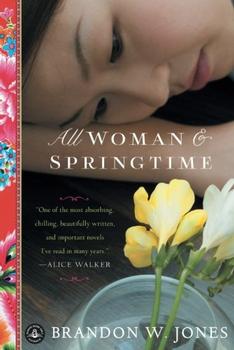
by Brandon W. Jones
Published 2013
This spellbinding debut, reminiscent of Memoirs of a Geisha, depicts, with chilling accuracy, life behind North Korea's iron curtain.
by Douglas A. Blackmon
Published 2009
In this groundbreaking historical expose, Douglas A. Blackmon brings to light one of the most shameful chapters in American history—an “Age of Neoslavery” that thrived from the aftermath of the Civil War through the dawn of World War II.
The Stone Home
by Crystal Hana Kim
A moving family drama and coming-of-age story revealing a dark corner of South Korean history.

The Flower Sisters
by Michelle Collins Anderson
From the new Fannie Flagg of the Ozarks, a richly-woven story of family, forgiveness, and reinvention.

The Funeral Cryer by Wenyan Lu
Debut novelist Wenyan Lu brings us this witty yet profound story about one woman's midlife reawakening in contemporary rural China.
Your guide toexceptional books
BookBrowse seeks out and recommends the best in contemporary fiction and nonfiction—books that not only engage and entertain but also deepen our understanding of ourselves and the world around us.