Summary | Excerpt | Reviews | Beyond the book | Read-Alikes | Genres & Themes | Author Bio
Critics' Opinion:
Readers' Opinion:
First Published:
Mar 2007, 408 pages
Paperback:
Dec 2008, 408 pages
 Book Reviewed by:
BookBrowse Review Team
Buy This Book
Happy Accidents shows that
many of the great medical discoveries of the 20th
century were made serendipitously. A few of the many
examples Meyers explores will be familiar, but most
will be a surprise to the majority of readers.
Apparently, the reason that so many of these "happy
accidents" are unknown to us is because scientists
often cover up the serendipitous nature of their
discoveries because, within the scientific
community, there is a something of a stigma attached
to chance discovery, because it can be misconstrued
as being pure luck. Thus many published papers omit
the blind alleys, wrong ideas and creative leaps
that went into the eventual discovery, and instead
present the findings as a smooth, logical process
devoid of stumbling blocks. Far from undermining the
great achievements of scientists such as Pasteur,
Fleming and Feynman, Happy Accidents
illustrates that it takes a very keen mind to
recognize an accidental discovery for what it is.
Winston Churchill once said "Men occasionally
stumble across the truth, but most of them pick
themselves up and hurry off as if nothing has
happened." Meyers points out that serendipity
happens when a "happy accident" is observed by a
person who has the ability to recognize the event as
notable, and is sufficiently intrigued to want to
unravel its mystery and find a useful application
for it. In other words, when chance meets judgment.
Meyers argues that the creative impulse in
scientific research is being kept unnecessarily in
check by an overly regimented education system,
giant pharmaceutical companies, peer review boards,
and granting agencies that require detailed
proposals that then have to be followed to the
letter.
In
Dog Years, Mark Doty makes reference to an
enlightened veterinarian school where students close
to completing their medical studies spend a semester
reading books that emphasize the relationship
between animals and man because, after years spent
with their noses in text books, it can be difficult to
remember why they wanted to become vets in the first
place. For similar reasons it would behoove medical
students, especially those who intend to go into
research, to read Happy Accidents before they
graduate.
That is not to say that Happy Accidents is
only for the medical specialists among us - far from
it. Morton Meyers' anecdote-rich writing style is
totally accessible to the layman; not only providing
an enlightening read but leaving the reader with a
wealth of bite-sized "did you know" facts to share
on any occasion when the subject of health and
medicine comes up which, for most of us, is an
increasingly popular topic as we get inexorably
closer to shuffling off our mortal coil!
You'll find an extensive (and exclusive) excerpt of
the introduction from Happy Accidents,
complete with illustrations, at BookBrowse.
"Induction and deduction only
extend existing knowledge ..... Rational thought can
be applied only to what is known. All new ideas are
generated with an irrational element in that there
is no way to predict them." - Morton A Meyers.
 This review was originally published in The BookBrowse Review in April 2007, and has been updated for the
November 2008 edition.
Click here to go to this issue.
This review was originally published in The BookBrowse Review in April 2007, and has been updated for the
November 2008 edition.
Click here to go to this issue.

If you liked Happy Accidents, try these:

by Marty Makary
Published 2021
One in five Americans now has medical debt in collections and rising health care costs today threaten every small business in America. Dr. Makary, one of the nation's leading health care experts, travels across America and details why health care has become a bubble.
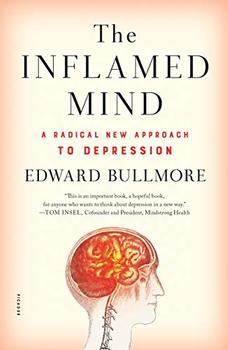
by Edward Bullmore
Published 2019
Worldwide, depression will be the single biggest cause of disability in the next twenty years. But treatment for it has not changed much in the last three decades. In the world of psychiatry, time has apparently stood still...until now with Edward Bullmore's The Inflamed Mind: A Radical New Approach to Depression.

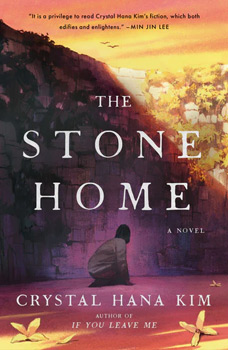
The Stone Home
by Crystal Hana Kim
A moving family drama and coming-of-age story revealing a dark corner of South Korean history.
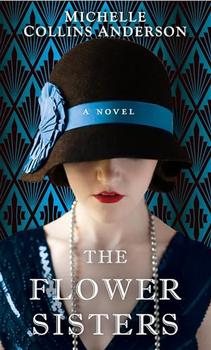
The Flower Sisters
by Michelle Collins Anderson
From the new Fannie Flagg of the Ozarks, a richly-woven story of family, forgiveness, and reinvention.
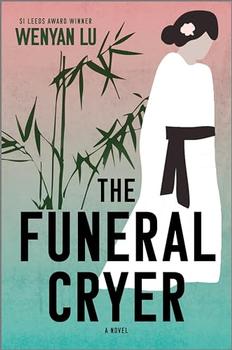
The Funeral Cryer by Wenyan Lu
Debut novelist Wenyan Lu brings us this witty yet profound story about one woman's midlife reawakening in contemporary rural China.
Your guide toexceptional books
BookBrowse seeks out and recommends the best in contemporary fiction and nonfiction—books that not only engage and entertain but also deepen our understanding of ourselves and the world around us.