Summary | Excerpt | Reviews | Beyond the book | Read-Alikes | Genres & Themes | Author Bio
Critics' Opinion:
Readers' Opinion:
First Published:
Jan 2007, 256 pages
Paperback:
Jan 2008, 256 pages
 Book Reviewed by:
BookBrowse Review Team
Buy This Book
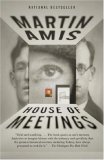
House of Meetings is a tale of envy, conscience and
ethics set against the harsh backdrop of the gulag period, which has rarely been
novelized by English-speaking writers. It is narrated by a
hard-nosed old man, a survivor of the Gulag, in the form of an extended letter to his
step-daughter as he takes a rather grim cruise north to the labor camp
where he spent the longest ten years of his life, enduring extreme cold,
starvation and gang wars. The time period of the narration is
defined exactly as it is written during the 2004
Beslan
school hostage crisis, which Amis uses to illustrate that the violence and
conflict of Russia's past is still effecting it today.
The narrator is one of life's survivors, he went away when he was 26 and was
closing on 40 when he was released, but he has a knack for finding his feet and
becomes a TV repairman, from which he segues into cold-war electronics, before
defecting to the West where he becomes rich on the back of one patent.
The narrator does not particularly want to be liked but he does want to be
understood, or more accurately he wants to understand himself (even though what
he uncovers is not going to be to his liking). He tells his story as he
sees it - from the final months of World War II where, like many other Russian
soldiers, he raped his way across East Germany, through his time in the gulag
and, in brief, the rest of his life. The story centers on the unequal
love triangle of him, his idealistic pacifist brother Lev and a Jewish woman
named Zoya. Both men are in love with Zoya (a somewhat typical Amis female fantasy figure) who they refer to as "The
Americas" because she is shaped like the continents (Brazilian backside,
Californian breasts, "the giddy disjunction between north and south, and then
the waist as thin as Panama"), in short she is endowed with an "outrageous
allocation of physical gifts" and knows exactly what to do with them.
Both brothers get caught in the Stalinist purges following World War II and
are sent to a Siberian gulag. The narrator was arrested first and Lev follows soon after, ironically having been turned into the authorities by someone who overhears him in conversation
with his sister praising "The Americas"; just before he is arrested he and Zoya marry.
Although from the reader's point of view, Lev is the more likeable of the brothers, it is
clear that Lev would have no chance of surviving the camps without his brother
to defend him from the violence inflicted by the strong, both prisoners and
guards, on the weak.
As the political climate begins to change things improve marginally in the
camps and conjugal visits can be arranged between prisoners and those spouses prepared to make the very long trek to Siberia for a night in the cabin known as "The House of Meetings". Zoya is one such spouse. However, after his night with her, Lev emerges from the House of Meetings a broken man; our narrator, still deeply jealous of his
relationship with Zoya, happily assumes he was unable to perform but Lev
assures him that that was not the case and promises to reveal what happened at a
later date.
Despite the book jacket's promise of a love story, it becomes clear early on
that this is not going to be a love story in any traditional sense; even the
narrator qualifies his statement by saying that it's a story of Russian love,
indicating that we shouldn't expect anything remotely soppy and loving within
these pages. In essence The House of Meetings is an extension, in
novel form, of Amis's 2002 nonfiction work
Koba the Dread: Laughter and the Twenty Million, a reference to
Stalin and the estimated 20 million who died under the Bolshevik regime between
1917 and 1933.
Many reviewers feel that this is Amis's best work since London Fields,
but a few feel that it is neither fish nor fowl - too novelized to be history
but too strident to be considered a good novel. One reviewer asks why it is necessary to read a novel about the period when
we already have first hand accounts such as Solzhenitsyn's The Gulag Archipelago. The answer to this seems very
simple. Amis's 200 page novel and Solzhenitsyn's substantial work of non-fiction written 50 year ago may share a similar objective but meet the needs
of two different audiences; after all, how many of us can honestly say hand on heart that we have read The
Gulag Archipelago cover to cover (512 pages in the abridged version but closer to 1,800 pages unabridged)?
Martin Amis, son of writer Kingsley Amis (Lucky Jim etc), was born
Martin Louis Amis in
Cardiff on August 25, 1949. He is the middle of three children (an older
brother Philip and younger sister, Sally, who died in 2000). His parents,
Hilary (Hilly) and Kingsley,
divorced when he was twelve.
He was educated in schools in Wales, England, Spain and the USA (while his
father lectured at Princeton), and graduated from Exeter College, Oxford, with
First Class Honours in English. His first novel, The Rachel Papers, was
published in 1973 while he was working as an editorial assistant at the Times
Literary Supplement. It won a Somerset Maugham Award in 1974.
His work has been heavily influenced by American fiction, especially by Philip Roth, John Updike and Saul Bellow, and also by Russian writers such as
Vladimir Nabokov. He is considered to be one of the most influential and
innovative voices in contemporary British fiction, and is sometimes grouped with
other British-based writers who emerged in the 1980s such as Salman Rushdie, Ian
McEwan and Julian Barnes.
He is a regular contributor to many newspapers,
magazines and journals, including the Sunday Times, The Observer, the Times
Literary Supplement and the New York Times.
In 1984 he married Antonia Phillips, with whom he has two sons, Louis (1985) and
Jacob (1986). Their marriage broke down in 1993 and in 1996 he married
Isabel Fonseca, with whom he has two daughters, Fernanda (1997) and Clio (1999).
He has another daughter who he met for the first time in 1996, Delilah Seale
(born ~1975), from an affair with Lamorna Heath.
He lives in London and Uruguay, with his wife and daughters.
Useful Link: For all you could ever want to know about Martin Amis visit
martinamisweb.com.
 This review was originally published in The BookBrowse Review in February 2007, and has been updated for the
January 2008 edition.
Click here to go to this issue.
This review was originally published in The BookBrowse Review in February 2007, and has been updated for the
January 2008 edition.
Click here to go to this issue.

If you liked House of Meetings, try these:

by Owen Matthews
Published 2009
An indelible portrait of Russia over seven decades and an unforgettable memoir about how we struggle to define ourselves in opposition to our ancestry only to find ourselves aligning with it.

by Simon Sebag Montefiore
Published 2008
A revelatory account that finally unveils the shadowy journey from obscurity to power of the Georgian cobbler’s son who became the Red Tsar—the man who, along with Hitler, remains the modern personification of evil.


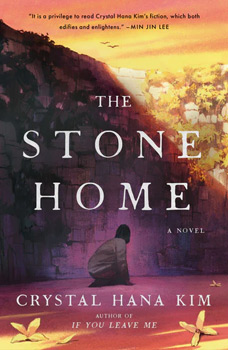
The Stone Home
by Crystal Hana Kim
A moving family drama and coming-of-age story revealing a dark corner of South Korean history.

The Flower Sisters
by Michelle Collins Anderson
From the new Fannie Flagg of the Ozarks, a richly-woven story of family, forgiveness, and reinvention.

The Funeral Cryer by Wenyan Lu
Debut novelist Wenyan Lu brings us this witty yet profound story about one woman's midlife reawakening in contemporary rural China.
Your guide toexceptional books
BookBrowse seeks out and recommends the best in contemporary fiction and nonfiction—books that not only engage and entertain but also deepen our understanding of ourselves and the world around us.