Summary | Excerpt | Reviews | Beyond the book | Read-Alikes | Genres & Themes | Author Bio
Critics' Opinion:
Readers' Opinion:
First Published:
Sep 2006, 192 pages
Paperback:
Nov 2007, 224 pages
 Book Reviewed by:
BookBrowse Review Team
Buy This Book
Galsan Tschinag's autobiographical story of a
boy living on the Mongolian steppes (prairies) offers an
evocative glimpse into a way of life in which the nomadic people
live in harmony with their awesome (in the literal sense)
surroundings, worshiping the sky as sacred. It is a record of a
time that was already vanishing in Tschinag's childhood but, thanks in part to Tschinag and others, is now being not just preserved but lived once
again.
The Blue Sky is set in the 1950s, when the
Tuvan's traditional nomadic ways were under threat from the
Communist government who, intent on producing a homogeneous and
equal Soviet people, introduced endless new rules that made it
ever harder to continue to live in the traditional ways
especially when the system rewarded the lazy over the
industrious.
I read The Blue Sky twice, the
first time to myself, the second time aloud to our
children. It's not really a book for young children, the pace is
a little too slow, but they, then 10 and 12, enjoyed it well enough when read aloud to them. The most stunning aspect
for them was that the young protagonist, who is perhaps 5 or 6
years old, is in charge of his own flock, when many of their
teenage friends aren't yet trusted to bike to school!
Adults and older teens who can appreciate the slower things in life
will find this an evocative and moving read.
About Galsan Tschinag:
Galsan's name in
his native Tuvan language is Irgit Shynykbai-oglu Dshurukuwaa.
He was born in the early forties in Mongolia and from 1962 until
1966 studied at the University of Leipzig, where he adopted
German as his written language. Under an oppressive Communist
regime he became a singer, storyteller, and poet in the ancient
Tuvan tradition.
As chief of all Tuvans, Tschinag led his people, scattered under
Communist rule, back in a huge caravan to their original home in
the High Altai mountains. In 1995, he signed a treaty with the
President of Mongolia that would allow many of the Tuvan people
(who had been displaced by the Soviet Union) to return to the
Altai. Armed with bags of money he had earned from his European
book sales he went into the Gobi desert and bought camels and
horses for those of his impoverished people who wanted to
return. Then, for three and a half months, he led a caravan of
extended families, along with 130 camels, 300 horses, sheep,
dogs and chickens over 2000 kilometers across the steppe, rivers
and mountain ranges back in to the High Altai (the largest
caravan since Genghis Khan); he tells this story in Die
Karawane (The Caravan). As a result of his efforts and the work of others, much of the Altai region is now
protected by the
Altai Tavan Bogd National Park.
He is the author of more than a dozen books which have been translated into about eight languages. He lives alternately
in the Altai, Ulaanbaatar (Mongolia's capital city) and in Europe.
The Blue Sky is subtitled a novel but in his author's
note Galsan describes it as the first part of an autobiographical
trilogy. In the Blue Sky he writes of his early
childhood. In the second and third parts, The Gray Earth
and The White Mountain, he describes discovering his
shamanic gift and being apprenticed as a child and adolescent
during a time when practicing shamanism was punishable with
imprisonment or execution. The latter two books have already
been published in German, but are not yet available in English;
in fact, Blue Sky is currently the only book by Galsan
Tschinag to be available in English.
The Blue Sky is translated into English by Katherina
Rout; her interview provides interesting background to this story.
"During my lifetime, I have lived in an indigenous, feudal, and communist society. Today, I move about
the country on horseback, by car, or by plane. With my shaman's
whisk, a truncheon, or a laptop, I alternate between living in
the indigenous culture of the post-Socialist Tuvans, the rising
Capitalism of Mongolia, and the enlightened state monopoly of
Western Europe. My life has been rich because I have always
found myself at the focal point of each epoch and have pursued
all my tasks and each of my professions with passion." -
Galsan Tschinag.
 This review was originally published in The BookBrowse Review in December 2006, and has been updated for the
November 2007 edition.
Click here to go to this issue.
This review was originally published in The BookBrowse Review in December 2006, and has been updated for the
November 2007 edition.
Click here to go to this issue.

If you liked The Blue Sky, try these:
by Yangzom Brauen
Published 2012
An extraordinary portrait of three generations of Tibetan women whose lives are forever changed when Chairman Mao's Red Army crushes Tibetan independence.

Message from an Unknown Chinese Mother
by Xue Xinran
Published 2012
Message from an Unknown Chinese Mother is powered by love and by heartbreak and will stay with readers long after they have turned the final page.


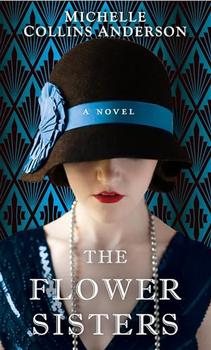
The Flower Sisters
by Michelle Collins Anderson
From the new Fannie Flagg of the Ozarks, a richly-woven story of family, forgiveness, and reinvention.
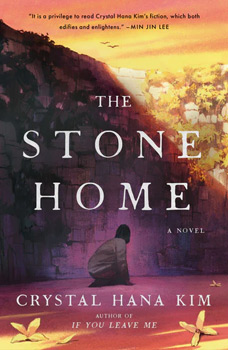
The Stone Home
by Crystal Hana Kim
A moving family drama and coming-of-age story revealing a dark corner of South Korean history.

The Funeral Cryer by Wenyan Lu
Debut novelist Wenyan Lu brings us this witty yet profound story about one woman's midlife reawakening in contemporary rural China.
Your guide toexceptional books
BookBrowse seeks out and recommends the best in contemporary fiction and nonfiction—books that not only engage and entertain but also deepen our understanding of ourselves and the world around us.