Summary | Excerpt | Reviews | Beyond the book | Read-Alikes | Genres & Themes | Author Bio
Critics' Opinion:
Readers' Opinion:
First Published:
Sep 2006, 576 pages
Paperback:
Aug 2006, 618 pages
 Book Reviewed by:
BookBrowse Review Team
Buy This Book
From the book jacket: What is it to be human? This question, as in
Birdsong, is at the heart of Human Traces. Set in the late 19th and
early 20th centuries, this is an extraordinary novel that brings to vivid life,
through the story of the volatile friendship and dedicated careers of two
determined men, the epic quest to map the human mind.
Comment: Faulks's latest novel, a 550 page epic that took him four years
to write, is not so much a novel about the dawn of
modern psychiatry, as a history of psychiatry wrapped around a novel. It's
an incredibly ambitious, intelligent work, sufficiently well researched that I
wouldn't be surprised if it becomes required reading for medical students.
In fact, the grasp that Faulks has for his material is sometimes quite
overwhelming, to the point that I must admit to skipping the occasional page
here and there when one or another of his characters expounded on the latest
theory of the day in particular depth!
It's impossible to provide an adequate synopsis of this extraordinary book in a
few lines but in short, Thomas Midwinter, an Englishman, and his close friend
Jacques Rebière, meet by chance in 1880 and immediately recognize a kindred
spirit in the other - both are training to become doctors at a time when mental
illness is beginning to be seen not as an affliction but as a disease that can
be cured, and both are determined to be at the forefront of medical discovery.
Thomas's path takes him to a hellish English asylum, while Jacques becomes
enamored of the theories put forward by the French neurologist Jean Charcot
(mirroring Freud, who was a great admirer of Charcot). Eventually they
open a clinic together in an old schloss (chateau/castle) on the
Austro/Slovenian border with the help of Thomas's sister, Sonia, with the
single-minded purpose of curing mental illness, but conflict develops when their
theories start to diverge. While the central characters obsessively work
to uncover the secrets of the human brain, they themselves, run the gamut of
human emotions, stepping into the edge of madness.
Did you know? Key to Human Traces is the theme of hearing
voices, now considered a classic sign of schizophrenia, but in Human Traces
it is posited as having a more central place in human evolution. In an
interview last year, Faulks said, "I think there's no doubt that the
hearing of voices is much more common than we generally acknowledge, and I don't
think it's necessarily a sign of being mad," He tells of an incident
he experienced shortly after his second child was born, when he heard his wife's
voice screaming for him but when he went upstairs there was nobody there.
In his acknowledgements, he references The Origins of Consciousness in the
Breakdown of the Bicameral Mind (1977), "a cult classic", in which the
author, Julian Jaynes, suggests that hearing voices was once commonplace and
that the loss of the ability to hear coincided with the generation of modern
human consciousness.
 This review
first ran in the October 5, 2006
issue of BookBrowse Recommends.
This review
first ran in the October 5, 2006
issue of BookBrowse Recommends.

If you liked Human Traces, try these:
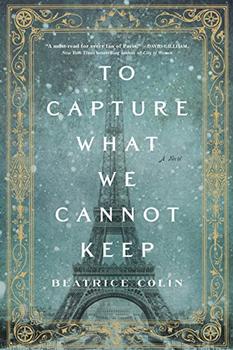
To Capture What We Cannot Keep
by Beatrice Colin
Published 2017
Set against the construction of the Eiffel Tower, this novel charts the relationship between a young Scottish widow and a French engineer who, despite constraints of class and wealth, fall in love.

by Anna Hope
Published 2016
A searing novel of forbidden love on the Yorkshire moors from the author of the critically acclaimed debut Wake


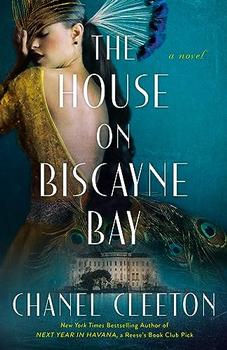
The House on Biscayne Bay
by Chanel Cleeton
As death stalks a gothic mansion in Miami, the lives of two women intertwine as the past and present collide.
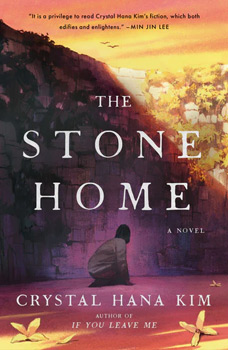
The Stone Home
by Crystal Hana Kim
A moving family drama and coming-of-age story revealing a dark corner of South Korean history.
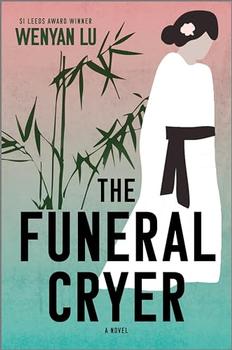
The Funeral Cryer by Wenyan Lu
Debut novelist Wenyan Lu brings us this witty yet profound story about one woman's midlife reawakening in contemporary rural China.
Your guide toexceptional books
BookBrowse seeks out and recommends the best in contemporary fiction and nonfiction—books that not only engage and entertain but also deepen our understanding of ourselves and the world around us.