Summary | Excerpt | Reading Guide | Reviews | Beyond the book | Read-Alikes | Genres & Themes | Author Bio
Critics' Opinion:
Readers' Opinion:
First Published:
Sep 2005, 384 pages
Paperback:
Sep 2006, 384 pages
 Book Reviewed by:
BookBrowse Review Team
Buy This Book
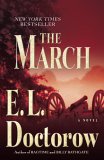
From the book jacket: In 1864, after Union general William Tecumseh
Sherman burned Atlanta, he marched his sixty thousand troops east through
Georgia to the sea, and then up into the Carolinas. The army fought off
Confederate forces and lived off the land, pillaging the Southern plantations,
taking cattle and crops for their own, demolishing cities, and accumulating a
borne-along population of freed blacks and white refugees until all that
remained was the dangerous transient life of the uprooted, the dispossessed, and
the triumphant. Only a master novelist could so powerfully and compassionately
render the lives of those who marched.
A magisterial work with an enormous cast of unforgettable characters– white and
black, men, women, and children, unionists and rebels, generals and privates,
freed slaves and slave owners. At the center is General Sherman himself; a
beautiful freed slave girl named Pearl; a Union regimental surgeon, Colonel
Sartorius; Emily Thompson, the dispossessed daughter of a Southern judge; and
Arly and Will, two misfit soldiers. Almost hypnotic in its narrative drive,
The March stunningly renders the countless lives swept up in the violence of
a country at war with itself.
Comment: Sherman's memory has been much reviled over the years, particularly in the
Southern states. As the man who led the infamous "March
to the Sea" and solved the problem of the hostile Plains Indians by advising
that the buffalo be killed off - thus destroying the way of life for the
Plains Indians, it's easy to see why. However, it would seem that he was
no lover of war - in fact, in the
early days of the Civil war he fell into a depression so severe that he was
relieved of his command and rumors spread of his insanity. Perhaps he had
the foresight to see that the South would inevitably lose, but that the North
would only be able to win at a terrible cost but that cost was necessary if
America was to stay as one country - and, indeed, it appears that he did not
come into his own as a commander until the powers that be recognized that
extreme measures would be required to win the war.
His position
(shared by Grant) is clearly stated in a number of historical records including
his letter to the Mayor of Atlanta:
"You cannot qualify war in harsher terms than I will. War is cruelty, and you cannot refine it; and those who brought war into our country deserve all the curses and maledictions a people can pour out. I know I had no hand in making this war, and I know I will make more sacrifices to-day than any of you to secure peace. But you cannot have peace and a division of our country. If the United States submits to a division now, it will not stop, but will go on until we reap the fate of Mexico, which is eternal war."
When researching the background to The March, the thing that struck
me most were the photographs of the Civil War; or to be more specific, the fact
that the war is so recent that it is possible to have a photographic record of
it!
With the Civil War such a core part of the American psyche, you would have
thought that a high-profile fictional interpretation would raise controversy,
but in fact, the mainstream reviewers are overwhelmingly in favor of The
March, with a few minor nitpicks here and there. I'm not sufficiently familiar with Civil War history to cast
an opinion on whether Sherman has been accurately portrayed or not, but it seems
that most who know these things, feel that Doctorow's representation of him as a
moody, complex character of varying ability is well done. Having said that, although Sherman is
obviously an essential part of the tale, he is just one of a large cast of,
mostly fictional, characters from all walks of live - characters that most
reviewers feel have been well-drawn, although one questioned the modern day bias
of the groups as a whole (as a general rule, Doctorow's freed slaves tend to be honorable fellows,
his white Southern men are corrupt and their women a tad clueless).
Reviewers also compliment Doctorow on his familiarity with the military
logistics and tactics of the period and his ability to portray the traveling
army in all its gory sights, sounds and smells.
"It is Mr. Doctorow's achievement in
these pages that in recounting
Sherman's march, he manages to weld
the personal and the mythic into a
thrilling and poignant story. He not
only conveys the consequences of
that campaign for soldiers and
civilians in harrowingly intimate
detail, but also creates an
Iliad-like portrait of war as a
primeval human affliction - "not war
as adventure, nor war for a solemn
cause," but "war at its purest, a
mindless mass rage severed from any
cause, ideal, or moral principle," a
"characterless entanglement of
brainless forces" as God's answer
"to the human presumption."
- Michiko Kakutani, The New York Times.
About the Author: Edgar
Lawrence Doctorow was born in New York City in 1931; he graduated with honors
from Kenyon College in 1952 and did graduate work at Columbia University before
serving in the US Army, stationed in Germany. He married Helen Setzer in
1954 and they have three children. He was senior editor for New American Library from 1959 to 1964 and then served as editor
in chief at Dial Press until 1969. Since then, he has devoted his time to
writing and teaching. He holds the Glucksman Chair in American Letters at New
York University and over the years has taught at several institutions, including
Yale University Drama School, Princeton University, Sarah Lawrence College, and
the University of California, Irvine.
Bibliography of Novels
Welcome to Hard Times (1960), Big as Life (1966), The Book of Daniel (1971), Ragtime (1974), Drinks Before Dinner (1979), Loon Lake (1980), American Anthem (1982), World's Fair (1985), Billy Bathgate (1989), Waterworks (1994), City of God(2000), The March (2005).
 This review
first ran in the October 5, 2006
issue of BookBrowse Recommends.
This review
first ran in the October 5, 2006
issue of BookBrowse Recommends.

If you liked The March, try these:
by John Sayles
Published 2012
It's 1897. Gold has been discovered in the Yukon. New York is under the sway of Hearst and Pulitzer. And in a few months, an American battleship will explode in a Cuban harbor, plunging the U.S. into war... This is history rediscovered through the lives of the people who made it happen.
by Glen David Gold
Published 2010
A novel with Charlie Chaplin at its center, capturing the moment when American capitalism, a world at war, and the emerging mecca of Hollywood intersect to spawn an enduring culture of celebrity.

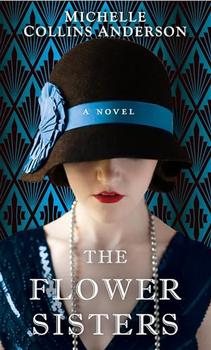
The Flower Sisters
by Michelle Collins Anderson
From the new Fannie Flagg of the Ozarks, a richly-woven story of family, forgiveness, and reinvention.
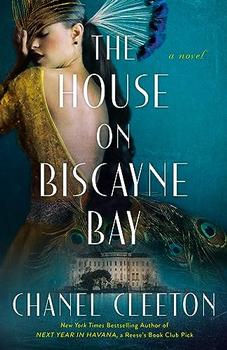
The House on Biscayne Bay
by Chanel Cleeton
As death stalks a gothic mansion in Miami, the lives of two women intertwine as the past and present collide.
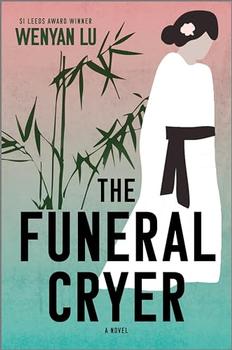
The Funeral Cryer by Wenyan Lu
Debut novelist Wenyan Lu brings us this witty yet profound story about one woman's midlife reawakening in contemporary rural China.
Your guide toexceptional books
BookBrowse seeks out and recommends the best in contemporary fiction and nonfiction—books that not only engage and entertain but also deepen our understanding of ourselves and the world around us.