
-
Your next favorite book
is waiting.
Summary | Excerpt | Reviews | Beyond the book | Read-Alikes | Genres & Themes | Author Bio
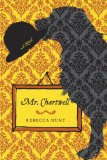
A Novel
by Rebecca Hunt Book Reviewed by:
The conceit at the heart of Mr. Chartwell - the re-envisioning of Winston Churchill's famous bouts of depression as actual visits from a huge, slobbery black dog - is not cutesy or trite, as the book jacket blurb might lead one to fear, but clever and disarming. Rebecca Hunt engages the topic of depression in an inventive way, and the result is not a grim dose of hard truth but a playful meditation on the human condition. This is a novel about depression that even a depressed person can enjoy - indeed, a depressed person might find it radically cheering.
Black Pat's emergence on the scene is broad comedy. Even though he is standing on his hind legs when Esther first opens the door ("a mammoth muscular dog about six foot seven high") and speaking like a gentleman, he soon regresses into dog-like behavior. Hunt's descriptions are exquisite, as the strange gentleman raises his eyebrows ("They weren't eyebrows so much as thumbprint-sized buds above his eyes, but they were expressive in the same way") or digs into the cheese and crackers ("They both listened to him chew. Not just a sickening noise, it was a vigorous one. The shape of his face didn't permit quiet eating, or subtle eating with a closed mouth. Loud and visible, the cheese mashed into a pulp"). In fact Black Pat's modus operandi is to hang around his "client" acting like a dog - chewing rocks, scratching, digging up smelly objects. He climbs up on the bed and snores. He distracts the victim from whatever else is going on. Discovering the way the dog interacts with the characters is one of the main pleasures of the novel, so I don't want to give too much away - but I will say that the surreal and absurd conjunction of moping thoughts and an ill-mannered animal is fertile and funny at every meeting.
This is not a meaty, wordy, plot-driven novel. Both chapters and sentences are short; the descriptions are lyrical and the dialog is epigrammatic. The characters are colorful sketches, although they do develop along a trajectory that is (quietly, poetically) suspenseful, even as we are really only given small glimpses of their lives. Rebecca Hunt trained as an artist (see her book-promotion interview on You Tube below) and it's fruitful to think of Mr. Chartwell as a work of art on the scale of a painting, with each scene arranged as a small composition. The visual details of each room are carefully rendered, as are the artifacts that each character keeps as reminders of the past. Churchill has historical souvenirs and gifts from heads of state; Esther has tchotchkes from old vacations and her late husband's pencil cup.
The most redemptive force at work in the novel, however, is not visual but linguistic - both Churchill and Esther are constantly reading and quoting. Esther works in a library and is trying to read Moby Dick; Churchill's trying to utter Shakespearean locutions. Black Pat muddies the air with as much distracting doggerel and as many meaningless puns as he can interject, but the characters keep fighting back, searching for more elevated language. Hunt has done a brilliant job putting words in Churchill's mouth - she pastes together phrases that sound like real quotations from a famous man of another time, with rich, archaic vocabulary and satisfying turns of phrase. "It's exhausting," he says to his wife, "All I want to do is lie doggo until it's all over, to frowst in my bedroom." When a new character, an accomplished chatterbox, comes on the scene, it's a major event. The clever wordplay is a saving grace, a consummate human skill that no canine can match.
 This review
first ran in the February 16, 2011
issue of BookBrowse Recommends.
This review
first ran in the February 16, 2011
issue of BookBrowse Recommends.

If you liked Mr. Chartwell, try these:
The Life and Opinions of Maf the Dog, and of His Friend Marilyn Monroe
by Andrew O'Hagan
Published 2011
In November 1960, Frank Sinatra gave Marilyn Monroe a dog. His name was Mafia Honey, or Maf for short. With style, brilliance, and panache, Andrew O’Hagan has drawn a one-of-a-kind portrait of the woman behind the icon, and the dog behind the woman.
by David Wroblewski
Published 2009
Born mute, speaking only in sign, Edgar Sawtelle leads an idyllic life with his parents on their farm in remote northern Wisconsin. But his life is plunged into chaos as his uncle returns, his father suddenly dies, and he is forced to flee into the wilderness with only three yearling dogs for company.

by Peter D. Kramer
Published 2006
A revolutionary exploration of mood disorders by the author of the landmark bestseller Listening to Prozac.



The truth does not change according to our ability to stomach it
Click Here to find out who said this, as well as discovering other famous literary quotes!

Can you name the title?
Test your book knowledge with our daily trivia challenge!
Your guide toexceptional books
BookBrowse seeks out and recommends the best in contemporary fiction and nonfiction—books that not only engage and entertain but also deepen our understanding of ourselves and the world around us.
