
-
Your next favorite book
is waiting.
Summary | Excerpt | Reviews | Beyond the book | Read-Alikes | Genres & Themes | Author Bio
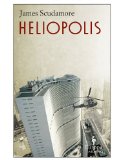
 Book Reviewed by:
James Scudamore's second novel, Heliopolis, (after The Amnesia Clinic) is a strikingly vivid and well-written story about Ludwig (Ludo) Aparecido dos Santos, a man who was born in one of São Paulo's largest favelas, or shantytowns, and shortly thereafter "rescued" along with his mother from its impoverished lifestyle by the wealthy and somewhat slimy character, Zé Fischer Carnicelli and his philanthropist wife Rebecca. Ludo's mother is hired as a cook at the Carnicellis' weekend home in the Brazilian countryside, a place where Ludo develops a taste for good food and the freedom of the outdoors. He also begins to cultivate his love for Melissa, Zé's daughter. As Ludo grows up and eventually comes to be adopted by the Carnicelli family, their differences in socio-economic status become undeniable, and his relationship to everyone around him begins to change. He even develops a sexual relationship with Melissa, who is now, technically, his sister. The story, told in interspersed accounts of present-day, first person narration, flashbacks and fully expanded memories, illustrates how money and birthplace affect Ludo's sense of identity.
Scudamore delivers an exquisite sense of place, particularly in his descriptions of São Paulo and its class struggles. He paints pictures that are simultaneously oppressive yet comfortable, decrepit but gorgeous. In one such passage Ludo describes:
"Since the city took off in the nineteenth century, wave after wave of developers have ripped through it, obliterating what lies in their path. But occasionally, the past remains in isolated fragments that seem as if they have escaped the halo of a nuclear explosion… A single-storey colonial-style building, lately a slum, survives on the older side. Its walls have been posted over so many times and in so many colours that they have faded to one texture and to a colour that is all colours. The carved stone over its entrance reads MDCCCLXXX, topped off by an angel flanked by two bugle-playing cherubs. It would have been grand here once. I picture carriages; ladies with parasols; men in dark suits with pearls in their neckties."
The city's stifling heat contrasts sharply with the cold alcohol Ludo consumes, and throughout the novel food and drink become vehicles for sensual expression and memory. After spending the night with his sister, Ludo describes one such example: "...ignoring the doorman's suspicious stare, I let myself out of the building and go to a nearby Italian café that serves good coffee and freshly baked rolls. I think of Melissa as I pick up a warm roll and tear it open". Like the city, he is a mixture of both rich and poor, an outcast and a member of the profoundly privileged, and he struggles to find his place.
In his job working at a communications office, Ludo is in a position of marketing products to the people living in the favelas, and he deals with his guilt by adopting an attitude of wry detachment: "My response to the realization that my job is pointless has thus far been to worry as little as possible, to spend my office days how I like, and to do just enough to slip under the radar. I pass the time sleeping and reading in toilet cubicles…". It's here in the men's room, in an attempt at having a more "down to earth" relationship, that Ludo tries to befriend the building's cleaning woman, Flávia. His failure to do so only emphasizes that Ludo doesn't fit in anywhere. His self-awareness is tragic at times, and it creates a sense of connection with the reader as Ludo gives voice to thoughts that surely many people have had.
Scudamore is unafraid of exploring difficult subjects--the patronizing nature of so-called philanthropy, the discomfort of not belonging, the independence that charity takes away, the uncertainty of how to help another person without being insulting, what it means to deserve something--and his writing is at its strongest when he offers no solutions to these social conflicts. Instead, he freely examines the raw feelings of shame, stifled anger, and apathy that plague his characters. Scudamore respects the complexities of the social dynamics and does not try to oversimplify these relationships.
In the last third of the novel, the story seems to weaken as details feel more contrived, and major plot points are both unnecessarily linked and dramatized. Similarly, some of the complexities Scudamore creates in the first portion of the book are diminished as loose ends are tied up too quickly and some very important questions go unexplored. These weaknesses notwithstanding, Scudamore's novel is well worth reading; it is unafraid, well crafted and vivid in every last detail.
 |
An example of the work of Haas&Hahn (see sidebar), visit favelapainting.com for more images |
 |
A panoramic view of the Favela da Rocinha in Rio de Janeiro, taken by Eric Schockmel. Click images for larger versions |
 This review
first ran in the November 17, 2010
issue of BookBrowse Recommends.
This review
first ran in the November 17, 2010
issue of BookBrowse Recommends.

If you liked Heliopolis, try these:

by Katherine Boo
Published 2014
From Pulitzer Prize-winner Katherine Boo, a landmark work of narrative nonfiction that tells the dramatic and sometimes heartbreaking story of families striving toward a better life in one of the twenty-first century's great, unequal cities.
How to Get Filthy Rich in Rising Asia
by Mohsin Hamid
Published 2014
From the internationally bestselling author of The Reluctant Fundamentalist, the boldly imagined tale of a poor boy's quest for wealth and love.
by Audrey Schulman
Published 2012
Evoking both Barbara Kingsolver and Andrea Barrett, this enthralling fiction, wise and generous, explores some of the crucial social and cultural challenges that, over the years, have come to shape our world.



The truth does not change according to our ability to stomach it
Click Here to find out who said this, as well as discovering other famous literary quotes!

Can you name the title?
Test your book knowledge with our daily trivia challenge!
Your guide toexceptional books
BookBrowse seeks out and recommends the best in contemporary fiction and nonfiction—books that not only engage and entertain but also deepen our understanding of ourselves and the world around us.
