
-
Your next favorite book
is waiting.
Summary | Excerpt | Reading Guide | Reviews | Beyond the book | Read-Alikes | Genres & Themes | Author Bio
A Novel
by Peter Ackroyd Book Reviewed by:
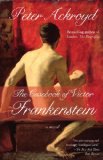
The origin of the novel Frankenstein is the stuff of legend. Mary Shelley, only eighteen years old and married to the atheist Percy Bysshe Shelley, formulated a story of a man and his evil creation for a parlor game between herself, her husband, and their friend, Lord Byron. As the horror story grew into a bigger and more complicated novel, Shelley sought the aid of her husband to help her edit and revise it for publication. In many ways, Frankenstein was born out of a collaborative, creative process. Now, almost 200 years after the first publication of Frankenstein in 1818, Peter Ackroyd is joining the party. Ackroyd's postmodern version allows the character, Victor Frankenstein, to meet the author, Shelley. This reinvention of a classic is faintly reminiscent of the moment in Shelley's Frankenstein when the creature discovers Milton's Paradise Lost and identifies with the fall of man. The creature becomes so enthralled that he claims he read Paradise Lost "as a true history" and not a work of fiction. Ackroyd performs a similar feat with The Casebook of Victor Frankenstein: he reads both fiction and history as one complete truth, rather than the separate stories they actually are.
While Shelley's original concentrated on the horror of creation - what feminists interpret as the horror of childbirth - Ackroyd lets this sense of horror expand. Horror is on the streets of London, an Ackroyd-esque twist that is to be expected, and not only in the shadows of Victor's laboratory. This allows for an objective portrait of the world of Mary Shelley's Frankenstein as well as the world of Mary Shelley and the violent, poverty-stricken streets of early-nineteenth-century London. This will delight readers who are familiar with the original and provide a helpful context for those who are just discovering it.
The co-existence of character and author is not cheeky or clever, but is a seamless construction of Ackroyd's fictionalized history and historicized fiction. Ackroyd does, however, have bouts of obtuse literary witticisms, such as when he shares the name of Frankenstein's monster prior to death: Jack Keat, an unexpected spoof on John Keats that arises and dies as quickly as the monster himself. Ackroyd's Victor Frankenstein is a magnet for the gothic, the sublime, and other examples of romantic philosophy from the period. Much of the novel wrangles with the tension and trauma of creation, whether it is the creation of poetry, demons, marriages, or children. Even the trauma of daily life is present, whether it is on the bank of the Thames, in the Swiss Alps, or the lecture halls of Oxford.
 Ackroyd concentrates on crafting a retelling that is accurate in its depictions, characters, and facts. The novel's inventiveness stems only from its postmodern construction. The literary characters - Mary, Percy, Lord Byron, and others - have been lifted from the pages of history and benefit from their remarkable legacies even more so than Victor Frankenstein himself, who comes off as flat, like a caricature of his original 1818 self. The tendency for the creator to be completely overshadowed by his creation (and in this case, his creators) thus continues in Ackroyd's vision of the story. After all, even the most informed readers are sometimes surprised to understand that Frankenstein is the name of the scientist, not the monster. Considering the richness of Ackroyd's portrayal of Percy, Mary, and the city of London, it's a shame not to have the same duality and complexity emit from the narrator and main character.
Ackroyd embellishes his story with bits of antiquity, and he does so with a gentle hand, without weighing down the plot for modern readers. This is wonderful for readers who are looking for a story as fast as it is colorful. Under Ackroyd's romantic, rapid pen, Frankenstein becomes accessible, easy to absorb, and light. He continues to prod the original tale's questions of creation and death, but does so at a modern pace. Needless to say, the tale has morphed considerably since its roots in Paradise Lost. Satisfied readers of Ackroyd's text will not find the truest, purest rendition of Frankenstein, but they will delight in a nineteenth-century tale of terror that still captures our attention in a twenty-first-century form.
Above: Drawing by Theodore Von Holst. Frontispiece to the first illustrated edition of Frankenstein published by Colburn and Bentley, London 1831.
 This review was originally published in The BookBrowse Review in November 2009, and has been updated for the
October 2010 edition.
Click here to go to this issue.
This review was originally published in The BookBrowse Review in November 2009, and has been updated for the
October 2010 edition.
Click here to go to this issue.

If you liked The Casebook of Victor Frankenstein, try these:
by Marie Benedict
Published 2021
A master storyteller whose clever mind may never be matched, Agatha Christie's untold history offers perhaps her greatest mystery of all.
by Gill Hornby
Published 2021
For fans of Jo Baker's Longbourn, a witty, poignant novel about Cassandra Austen and her famous sister, Jane.
by Jeanette Winterson
Published 2020
What will happen when homo sapiens is no longer the smartest being on the planet? In fiercely intelligent prose, Jeanette Winterson shows us how much closer we are to that future than we realize. Funny and furious, bold and clear-sighted, Frankissstein is a love story about life itself.



Education is the period during which you are being instructed by somebody you do not know, about something you do ...
Click Here to find out who said this, as well as discovering other famous literary quotes!

Can you name the title?
Test your book knowledge with our daily trivia challenge!
Your guide toexceptional books
BookBrowse seeks out and recommends the best in contemporary fiction and nonfiction—books that not only engage and entertain but also deepen our understanding of ourselves and the world around us.
