
-
Your next favorite book
is waiting.
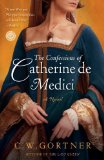
A Novel
by C.W. Gortner Book Reviewed by:
If you like historical fiction, BookBrowse readers think you'll love The Confessions of Catherine de Medici. 13 out of 14 of them rated it 4 or 5 stars. Here's what they had to say:
C.W. Gortner re-imagines the trials and tribulations of Catherine de Medici "in her own words," an interesting, successful technique that effectively presents the life and times of a complex historical figure whose life story is permeated with sadness, betrayals, exaggerations and intrigue. Gortner's well written, informative and enjoyable fictional rendition could encourage readers to compare his treatment and research of this historical figure with one of Catherine de Medici's biographers. In Gortner's words, "All stories have two sides, and Catherine's is no exception." (Marie A)
The opposing sides of Catherine's nature and actions make it difficult to decide whether to love, despise or sympathize with her. I think I ended up with somewhat mixed feelings about her. She knew that as the daughter of noblemen, her life was not her own, but after the death of her husband she became a power to be reckoned with as she did everything she could to secure the throne for her children. Whether what was necessary was right or moral may not have always been what determined her actions, but perhaps her ultimate motivation was right. She was clearly a complex woman in a complex time (Juli S). I can't promise you'll like her; she has many sides, but they're all fascinating, and you'll thoroughly enjoy her company. I actually took a 2 day vacation with these 400 pages of non-stop page-turning. The history is passed out like a dessert tray in between meaty courses of Catherine (Mary G).
Gortner does a phenomenal job of portraying a very complicated era in French history and making it interesting to the reader. Catherine does, eventually, become a lovable character, and I felt great empathy for each of her losses and failures... and there were many (Amy H). If you enjoy history, intrigue and a little mayhem, you will enjoy this book (Barbara R).
 This review was originally published in August 2010, and has been updated for the
May 2011 paperback release.
Click here to go to this issue.
This review was originally published in August 2010, and has been updated for the
May 2011 paperback release.
Click here to go to this issue.
 Catherine de Medici was born on April 13, 1519 in Florence, Italy. Her mother, Madeleine de La Tour d'Auvergne, died a few days later either of plague or of syphilis contracted from her husband, Lorenzo II de Medici, Duke of Urbino (a sovereign state in northern Italy), who died from the disease a few weeks later. Madeline and Lorenzo had been married just a year, and Catherine was their only child. Catherine's care fell to her aunt and maternal grandmother, who raised her in the Palazzo Medici.
The House of Medici was a political dynasty that came into prominence in the 14th century. Having acquired great wealth first in the textile trade and later as bankers, the Medici family became the unofficial rulers of the republic of Florence, and later the recognized sovereigns of Tuscany. When the family was overthrown in 1527, Catherine was taken hostage and placed in a series of convents. After Florence surrendered to Charles V in 1530, Pope Clement VII (Cardinal Giulio de' Medici) helped arrange Catherine's marriage to the future King Henry II of France in 1533.
She bore King Henry ten children, Francis II, Charles IX and Henry III among them. After the King's death in 1559 (from wounds sustained in a jousting match) and her son Francis's death the following year, the government fell entirely into Catherine's hands. She ruled as regent for Charles, and wielded considerable influence over him during his reign. In these years she faced political mayhem, bloody rebellions and religious massacres, and as a consequence her actions as ruler are shrouded in mystery and intrigue. She has been held partly responsible for starting the French Wars of Religion (primarily between Catholics and Protestants), and accused of poisoning her enemies and manipulating her children to extend her family's power. Henry IV is reported to have said of her:
"I ask you, what could a woman do, left by the death of her husband with five little children on her arms, and two families of France who were thinking of grasping the crown - our own [the Bourbons] and the Guises? Was she not compelled to play strange parts to deceive first one and then the other, in order to guard, as she did, her sons, who successively reigned through the wise conduct of that shrewd woman? I am surprised that she never did worse."
She died in January 1589, at the age of 69, probably of pleurisy.
This review was originally published in August 2010, and has been updated for the
May 2011 paperback release.
Click here to go to this issue.
Your guide toexceptional books
BookBrowse seeks out and recommends the best in contemporary fiction and nonfiction—books that not only engage and entertain but also deepen our understanding of ourselves and the world around us.
