
-
Your next favorite book
is waiting.
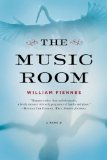
A Memoir
by William Fiennes Book Reviewed by:
The Music Room combines the author's experiences growing up in a castle,
and his memories of his brother who suffered ongoing brain damage
due to epileptic seizures. Interspersed are vignettes relating to the history and science of "the sacred disease" (as epilepsy
was dubbed by the ancient Greeks). Fiennes' prose is both evocative and somewhat
elegiac as he shares his love of both his home and his brother.
Fiennes deftly relates the simple activities of his somewhat rarified childhood
such as learning to ride a bicycle in the Great Hall, the elation of
catching his first pike in the moat, and his onetime fear of a cobwebbed room full of ancient armor. These
passages are great fun and fire the reader's imagination.
He also relates the many ways his parents struggled to support the
property, with strangers frequently traipsing through the house on revenue
raising tours - but even as a child it was clear to him that the tours weren't
just a matter of financial necessity:
The house didn't just belong to us; it was part of the country's heritage, the world's, and our task was to care of it for as long as we were here, and do our best to leave it in good health for future generations. 'We're stewards,' Dad told visitors. He and my mother wanted to look after the house on behalf of everyone who might one day appreciate it, in a month's time or a hundred years.
Some of his more exciting memories are of the weeks when film crews invaded (see the sidebar for a partial list of movies filmed at the house):
We opened a gift shop in the stables and I sold Ian McKellan a postcard; I ran through the arch into the walled Ladies' Garden and saw Jane Seymour in a white Regency gown bend to sniff a rose; … Richard Chamberlain as Prince Charming kneels to fit the twinkling slipper; a stuntman in plumed tricorne hat and breeches leaps off the gatehouse onto a crashpad of cardboard boxes and foam … Oliver Cromwell's warts are Rice Krispies painted brown and glued to his cheek and nose.
Less compelling is the author's description of his relationship with his
brother, Richard. William was eleven years Richard's junior and, as Richard grew older,
and his brain damage became more severe, he had to be institutionalized for increasing periods of time. The sections of The Music Room addressing Richard are more opinions and impressions than
specific events. Also lacking is Fiennes' emotional response to his brother's
illness. Richard could, at times, become quite violent; but Fiennes simply relates the
facts, saying little about his own reactions.
The book's most serious flaw is the author's frequent and inexplicable
shifting of case throughout the narrative, often mid-paragraph. Some readers
will find this technique too distracting to overlook, and because of this I
suggest that you read the excerpt at BookBrowse before investing in the book.
The Music Room lacks the gossipy tone prevalent among so many current
memoirs; it exposes no family scandal or deep emotional scars, and pushes no
political agenda. It is, however, a gentle love-filled memoir which should
appeal to many, especially those with an interest in modern castle life!
 This review was originally published in November 2009, and has been updated for the
September 2010 paperback release.
Click here to go to this issue.
This review was originally published in November 2009, and has been updated for the
September 2010 paperback release.
Click here to go to this issue.
The unnamed location of William Fiennes' memoir is Broughton Castle, a
medieval manor house near the village of Broughton, two miles southwest of
Banbury, in the county of Oxfordshire, England.

The estate is situated at the confluence of three streams, making it an ideal
location for a fortified manor house complete with moat. No one is sure when the
first building was constructed at the site, but parts of the current structure
date to around 1300 CE, when Sir John de Broughton II began developing it.
The property was sold in 1377 to William of Wykeham (Bishop of Winchester;
Chancellor of England; founder of both Winchester College and New College, Oxford).
His descendent, Margaret Wykeham, and her husband, Sir William Fiennes, second
Lord of Saye and Sele (a title his father had earned a few years earlier for
services during Britain's Hundred Years' War against France) inherited Broughton
in 1457.
Five generations later, around 1550, Richard Fiennes, Seventh Baron Saye and
Sele, began expanding the house, transforming it into the elaborate Tudor-style
manor house that makes up much of the current-day property.
 The
oldest part of the house is the dining room and a connecting hallway known as
The Groined Passage (a groin is an architectural term referring to a type of
ceiling design in which arches intersect to form a point - shown left).
Another notable feature is the moat, which is six feet deep and encircles an area of three acres.
The
oldest part of the house is the dining room and a connecting hallway known as
The Groined Passage (a groin is an architectural term referring to a type of
ceiling design in which arches intersect to form a point - shown left).
Another notable feature is the moat, which is six feet deep and encircles an area of three acres.
Other interesting features include Queen Ann's Room, named to commemorate the
1604 visit of King James I's wife, and the King's Chamber, used by both James I
and Edward VII. The formal walled Ladies' Garden on the south side
of the castle was established in the 1880s, although its current fleur-du-leis
design is based on advice provided by American Lanning Roper in 1970.

This review was originally published in November 2009, and has been updated for the
September 2010 paperback release.
Click here to go to this issue.
Your guide toexceptional books
BookBrowse seeks out and recommends the best in contemporary fiction and nonfiction—books that not only engage and entertain but also deepen our understanding of ourselves and the world around us.
