
-
Your next favorite book
is waiting.
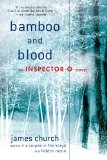
An Inspector O Novel
by James Church Book Reviewed by:
With Inspector O, James Church has crafted the quintessential quiet man trying
his best to do his job within a corrupt and volatile political system while not
allowing its values to reset his own moral compass. The narrative says it all as
O's first person account unveils a man of few words – indeed the dialogue is
spare almost to the point of stark – but with incredibly picturesque and
insightful observations. O is a man of his country; one gets a picture
of a land of lean beauty and unforgiving climate, and of his own personal
history but not of his country's political regime.
As a low-to-mid level officer in North Korea's Ministry of Public Security, O's
job is whatever his superior, or his superior's superior, tells him it is. As
the book opens O is staking out a man, a foreigner of indeterminate national
origin, who is visiting the capital city of Pyongyang. In addition to not
knowing where the man is from nobody seems to have any knowledge of the reason
for his visit. O is simply following orders to keep an eye on him, which he does
to the best of his ability.
Despite sub-freezing temperatures, inadequate clothing for the season,
unpredictable basic services such as heat and electricity and the near
starvation rations of a country in the midst of a famine, O is remarkably
upbeat. Maybe sanguine is a better word. He dispatches his duty as instructed,
all the while taking comfort from stroking the bits of wood that he keeps in his
pocket. He keeps a variety of different types of wood at hand. Their
textures and characters conjure memories of a deceased grandfather whom O loved
and admired. The memories serve to ground him in the old man's wisdom and
principles. They also help insulate O from the chaos of a country in turmoil.
This gives him the freedom to be a pragmatist in a country where people
disappear without a trace or a question and where everyone lives in fear of a
capricious government.
He knows which parts of his job are important to his superiors – for example, he
is expected to file reports on his and the foreigner's activities but O knows
nobody will read them, so he cuts corners to make his life more bearable.
Additionally, he asks few questions, resignedly accepting the fact that even
those will fail to elicit satisfactory responses. So after he loses track of the
foreigner and is given another assignment (to investigate the murder of a young
woman but not to get too involved) and ends up being sent to New York with no
explanation, he keeps his own counsel, simply trying to steer clear of trouble.
And yet the woman, her diplomat husband and the strange foreigner intrigue O. He
suspects the three are related somehow, especially after the foreigner returns
and O must accompany him to visit a remote military post that may or may not
(nothing is certain in this totalitarian country) be involved in building
missiles.
Then, in the ultimate of unrelated job assignments, O is sent to Geneva,
Switzerland to represent he knows not whom in negotiations for he knows not what
between several countries. He is given one terse message and instructed to
deliver it at an appropriate time, a time of his choosing which, of course, he
will be held accountable for. Is he there for missiles? For food? For another
reason, unrelated to either?
This is where Church's narrative style peaks. His ability to portray what very well may be the environment in which many so-called international liaisons – whether representing or meeting with representatives of totalitarian countries - must function becomes visceral. There are no clear rules. There is no certainty about whom one can trust. Through O the author shows us that the ground of international relations can have all the stability of the shifting floor of a carnival funhouse – mirrors and all. As a former Western intelligence officer in Asia, the pseudonymous Church ought to know of what he speaks, and as a writer he speaks it masterfully.
 This review was originally published in January 2009, and has been updated for the
February 2010 paperback release.
Click here to go to this issue.
This review was originally published in January 2009, and has been updated for the
February 2010 paperback release.
Click here to go to this issue.
North Korea
James Church paints a grim picture of what life is like and how a government
agency functions within North Korea. It is a picture in bold contrast to the one
portrayed by the official
website of
the Democratic People's Republic of Korea (DPR). The ideals, as stated by Kim
Il-Sung, predecessor to current leader Kim Jong Il, are that, "the superior
organism always help [sic] the inferior one. The superior always assist [sic]
the subordinates and he goes always to the working areas to understand the real
situation and take [sic] the correct measures to solve the problems; he gives
preference to the political work, to the people's work in all the activities,
and improves the enthusiasm and the creative initiative of the masses to
accomplish the revolutionary tasks." One would be hard pressed to recognize
these principles in either the accounts of the fictional Inspector O or in the
picture of North Korea obtained through current media reports.
The
CIA World Factbook describes a country that is in a state of severe social and economic decline. The unembellished facts, compared to, say, neighboring South Korea, tell a story that would be disturbing to most Western sensibilities. For one, theirs is a judicial system
based on the Prussian Civil Code. According to the
Encyclopedia Britannica, under this system, among other things, political
dissent is severely punished and censorship is strictly enforced. It is perhaps
telling that whereas the CIA Factbook lists political pressure groups in most
countries, there are no entries for such groups in North Korea.
The function of the police in a totalitarian state* such as North Korea is
interesting as well. As explained by the Encyclopedia Britannica, "Police
operations within a totalitarian state often appear similar to those within a
police state, but one important difference distinguishes them. In a police state
the police operate according to known, consistent procedures. In a totalitarian
state the police operate without the constraints of laws and regulations. Their
actions are unpredictable and directed by the whim of their rulers." Inspector O
might be inclined to agree.
Sadly, what is clear is that in the 60 years since the splitting of Korea into the Democratic People's Republic of Korea and South Korea (each with diametrically opposed political, economic, and social systems), South Korea has developed into one of the richest countries in Asia, with a fully functioning democracy; whereas the DPR suffers from an extremely weak economy, with millions of people barely subsisting in famine conditions, unreliable to nonexistent basic services and a leader who seems indifferent to his country's plight. A sad state of affairs for a country that has a rich cultural history dating back thousands of years.
Totalitarianism* is a concept used to describe a single-party political system where the state regulates almost every aspect of life, both public and private. Power is maintained by means of an official all-embracing ideology and propaganda disseminated through the state-controlled mass media; backed up by severe restrictions on trade, free speech and so on; with mass surveillance and widespread use of terror tactics used to keep people in check.
This review was originally published in January 2009, and has been updated for the
February 2010 paperback release.
Click here to go to this issue.
Your guide toexceptional books
BookBrowse seeks out and recommends the best in contemporary fiction and nonfiction—books that not only engage and entertain but also deepen our understanding of ourselves and the world around us.
