
-
Your next favorite book
is waiting.
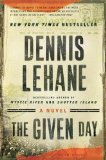
A Novel
by Dennis Lehane Book Reviewed by:
If you think that a fictional account of the 1919 Boston Police strike
wouldn't hold your interest, you'd be wrong. Dennis Lehane, best known for his
mysteries set in contemporary Boston, draws comparisons to E.L. Doctorow's
classic
Ragtime with his historical novel, The Given Day.
Both books combine the stories of fictional characters with actual people
who lived at the time, with anarchist Emma Goldman making an appearance in both.
The themes of family, loyalty, greed, class, race, secrets and power, and how
they affect people and their relationships, combine to make this an
unforgettable novel.
Baseball fans will be drawn in immediately as the story starts off with
Babe Ruth,
playing at that time for the Boston Red Sox. Ruth stumbles upon a baseball game
being played by young black men in Ohio, and asks to join the game. He is in awe
of their talent, and when men who love the purity of the sport play the game, it
is beautiful. Lehane's description of this game of baseball accurately depicts
why Americans love it so.
Racism rears its head when the rest of the Red Sox players want to join the
game. When the black players' superior skills are apparent, the white players
pull their rank as the ruling class, and the illusion that the game is being
played by equals is over.
This incident sets the tone for the rest of the novel. While Babe Ruth is
portrayed as not very intelligent, he understands one important thing: it's all
about money. "The world made his head hurt - Bolsheviks overthrowing the czar,
the Kaiser running roughshod over Europe, anarchists tossing bombs in the
streets of this very country, blowing up parades and mailboxes. People were
angry, people were shouting, people were dying in trenches and marching outside
factories. And it all had something to do with money".
Cynics may say that it has always been, and always will be, this way. Money
rules all, and those who have it will do anything to keep it, and if that means
lying, stealing and killing, then that is what they will do.
Lehane captures the essence of his characters in just a few sentences. When
Luther meets Isaiah Giddreaux, a compatriot of
W.E.B. Du
Bois, he says Isaiah has "the eyes of a lamb lying down in the last spot of
sun on a summer evening. Or those of a lion, waiting for the lamb to get
sleepy". Immediately the reader knows not to underestimate Giddreaux.
This is a period in American history that many people have forgotten, but the
author brings it vividly back to life. Anarchists, both homegrown and European,
and Bolsheviks, disciples of the recent Russian revolution, wanted to upend
American society through violent means if necessary, creating an atmosphere of
terror.
Lehane clearly wishes the reader to compare the fear that Americans felt after
9/11 to the fear that Americans in big cities like Chicago, Boston and New York
felt at this time. A diner owner who sells frankfurters changes the name on the
menu to "Liberty Sausages" because of the war against Germany (Freedom Fries,
anyone?). In interviews about the book, Lehane calls
Luigi Galleani, an Italian
anarchist who urged his followers to create 'urban terrorism', the "Osama Bin
Laden of his time."
A good book leaves the reader wanting more, and although this book is 700
pages, I still wanted more. The references to historical events, such as the
industrial explosion that sent cascades of molasses through the streets of
Boston, the bombing of the United States Attorney General's home, and the
climactic strike by the Boston police and the chaos that ensued, sent me on an
Internet search for more information.
The author takes fascinating historical events and places his intriguing
characters smack in the middle of them. The real characters of Massachusetts
governor
Calvin Coolidge, who used the police strike to launch his national
political career, Babe Ruth and a young federal attorney named
John E. Hoover,
add to the realism of the novel.
Lehane clearly believes that class warfare has always been with us. Danny
Coughlin says, "In the war, they died by the millions. For nothing but real
estate. And now, in the streets of the world, the same battle continued. Today,
Boston. Tomorrow, someplace else. The poor fighting the poor. As they'd always
done. As they were encouraged to. And it would never change. He finally realized
that. It would never change." Could the same be said of the world today?
The characters are memorable, and their motives realistic. Lehane gives them interesting moral dilemmas in which good people sometimes choose to
do bad things for complex reasons. Luther has to decide whether to betray his
benefactors, whom he respects and loves, in order to save his wife. Danny has to
lie to people to get a promotion he wants and deserves. The family that runaway
Luther Lawrence, police officer Danny Coughlin and Irish immigrant Nora form is
in many ways more authentic than the Coughlin family to whom Danny was born.
This is a big, important work of literary fiction, and it is incredibly well
done. There is much that is thought-provoking, and Lehane makes his views
on class warfare known. The author weaves his fictional characters, real people
and events into a story that captures the reader's attention from the onset and
never lets up. It is perhaps the best American novel I have read this year.
 This review was originally published in November 2008, and has been updated for the
September 2009 paperback release.
Click here to go to this issue.
This review was originally published in November 2008, and has been updated for the
September 2009 paperback release.
Click here to go to this issue.
Prohibition was about to become the law of the land in 1919, and the Purity
Distilling Company wanted to make a last batch before their product became
illegal. They had a huge tank situated in the North End of Boston, which was
densely populated with Italian immigrants.
The company poured warm molasses into the tank on top of a half full tank of
cold molasses. The chemical reaction formed by this caused gaseous vapors which
reacted with the weakened walls of the tank, and an explosion occurred.
Witnesses described a tidal wave of over two million gallons of molasses that
cascaded into the streets of the North End at an estimated 35 mph. An elevated
train bridge and a firehouse were destroyed. Twenty-one people died, over 150
people were injured.
 The odor of molasses lingered in the neighborhood for years, and some people
claim that on a hot day, the smell is still there. The Purity Distilling Company
blamed Italian anarchists, whom they said blew up the tower.
The odor of molasses lingered in the neighborhood for years, and some people
claim that on a hot day, the smell is still there. The Purity Distilling Company
blamed Italian anarchists, whom they said blew up the tower.
This disaster spawned several long-reaching consequences. One is that the people
in the poor immigrant neighborhood of North End sued United States Industrial
Alcohol Company for negligence. The resulting class action lawsuit, one of the
first in Massachusetts, lasted six years and called over 3000 witnesses.
The plaintiffs won a settlement of $650,000 - the amount, considered enormous at
the time, led to stricter safety regulations at a time when
business had little regulation from the government. The city of Boston required
architects and engineers to draft drawings and sign off on them. This regulation
soon became common practice across the country.
The incident also led to Italian immigrants
becoming more politically active. Up to this point, the residents of the North
End were most concerned with daily survival. After this incident, they became
more involved and better informed citizens.
This review was originally published in November 2008, and has been updated for the
September 2009 paperback release.
Click here to go to this issue.
Your guide toexceptional books
BookBrowse seeks out and recommends the best in contemporary fiction and nonfiction—books that not only engage and entertain but also deepen our understanding of ourselves and the world around us.
