
-
Your next favorite book
is waiting.
Summary | Excerpt | Reviews | Beyond the Book | Readalikes | Genres & Themes | Author Bio
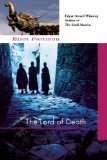
 Book Reviewed by:
Chapter One
No one ever died on Mount Chomolungma, the sherpas
always told Shan Tao Yun when he was sent to retrieve a body. A
man might freeze so hard his fingers would snap like kindling, his
bones might be shattered in a thousand-foot fall, but the mother
goddess mountain - Everest to Westerners - captured their spirits,
keeping them alive and within her grip for her own purpose.
They weren’t exactly alive, but they weren’t dead in the traditional
sense, an old sherpa had warned him, as if Shan should expect the
corpse he conveyed to be summoned back up the mountain at any
time. More than one of Shan’s new friends in the climbing camps
insisted that in the winds blowing from the summit they sometimes
heard the voices of those who had died years earlier. Shan
glanced at the snow-capped peak as he soberly tightened the rope
fastening his canvas-wrapped burden to the pack mule, lightly
resting his hand for a moment on the roundness that was the dead
man’s shoulder. This one had been a friend. If Shan heard the
voice of Tenzin Nuru on the wind he would recognize it.
He had taken several steps down the trail when the lead rope
jerked him backward. The old mule, his steady companion on
such treks, refused to move. Shan studied the high, windblown
landscape warily, trusting completely in the animal’s instincts. The
Tibetans always gave him the same mule, a graceful long-legged
creature, whose bright intelligent eyes followed Shan attentively
as he recited ancient Chinese poems during their descents with
the dead. Its ears were back now, its head cocked.
He heard the sound of hooves on the loose gravel a moment
before a small horse, saddled but riderless, burst over the low rise
ahead of them. Rock and roll music blared from a battered tape
player suspended on a string from the pommel; an old bolt action
rifle dragged in the dirt, hanging on a broken strap. Shan’s heart
sank, then he leapt for the reins to stop the horse and grabbed the
gun, deftly popping out the magazine and tossing it into the rocks.
He glanced quickly about for a side trail to flee down. Then,
finding none, tossed his coat over his cargo, calmed the horse by
stroking its neck, and shut off the music.
A moment later a man in a tattered gray uniform trotted over
the rise, panting, spitting a quick curse as he recognized Shan. He
paused and straightened his tunic, awkwardly accepted the rifle
from Shan, then turned the weapon around and aimed it at Shan.
"In the name of the People’s Republic I arrest you," the man said
in a weary voice.
Shan stroked the horse’s neck. "On what charges today,
Constable Jin?"
The constable, a Tibetan in his mid-thirties who had assumed
a Chinese name when he’d put on the Chinese uniform, eyed the
mule’s cargo uncertainly. "Murder?" he offered in a hopeful tone.
Jin Bodai did not work for the dreaded Public Security Bureau but
for the county, as a law enforcement functionary whose main job
consisted of checking on permits and writing up traffic violations.
Shan watched patiently as Jin tucked his carbine under one
arm then untied the outer rope on the mule’s bundle, exposing
Tenzin’s head. The constable lifted the head by the hair, bent
closer to study it, then dropped it, and looked back at Shan with
a quizzical expression.
"Any doctor," Shan explained in a steady voice, "even those in
Tingri county, would tell you this man died at least two days ago.
A dozen people could testify I was with them two days ago, in
town, working at the warehouse."
Jin, more peeved than ever, jabbed the gun toward Shan again.
"Still," he ventured, "a man without his papers, an illegal carrying
a corpse. It would be enough to get me off this damned mountain
at least."
"You lost your ammunition, Constable." Hardly a week went
by when the two of them did not spar, but more than once Shan
had rescued Jin by preparing paperwork needed for China’s vast
law enforcement bureaucracy.
Excerpted from The Lord of Death by Eliot Pattison Copyright © 2009 by Eliot Pattison. Excerpted by permission of Soho Press. All rights reserved. No part of this excerpt may be reproduced or reprinted without permission in writing from the publisher.





The only real blind person at Christmas-time is he who has not Christmas in his heart.
Click Here to find out who said this, as well as discovering other famous literary quotes!

Can you name the title?
Test your book knowledge with our daily trivia challenge!
Your guide toexceptional books
BookBrowse seeks out and recommends the best in contemporary fiction and nonfiction—books that not only engage and entertain but also deepen our understanding of ourselves and the world around us.

