
-
Your next favorite book
is waiting.
Summary | Excerpt | Reviews | Beyond the Book | Readalikes | Genres & Themes | Author Bio
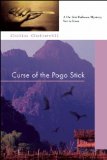
 Book Reviewed by:
Prologue
As there were no longer any records, the Hmong could
not even tell when they actually misplaced their history.
The event had deleted itself. But the oral legend that was
passed on unreliably like a whisper from China would
have them believe the following:
The elders of the Hmong tribes had gathered to lead
the great exodus. For countless centuries, their people
had been victimized by the mandarins. With no more will
to fight, the time had come to flee. Traditional nomads,
the Hmong had few valuable possessions to carry. They
would lead their animals and build new homes when
they reached the promised lands to the south. But there
was one artifact that belonged to all the Hmong. It was
the sacred scroll that contained their written language,
legends, and myths of ancestors in a sunless, ice-covered
land, and, most importantly, the map of how to reach
their nirvana: the Land of the Dead in the Otherworld.
With great ceremony, the scroll was removed from its
hiding place, wrapped in goat hide, and given the position
of honor at the head of the caravan. The Hmong
walked for a hundred days and a hundred nights and
on the hundred and first night they were lashed by a
monsoon that drenched them all before they could find
shelter. Cold and wet, they sat shivering in a cave until the
sun rose. The keeper of the scroll was distraught to discover
that the rain had soaked through the goat hide and
dampened the sacred document. Chanting the appropriate
mantras, they unrolled the text and laid it on the
grass to dry beneath the hot morning sun. And the followers,
exhausted from their sleepless night, found shade
under the trees and fell into a deep sleep.
While they slumbered, a herd of cattle found its way
up to the mountain pass and discovered both the sleeping
Hmong and the hemp scroll inscribed with vegetable
dyes. And, starved of new culinary experiences, they set
about eating this delicious breakfast with vigor. The
Hmong awoke to find their sacred scroll chewed to
pieces. They chased off the cattle and collected the surviving
segments. These they entrusted to a shaman who
stayed awake with them and kept them safe and dry for
the next hundred days and hundred nights. But on the
hundred and first day, the clouds finally parted and the
sun shone and the Hmong found themselves in a
deserted village. Not one to ignore the lessons of experience,
the shaman laid out the segments in the loft of
the longhouse. Certain the remnants of the scroll
wouldn’t be attacked by cattle or goats or birds there, he
finally joined his brothers and sisters in a well-earned
sleep. But he hadn’t taken the rats into account. Halfstarved
and desperate, the rats set about the hemp and
devoured it in a frenzy. Unsated, but with the memory of
food now implanted in their minds, they then turned
upon one another. When the Hmong finally climbed
into the loft, all they found were several ratty corpses and
a few unreadable shreds of their culture. This, according
to the legend, was how the Hmong lost their history and
their written language.
The spirit of the first-ever Hmong shaman, See Yee,
looked up from the Otherworld and was mightily pissed
that his people could be so careless. He stewed over this
for a lifetime or two before he could find it in his heart
to forgive them. But he didn’t send them a new scroll or
a new script, for that really would have been tempting
fate. Instead, he taught six earthly brothers how to play
six music pipes of different lengths. By playing together,
this sextet found they were able to guide the dead to the
Otherworld without the map. But, as they got older and
found themselves with more personal commitments, it
wasn’t always easy to get them together to perform. So
See Yee taught mankind how to put the six pipes together
and play them with six fingers as one instrument. Thus,
the kwee was born.
Excerpted from The Curse of the Pogo Stick by Colin Cotterill Copyright © 2008 by Colin Cotterill . Excerpted by permission of Random House, a division of Random House, Inc. All rights reserved. No part of this excerpt may be reproduced or reprinted without permission in writing from the publisher.




Finishing second in the Olympics gets you silver. Finishing second in politics gets you oblivion.
Click Here to find out who said this, as well as discovering other famous literary quotes!

Can you name the title?
Test your book knowledge with our daily trivia challenge!
Your guide toexceptional books
BookBrowse seeks out and recommends the best in contemporary fiction and nonfiction—books that not only engage and entertain but also deepen our understanding of ourselves and the world around us.

