
-
Your next favorite book
is waiting.
Summary | Excerpt | Reading Guide | Reviews | Beyond the Book | Readalikes | Genres & Themes | Author Bio
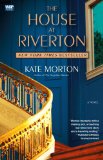
A Novel
by Kate Morton Book Reviewed by:
GHOSTS STIR
Last November I had a nightmare.
It was 1924 and I was at Riverton again. All the doors hung wide open, silk billowing in the summer breeze. An orchestra perched high on the hill beneath the ancient maple, violins lilting lazily in the warmth. The air rang with pealing laughter and crystal, and the sky was the kind of blue we'd all thought the war had destroyed forever. One of the footmen, smart in black and white, poured champagne into the top of a tower of glass flutes and everyone clapped, delighting in the splendid wastage.
I saw myself, the way one does in dreams, moving amongst the guests. Moving slowly, much more slowly than one can in life, the others a blur of silk and sequins.
I was looking for someone.
Then the picture changed and I was near the summer house, only it wasn't the summer house at Riverton -- it couldn't have been. This was not the shiny new building Teddy had designed, but an old structure with ivy climbing the walls, twisting itself through the windows, strangling the pillars.
Someone was calling me. A woman, a voice I recognized, coming from behind the building, on the lake's edge. I walked down the slope, my hands brushing against the tallest reeds. A figure crouched on the bank.
It was Hannah, in her wedding dress, mud splattered across the front, clinging to the appliquéd roses. She looked up at me, her face pale where it emerged from shadow. Her voice chilled my blood. "You're too late." She pointed at my hands. "You're too late."
I looked down at my hands, young hands, covered in dark river mud, and in them the stiff, cold body of a dead foxhound.
I know what brought it on, of course. It was the letter from the filmmaker. I don't receive much mail these days: the occasional postcard from a dutiful, holidaying friend; a perfunctory letter from the bank where I keep a savings account; an invitation to the christening of a child whose parents I am shocked to realize are no longer children themselves.
Ursula's letter had arrived on a Tuesday morning late in November and Sylvia had brought it with her when she came to make my bed. She'd raised heavily sketched eyebrows and waved the envelope.
"Mail today. Something from the States by the look of the stamp. Your grandson, perhaps?" The left brow arched -- a question mark -- and her voice lowered to a husky whisper. "Terrible business, that. Just terrible. And him such a nice young man."
As Sylvia tut-tutted, I thanked her for the letter. I like Sylvia. She's one of the few people able to look beyond the lines on my face to see the twenty-year-old who lives inside. Nonetheless, I refuse to be drawn into conversation about Marcus.
I asked her to open the curtains and she pursed her lips a moment before moving on to another of her favorite subjects: the weather, the likelihood of snow for Christmas, the havoc it would wreak on the arthritic residents. I responded when required, but my mind was on the envelope in my lap, wondering at the scratchy penmanship, the foreign stamps, softened edges that spoke of lengthy travails.
"Here, why don't I read that for you," Sylvia said, giving the pillows a final, hopeful plump. "Give your eyes a bit of a rest?"
"No. Thank you. Perhaps you could pass my glasses, though?"
When she'd left, promising to come back and help me dress after she'd finished her rounds, I prised the letter from its envelope, hands shaking the way they do, wondering whether he was finally coming home.
But it wasn't from Marcus at all. It was from a young woman making a film about the past. She wanted me to look at her sets, to remember things and places from long ago. As if I hadn't spent a lifetime pretending to forget.
I ignored that letter. I folded it carefully and quietly, slid it inside a book I'd long ago given up reading. And then I exhaled. It was not the first time I had been reminded of what happened at Riverton, to Robbie and the Hartford sisters. Once I saw the tail end of a documentary on television, something Ruth was watching about war poets. When Robbie's face filled the screen, his name printed across the bottom in an unassuming font, my skin prickled. But nothing happened. Ruth didn't flinch, the narrator continued, and I went on drying the dinner plates.

Copyright © 2006 by Kate Morton.




The only completely consistent people are the dead
Click Here to find out who said this, as well as discovering other famous literary quotes!

Can you name the title?
Test your book knowledge with our daily trivia challenge!
Your guide toexceptional books
BookBrowse seeks out and recommends the best in contemporary fiction and nonfiction—books that not only engage and entertain but also deepen our understanding of ourselves and the world around us.
