Summary | Excerpt | Reading Guide | Reviews | Beyond the Book | Readalikes | Genres & Themes | Author Bio
Critics' Opinion:
Readers' Opinion:
First Published:
Feb 2007, 240 pages
Paperback:
Aug 2008, 240 pages
 Book Reviewed by:
BookBrowse Review Team
Buy This Book

Chapter One
There were all kinds of stories told about the war that made it sound as if
it was happening in a faraway and different land. It wasn’t until refugees
started passing through our town that we began to see that it was actually
taking place in our country. Families who had walked hundreds of miles told how
relatives had been killed and their houses burned. Some people felt sorry for
them and offered them places to stay, but most of the refugees refused, because
they said the war would eventually reach our town. The children of these
families wouldn’t look at us, and they jumped at the sound of chopping wood or
as stones landed on the tin roofs flung by children hunting birds with
slingshots. The adults among these children from the war zones would be lost in
their thoughts during conversations with the elders of my town. Apart from their
fatigue and malnourishment, it was evident they had seen something that plagued
their minds, something that we would refuse to accept if they told us all of it.
At times I thought that some of the stories the passersby told were exaggerated.
The only wars I knew of were those that I had read about in books or seen in
movies such as Rambo: First Blood, and the one in neighboring Liberia that I had
heard about on the BBC news. My imagination at ten years old didn’t have the
capacity to grasp what had taken away the happiness of the refugees.
The first time that I was touched by war I was twelve. It was in January of
1993. I left home with Junior, my older brother, and our friend Talloi, both a
year older than I, to go to the town of Mattru Jong, to participate in our
friends’ talent show. Mohamed, my best friend, couldn’t come because he and his
father were renovating their thatched-roof kitchen that day. The four of us had
started a rap and dance group when I was eight. We were first introduced to rap
music during one of our visits to Mobimbi, a quarter where the foreigners who
worked for the same American company as my father lived. We often went to
Mobimbi to swim in a pool and watch the huge color television and the white
people who crowded the visitors’ recreational area. One evening a music video
that consisted of a bunch of young black fellows talking really fast came on the
television. The four of us sat there mesmerized by the song, trying to
understand what the black fellows were saying. At the end of the video, some
letters came up at the bottom of the screen. They read “Sugarhill Gang,
‘Rapper’s Delight.’” Junior quickly wrote it down on a piece of paper. After
that, we came to the quarters every other weekend to study that kind of music on
television. We didn’t know what it was called then, but I was impressed with the
fact that the black fellows knew how to speak English really fast, and to the
beat.
Later on, when Junior went to secondary school, he befriended some boys who
taught him more about foreign music and dance. During holidays, he brought me
cassettes and taught my friends and me how to dance to what we came to know as
hip-hop. I loved the dance, and particularly enjoyed learning the lyrics,
because they were poetic and it improved my vocabulary. One afternoon, Father
came home while Junior, Mohamed, Talloi, and I were learning the verse of “I
Know You Got Soul” by Eric B. & Rakim. He stood by the door of our clay brick
and tin roof house laughing and then asked, “Can you even understand what you
are saying?” He left before Junior could answer. He sat in a hammock under the
shade of the mango, guava, and orange trees and tuned his radio to the BBC news.
“Now, this is good English, the kind that you should be listening to,” he
shouted from the yard.
While Father listened to the news, Junior taught us how to move our feet to
the beat. We alternately moved our right and then our left feet to the front and
back, and simultaneously did the same with our arms, shaking our upper bodies
and heads. “This move is called the running man,” Junior said. Afterward, we
would practice miming the rap songs we had memorized. Before we parted to carry
out our various evening chores of fetching water and cleaning lamps, we would
say “Peace, son” or “I’m out,” phrases we had picked up from the rap lyrics.
Outside, the evening music of birds and crickets would commence.
Excerpted from A Long Way Gone: Memoirs of a Boy Soldier by Ishmael Beah. Copyright © 2007 by Ishmael Beah. Published in February 2007 by Sarah Crichton Books, a division of Farrar, Straus and Giroux, LLC. All rights reserved.


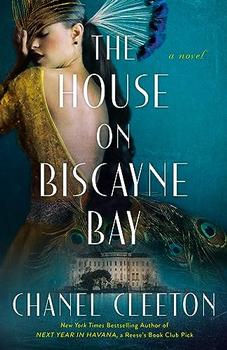
The House on Biscayne Bay
by Chanel Cleeton
As death stalks a gothic mansion in Miami, the lives of two women intertwine as the past and present collide.
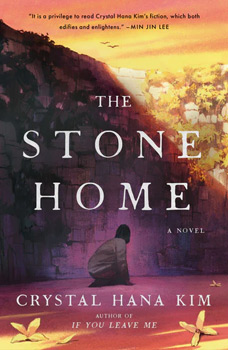
The Stone Home
by Crystal Hana Kim
A moving family drama and coming-of-age story revealing a dark corner of South Korean history.
The low brow and the high brow
Click Here to find out who said this, as well as discovering other famous literary quotes!
Your guide toexceptional books
BookBrowse seeks out and recommends the best in contemporary fiction and nonfiction—books that not only engage and entertain but also deepen our understanding of ourselves and the world around us.