Summary | Excerpt | Reading Guide | Reviews | Beyond the Book | Readalikes | Genres & Themes | Author Bio
Critics' Opinion:
Readers' Opinion:
First Published:
Apr 2006, 288 pages
Paperback:
Mar 2007, 224 pages
 Book Reviewed by:
BookBrowse Review Team
Buy This Book

Introduction
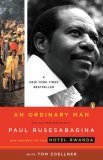
My name is Paul Rusesabagina. I am a hotel manager. In April
1994, when a wave of mass murder broke out in my country, I was able to hide
1,268 people inside the hotel where I worked.
When the militia and the Army came with orders to kill my
guests, I took them into my office, treated them like friends, offered them beer
and cognac, and then persuaded them to neglect their task that day. And when
they came back, I poured more drinks and kept telling them they should leave in
peace once again. It went on like this for seventy-six days. I was not
particularly eloquent in these conversations. They were no different from the
words I would have used in saner times to order a shipment of pillowcases, for
example, or tell the shuttle van driver to pick up a guest at the airport. I
still don’t understand why those men in the militias didn’t just put a bullet in
my head and execute every last person in the rooms upstairs but they didn’t.
None of the refugees in my hotel were killed. Nobody was beaten. Nobody was
taken away and made to disappear. People were being hacked to death with
machetes all over Rwanda, but that five-story building became a refuge for
anyone who could make it to our doors. The hotel could offer only an illusion of
safety, but for whatever reason, the illusion prevailed and I survived to tell
the story, along with those I sheltered. There was nothing particularly heroic
about it. My only pride in the matter is that I stayed at my post and continued
to do my job as manager when all other aspects of decent life vanished. I kept
the Hotel Mille Collines open, even as the nation descended into chaos and eight
hundred thousand people were butchered by their friends, neighbors, and
countrymen.
It happened because of racial hatred. Most of the people
hiding in my hotel were Tutsis, descendants of what had once been the ruling
class of Rwanda. The people who wanted to kill them were mostly Hutus, who were
traditionally farmers. The usual stereotype is that Tutsis are tall and thin
with delicate noses, and Hutus are short and stocky with wider noses, but most
people in Rwanda fit neither description. This divide is mostly artificial, a
leftover from history, but people take it very seriously, and the two groups
have been living uneasily alongside each other for more than five hundred years.
You might say the divide also lives inside me. I am the son
of a Hutu farmer and his Tutsi wife. My family cared not the least bit about
this when I was growing up, but since bloodlines are passed through the father
in Rwanda, I am technically a Hutu. I married a Tutsi woman, whom I love with a
fierce passion, and we had a child of mixed descent together. This type of
blended family is typical in Rwanda, even with our long history of racial
prejudice. Very often we can’t tell each other apart just by looking at one
another. But the difference between Hutu and Tutsi means everything in Rwanda.
In the late spring and early summer of 1994 it meant the difference between life
and death.
Between April 6, when the plane of President Juvenal
Habyarimana was shot down with a missile, and July 4, when the Tutsi rebel army
captured the capital of Kigali, approximately eight hundred thousand Rwandans
were slaughtered. This is a number that cannot be grasped with the rational
mind. It is like trying—all at once—to understand that the earth is surrounded
by billions of balls of gas just like our sun across a vast blackness. You
cannot understand the magnitude. Just try! Eight hundred thousand lives snuffed
out in one hundred days. That’s eight thousand lives a day. More than five lives
per minute. Each one of those lives was like a little world in itself.
Some person who laughed and cried and ate and thought and felt and hurt just
like any other person, just like you and me. A mother’s child, every one
irreplaceable.
Copyright Paul Rusesabagina 2006. All rights reserved. No part of this book maybe reproduced without written permission from the publisher, Viking Press.



The Stone Home
by Crystal Hana Kim
A moving family drama and coming-of-age story revealing a dark corner of South Korean history.
The Flower Sisters
by Michelle Collins Anderson
From the new Fannie Flagg of the Ozarks, a richly-woven story of family, forgiveness, and reinvention.

The Funeral Cryer by Wenyan Lu
Debut novelist Wenyan Lu brings us this witty yet profound story about one woman's midlife reawakening in contemporary rural China.
Your guide toexceptional books
BookBrowse seeks out and recommends the best in contemporary fiction and nonfiction—books that not only engage and entertain but also deepen our understanding of ourselves and the world around us.