Summary | Excerpt | Reading Guide | Reviews | Readalikes | Genres & Themes | Author Bio

Critics' Opinion:
Readers' Opinion:
First Published:
Dec 2003, 416 pages
Paperback:
Mar 2005, 432 pages

Chapter One
June 21, 1895
Bombay, India
"Please tell me that's not going to be part of my birthday dinner this evening."
I am staring into the hissing face of a cobra. A surprisingly pink tongue slithers in and out of a cruel mouth while an Indian man whose eyes are the blue of blindness inclines his head toward my mother and explains in Hindi that cobras make very good eating.
My mother reaches out a white-gloved finger to stroke the snake's back. "What do you think, Gemma? Now that you're sixteen, will you be dining on cobra?"
The slithery thing makes me shudder. "I think not, thank you."
The old, blind Indian man smiles toothlessly and brings the cobra closer. It's enough to send me reeling back where I bump into a wooden stand filled with little statues of Indian deities. One of the statues, a woman who is all arms with a face bent on terror, falls to the ground. Kali, the destroyer. Lately, Mother has accused me of keeping her as my unofficial patron saint. Lately, Mother and I haven't been getting on very well. She claims it's because I've reached an impossible age. I state emphatically to anyone who will listen that it's all because she refuses to take me to London.
"I hear in London, you don't have to defang your meals first," I say. We're moving past the cobra man and into the throng of people crowding every inch of Bombay's frenzied marketplace. Mother doesn't answer but waves away an organ-grinder and his monkey. It's unbearably hot. Beneath my cotton dress and crinolines, sweat streaks down my body. The flies--my most ardent admirers--dart about my face. I swat at one of the little winged beasts, but it escapes and I can almost swear I hear it mocking me. My misery is reaching epidemic proportions.
Overhead, the clouds are thick and dark, giving warning that this is monsoon season, when floods of rain could fall from the sky in a matter of minutes. In the dusty bazaar the turbaned men chatter and squawk and bargain, lifting brightly colored silks toward us with brown, sunbaked hands. Everywhere there are carts lined with straw baskets offering every sort of ware and edible-thin, coppery vases; wooden boxes carved into intricate flower designs; and mangos ripening in the heat.
"How much farther to Mrs. Talbot's new house? Couldn't we please take a carriage?" I ask with what I hope is a noticeable annoyance.
"It's a nice day for a walk. And I'll thank you to keep a civil tone."
My annoyance has indeed been noted.
Sarita, our long-suffering housekeeper, offers pomegranates in her leathery hand. "Memsahib, these are very nice. Perhaps we will take them to your father, yes?"
If I were a good daughter, I'd bring some to my father, watch his blue eyes twinkle as he slices open the rich, red fruit, then eats the tiny seeds with a silver spoon just like a proper British gentleman.
"He'll only stain his white suit," I grumble. My mother starts to say something to me, thinks better of it, sighs--as usual. We used to go everywhere together, my mother and I--visiting ancient temples, exploring local customs, watching Hindu festivals, staying up late to see the streets bloom with candlelight. Now, she barely takes me on social calls. It's as if I'm a leper without a colony.
"He will stain his suit. He always does," I mumble in my defense, though no one is paying me a bit of attention except for the organ-grinder and his monkey. They're following my every step, hoping to amuse me for money. The high lace collar of my dress is soaked with perspiration. I long for the cool, lush green of England, which I've only read about in my grandmother's letters. Letters filled with gossip about tea dances and balls and who has scandalized whom half a world away, while I am stranded in boring, dusty India watching an organ-grinder's monkey do a juggling trick with dates, the same trick he's been performing for a year.
Excerpted from A Great and Terrible Beauty by Libba Bray Copyright© 2004 by Libba Bray. Excerpted by permission of Delacorte Books for Young Readers, a division of Random House, Inc. All rights reserved. No part of this excerpt may be reproduced or reprinted without permission in writing from the publisher.




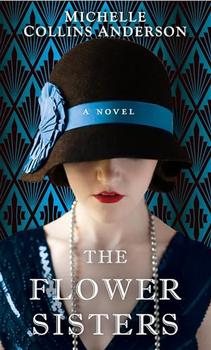
The Flower Sisters
by Michelle Collins Anderson
From the new Fannie Flagg of the Ozarks, a richly-woven story of family, forgiveness, and reinvention.

The House on Biscayne Bay
by Chanel Cleeton
As death stalks a gothic mansion in Miami, the lives of two women intertwine as the past and present collide.

The Funeral Cryer by Wenyan Lu
Debut novelist Wenyan Lu brings us this witty yet profound story about one woman's midlife reawakening in contemporary rural China.
Your guide toexceptional books
BookBrowse seeks out and recommends the best in contemporary fiction and nonfiction—books that not only engage and entertain but also deepen our understanding of ourselves and the world around us.