Summary | Excerpt | Reviews | Readalikes | Genres & Themes | Author Bio
Critics' Opinion:
Readers' Opinion:
First Published:
Jan 2002, 352 pages
Paperback:
Feb 2003, 496 pages

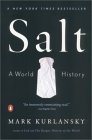
Throughout the long history of China, sprinkling salt directly on food has been a rarity. Usually it has been added during cooking by means of various condiments—salt-based sauces and pastes. The usual explanation is that salt was expensive and it was stretched by these condiments. A recurring idea throughout the ancient world from the Mediterranean to Southeast Asia, fish fermented in salt was one of the most popular salt condiments in ancient China. It was called jiang. But in China soybeans were added to ferment with the fish, and in time the fish was dropped altogether from the recipe and jiang became jiangyou, or, as it is called in the West, soy sauce.
Soy is a legume that produces beans, two or three in a two-inch- long furry pod. The beans can be yellow, green, brown, purple, black, or spotted, and Chinese cooking makes a great distinction among these varieties. Jiangyou is made from yellow beans, but other types are also fermented with salt to produce different pastes and condiments.
In China, the earliest written mention of soy is in the sixth century b.c., describing the plant as a 700-year-old crop from the north. Soy was brought to Japan from China in the sixth century a.d. by Chinese Buddhist missionaries. Both the religion and the bean were successfully implanted. But the Japanese did not make soy sauce until the tenth century. Once they did learn, they called it shoyu and industrialized it and sold it around the world.
Though jiangyou and shoyu are pronounced very differently and appear to be very different words in Western writing, the two words are written with the same character in Japanese and Chinese. Mao’s 1950s literacy campaign simplified the language to some 40,000 characters, but a pre-Mao character for the soy plant, su, depicts little roots at the bottom which revive the soil.
Soy puts nutrients back into the soil and can restore fields that have been exhausted by other crops. The bean is so nutritious that a person could be sustained for a considerable period on nothing but water, soy, and salt.
The process by which the Chinese, and later the Japanese, fermented beans in earthen pots is today known as lactic acid fermentation, or, in more common jargon, pickling. Optimum lactic fermentation takes place between sixty-four and seventy-one degrees Fahrenheit, which in most of the world is an easily achieved environment.
As vegetables begin to rot, the sugars break down and produce lactic acid, which serves as a preservative. Theoretically, pickling can be accomplished without salt, but the carbohydrates and proteins in the vegetables tend to putrefy too quickly to be saved by the emerging lactic acid. Without salt, yeast forms, and the fermentation process leads to alcohol rather than pickles.
Between .8 and 1.5 percent of the vegetable’s weight in salt holds off the rotting process until the lactic acid can take over. Excluding oxygen, either by sealing the jar or, more usually, by weighting the vegetables so that they remain immersed in liquid, is necessary for successful lactic fermentation.
The ancient Chinese pickled in earthen jars, which caused a white film called kahm yeast, harmless but unpleasant tasting, to form on the top. Every two weeks the cloth, board, and stone weighting the vegetables had to be washed or even boiled to remove the film. This added work is why pickling in earthen jars has not remained popular.
In Sichuan, pickled vegetables are still a staple. They are served with rice, which is never salted. The salty vegetables contrast pleasantly with the blandness of the warm but unseasoned rice gruel that is a common breakfast food. In effect, the pickles are salting the rice.
South of the Sichuan capital of Chengdu, lies Zigong, a hilly provincial salt town that grew into a city because of its preponderance of brine wells. The crowded, narrow, downhill open-air market in the center of town continues to sell salt and special pickling jars for the two local specialties, paocai and zhacai. A woman at the market who sold the glass pickling jars offered this recipe for paocai:
Salt by Mark Kurlansky. Copyright Mark Kurlansky 2001. Reproduced by permission of the publisher, Walker Books. All rights reserved. No part of this book may be reproduced without written permission from the publisher.






The Flower Sisters
by Michelle Collins Anderson
From the new Fannie Flagg of the Ozarks, a richly-woven story of family, forgiveness, and reinvention.
The House on Biscayne Bay
by Chanel Cleeton
As death stalks a gothic mansion in Miami, the lives of two women intertwine as the past and present collide.

The Funeral Cryer by Wenyan Lu
Debut novelist Wenyan Lu brings us this witty yet profound story about one woman's midlife reawakening in contemporary rural China.
Your guide toexceptional books
BookBrowse seeks out and recommends the best in contemporary fiction and nonfiction—books that not only engage and entertain but also deepen our understanding of ourselves and the world around us.