Summary | Excerpt | Reading Guide | Reviews | Readalikes | Genres & Themes | Author Bio
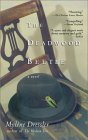
Critics' Opinion:
Readers' Opinion:
First Published:
Sep 2001, 240 pages
Paperback:
Aug 2002, 242 pages

Chapter 1
When I first found my mother's battered little sewing table--or rather, first asked the silver-haired woman who managed the antiques store, or rather that section of the tenth floor with its expensive, museum-quality French Provincials, near the back of a building on West Twenty-fifth Street, in a room lit by pools of halogen light, what exactly the homely little table was, and what on earth it was doing there, tucked in among all the grand buffets and elegant secrétaires--I was careful to keep my damp hands very still, and to look down puzzled and unrecognizing at it, blinking from under my homburg, to make clear I was stunned only that she would have anything so ordinary, so obviously anachronistic and anonymous and crude and utterly out of keeping with the rest of her very fine and select trade.
I had just come up out of the street from one of my walks. I'd only wanted to get out of the sun for a moment, to shift the weight in my canvas grocery bag, and so I had browsed up the floors of the building without thinking. I went into the shop--Lowenstein's Fine Antiques and Reproductions--for no better reason than that for the moment it had seemed empty of customers. And then, at the end of an aisle cluttered with glassy armoires and spindle-legged vanities, dancing under my septuagenarian's eyes and those fixed, spotted lights, I saw--when I looked again I couldn't mistake it--this ghost, this small, lost thing, floating like a piece of impossible wreckage toward me.
The tall and very elegant woman manager stepped forward and answered--taking my shopping bag from my hands and setting it, firmly, far away from her crystal and Limoges--that her shop specialized in "unfamiliar" pieces.
"But this particular piece doesn't seem very remarkable." My breath caught. I hoped my words would explain my unaccountable seizing in front of it.
"No?"
"I mean--it's not French...is it? It's certainly not provincial. It looks rustic, of course, I can see that. But--you'll have to excuse my ignorance--it's only a kind of box, with four legs. Isn't it? Is it some kind of--primitive?"
"English."
"The wood is pine." I didn't touch it.
"Blackened pine."
"Yes. I thought so." I knew so. I recognized every gouge in its surface, every pit, the places where my mother had dug in her thimble when she needed to control her disappointment in life.
"Just an ordinary twentieth-century worktable," the manager added.
"And you acquired it...?"
"From my husband. This was, for a time, his shop."
"Divorce." I wiped my forehead and nodded blankly. My thoughts were in disarray. But I told myself, distractedly, It's all right, it's all right, we marital failures form a virtual club.
"No."
"I'm sorry."
"It's quite all right. Is there something else I can show you?"
"Well, this chair, for instance." I forced myself to turn away from the illuminated end of the aisle. "This is striking. I can see that this, this is something quite unique."
"Normandy. Mahogany. Eighteenth century. Very rare."
"So why then the primitive, also?"
"Because it's unusual." She looked at me steadily. "It's a family piece."
"Is it?"
"It belonged to my husband's aunt. She was a Jew in hiding during the Second World War. Would you like to know more?"
I nodded weakly. I couldn't protest.
"She was given this table when she came out of hiding. She had nothing left. Absolutely nothing. Her parents, her family, her home--all gone. But she was given this table, at liberation, by a stranger in the street who stopped and wept and set it down at her feet. Afterward she brought it here to New York with her. When she emigrated."
From The Deadwood Beetle, by Mylene Dressler. (c) September 2001, G. P. Putnam & Sons, used by permission.




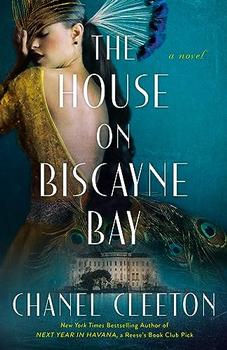
The House on Biscayne Bay
by Chanel Cleeton
As death stalks a gothic mansion in Miami, the lives of two women intertwine as the past and present collide.
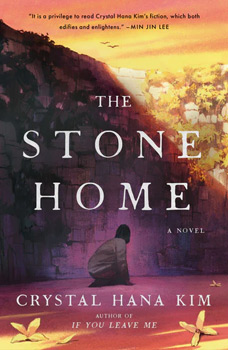
The Stone Home
by Crystal Hana Kim
A moving family drama and coming-of-age story revealing a dark corner of South Korean history.

The Funeral Cryer by Wenyan Lu
Debut novelist Wenyan Lu brings us this witty yet profound story about one woman's midlife reawakening in contemporary rural China.
Your guide toexceptional books
BookBrowse seeks out and recommends the best in contemporary fiction and nonfiction—books that not only engage and entertain but also deepen our understanding of ourselves and the world around us.