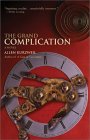
Summary | Excerpt | Reading Guide | Reviews | Readalikes | Genres & Themes | Author Bio
Critics' Opinion:
Readers' Opinion:
First Published:
Aug 2001, 360 pages
Paperback:
Aug 2002, 512 pages

At a traffic light near Lincoln Center, on a stretch of Broadway that brashly disrupts the city's grid, I withdrew the purloined call slip just as a taxi pulled up to the curb. The driver, compact and neatly dressed, jumped out, popped the trunk, and produced a small rug, which he unfurled with a firm, practiced snap. Then, facing a warehouse topped by a miniature Statue of Liberty, he kneeled in prayer. While the cabby, oblivious to the rush-hour traffic, satisfied his devotional obligations, I focused on the slip, noticing for the first time that its lettering leaned gently backward, as if to corroborate the writer's inclination toward the past. When the light changed, I put the slip back in my pocket, determined to investigate the origins of the beautiful script.
I got home just as the sun was dropping behind the water towers. Mr. Lopez, wearing his super's hat (he also owned the corner bodega), was hosing down an old ceramic sign that said, NO LOITERING OR BALL PLAYING, a wistful reminder of quieter times – before the spray of fluorescent paint and nine-millimeter bullets blemished the brick, before teenage crack dealers hung sneakers from lampposts to advertise their drive-by business.
"Hey, Mr. Lopez," I called out. "Can we get the landlord to update that sign?"
"Eh?"
"Maybe it should just say, NO DRUGS."
Mr. Lopez said, "Okay, my friend," his standard response to all complaints, whether about street crime, boiler malfunctions, or rats sharpening their teeth against the rotting wallboard. He turned to admire one of his children, who had just crawled inside the cabinet of a television set abandoned on the curb a week before. The little boy, discovering that an old paint roller served nicely as a gun, scanned the block for targets and soon found his father and me in his sights. As the child squeezed off imaginary rounds from inside the TV, I took a few quick notes. The natural place to register the scene would have been the "Enclosure" section of my girdle book, but I'd determined long before to restrict that rubric to purely autobiographical entries. I opted for "Street Views, Misc."
A gypsy cab caught my eye. Once more a driver hopped out and yanked something from the trunk. This time the object was a black satin jacket that advertised Les Misérables. The cabby beckoned Mr. Lopez, who, after careful inspection of the contraband, peeled a twenty from a fat roll of cash. As he was completing the sale, the nightly drug trade started revving up.
"We gots blue." . . . "Blue's doin' it." . . . "Blue's out."
The super grabbed his child from the TV cabinet and bundled him into the building. I followed close behind but stopped when I felt a crunch underfoot. I bent down and picked up an inch-long torpedo of plastic used to package crack cocaine. This isn't blue, I found myself thinking. There's too much purple in the mix. Periwinkle, maybe, or cornflower. Suddenly I had a vision of the guys on the corner shouting, "Periwinkle's doin' it!" and "We gots cornflower!" Maybe I could scrounge up an offprint of "A System of Color Identification for Bibliographical Description" and convince the dealers to refine their patter.
My attention shifted when an ebony BMW pulled up to the curb. A tinted window lowered with an electronic whir.
"Yo! You with that fuckin' notebook thing. You gots a problem?"
The challenge was punctuated with a prodigious gob of spit. Sensing there was little dividend in direct response, I smiled and ducked inside, taking the stairs two at a time. At the front door of our apartment, I tripped over the size 16[small]eee[/small] sneakers my wife keeps around to scare off intruders.
I hung up my jacket and satchel and checked the mail: credit card bills, the Dewey Circle quarterly, and a course bulletin from House of Paper, the arts center where Nic taught the odd course on pop-up design. There was also a letter from a library-school classmate I never much liked, announcing his appointment as head cataloger for the central branch of a "very posh" township in New Jersey. To his boastful update he added a newspaper clip showing a "Map of Murder" that confirmed graphically the dangers I'd just been annotating downstairs. The map displayed my section of the Upper West Side obliterated by a cluster of dots marking instances of violent crime. In the margin, my classmate had written, "Wow! You live there??!!"
Copyright © 2001 by Allen Kurzweil. Reprinted by permission of Hyperion.


The Stone Home
by Crystal Hana Kim
A moving family drama and coming-of-age story revealing a dark corner of South Korean history.
The Flower Sisters
by Michelle Collins Anderson
From the new Fannie Flagg of the Ozarks, a richly-woven story of family, forgiveness, and reinvention.
The Funeral Cryer by Wenyan Lu
Debut novelist Wenyan Lu brings us this witty yet profound story about one woman's midlife reawakening in contemporary rural China.
Your guide toexceptional books
BookBrowse seeks out and recommends the best in contemporary fiction and nonfiction—books that not only engage and entertain but also deepen our understanding of ourselves and the world around us.