Summary | Excerpt | Reviews | Readalikes | Genres & Themes | Author Bio
Critics' Opinion:
Readers' Opinion:
First Published:
Apr 2001, 464 pages
Paperback:
Feb 2002, 560 pages

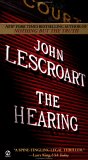
Casting his eyes up for a moment, over the buildings that rose all around him, he noticed the star-studded sky. Here between the buildings it was full night. The filigreed streetlights--four of them, two on each side--glowed. The street had that glassy, wet look favored by cinematographers, although the asphalt itself was dry.
A figure separated itself from the group and began walking toward him. It was Ridley Banks. After he'd closed to within fifteen feet, he stopped--perhaps catching the "keep away" vibe that his lieutenant projected--and waited until the two men were side by side. Glitsky's usual style was all business in any event, and today it served him particularly well. "What've we got?" he asked tersely.
"About as clean as it gets, Abe. We got a body, a shooter, a weapon and a motive."
"And what's that, the motive?"
They were still standing off a ways from the knot that had formed around the body. Banks kept his voice low. "Robbery. He took her purse, the watch, a gold chain ..."
Glitsky was moving forward again. He'd made it down from his duplex to the scene in only a bit more time than it had taken the techs, and now, just as he came up to the main knot surrounding the body, one of the car's searchlights strafed the lane. Reflexively, Glitsky put a hand up against the light, pressed himself forward, went down to a knee by the fallen body.
It lay on its right side, stretched out along the pavement in an attitude of sleep. It struck Glitsky that whoever had shot her had laid her down gently. He saw no blood at first glance. The face was unmarked, eyes closed.
He'd come to love that face. There'd been a picture of her in the Chronicle in the past year and he'd cut it out and stuck it in the bottom of the junk drawer of his desk. Two or three times, he'd closed and locked the door to his office, taken it out and just looked at her.
Seeing her mother in her face. Seeing himself.
In recent months, he'd told himself it was possible that if they came to know about each other, it wouldn't be baggage after all, but a source of something else--connection, maybe. He didn't know--he wasn't good at that stuff. But the feeling had been building and he'd come close to deciding that he would tell her, see where it took them.
The body was clad in an elegant overcoat, still buttoned to the neck. Blue or black in color, it looked expensive with its fur-trimmed collar, red satin lining. One black pump had come off her left foot and lay on its side, pathetically, in the gutter.
She was wearing black hosiery--and again, there was no sign that it had snarled or that the nylon had run when she'd gone down. Under the overcoat, Glitsky saw a couple of inches of what appeared to be a blue or black skirt with white pinstripes.
The lack of blood nagged. Glitsky stood, moved around to her back side, studying the pavement. Ridley was a step behind him and anticipated his question. He handed the lieutenant a Ziploc bag which held an almost impossibly small handgun. "One shot at the hairline in back, close contact, up into the brain. No exit wound."
Glitsky opened the bag and looked inside, put his nose against the opening and smelled the cordite. He recognized the weapon as a North American Arms five-shot revolver, perhaps the smallest commercially made weapon in America. It was most commonly worn as a belt buckle, out in the open, so small it did not seem possible that it could be a real gun. It weighed less than ten ounces and fit easily in the palm of his hand. Ridley was going on with his descriptions and theories and Glitsky ached to tell him to shut up.
But he wasn't going to give anything away and he didn't trust himself to utter a word. Instead, he left it to his body language. Zipping up the plastic that held the gun, he gave it to Banks without comment, and moved off, hands in his pockets. The message was clear--Glitsky was concentrating, thinking, memorizing the scene. Disturb him at your peril.
Reprinted from The Hearing by John Lescroart by permission of Dutton, a member of Penguin Putnam Inc. Copyright © 2001 by John Lescroart. All rights reserved. This excerpt, or any parts thereof, may not be reproduced in any form without permission.


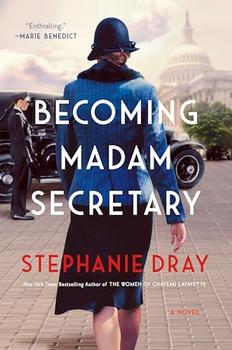
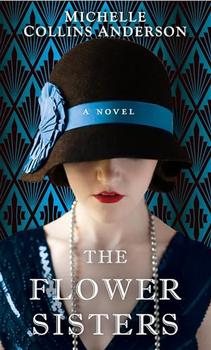
The Flower Sisters
by Michelle Collins Anderson
From the new Fannie Flagg of the Ozarks, a richly-woven story of family, forgiveness, and reinvention.
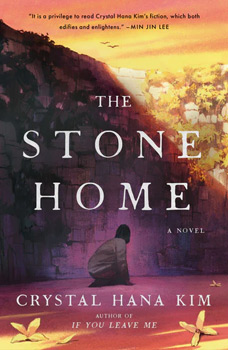
The Stone Home
by Crystal Hana Kim
A moving family drama and coming-of-age story revealing a dark corner of South Korean history.

The Funeral Cryer by Wenyan Lu
Debut novelist Wenyan Lu brings us this witty yet profound story about one woman's midlife reawakening in contemporary rural China.
Your guide toexceptional books
BookBrowse seeks out and recommends the best in contemporary fiction and nonfiction—books that not only engage and entertain but also deepen our understanding of ourselves and the world around us.