Summary | Excerpt | Reading Guide | Reviews | Readalikes | Genres & Themes | Author Bio

Critics' Opinion:
Readers' Opinion:
First Published:
Aug 1999, 276 pages
Paperback:
Apr 2001, 304 pages

After lunch, I went to the villa on foot. The tenants were just leaving as I arrived; they cursed me and called me a whore of the Germans. I stood silently aside to let them pass me; the lives of my friends were more important than my own wounded feelings. I prayed silently for them to hurry up, to leave, to turn the corner of the street and be gone, never to come back.
And then the house was mine. Perhaps the major thought it was to be his house, but I knew better. The house was mine, my treasure box, my sword, my henhouse. I turned around and around in the front hall, owning the moldings around the door frames, owning the chandelier over the staircase, owning the door to the basement.
I opened that door and went downstairs, taking the time to examine the space more thoroughly. As servants' quarters, the basement rooms were outfitted with everything necessary -- two bedrooms, a kitchenette, a bathroom, closets. All the windows up by the ceiling, windows and ground level, were covered with dark cardboard for the Verdunklung, the blackouts. No one could see into the basement from the outside. No light would show. I felt a surge of elation as I went into the furnace room and opened the coal chute. For a moment, as I stood clapping coal dust from my hands, I had a picture of my friends sliding down the chute like children in a playground. I even pictured myself, like a proud mother, catching them in my arms and setting them safely on the ground, while a blue sky embraced us from above.
Then the sunny picture faded, and I was left with one more question: How was I going to get them out of the major's bathroom and out of HKP?
The Villa
I would need a key. The street entrance of the hotel was not guarded, and was well out of sight of the guardhouse at the main gate. But the door was always locked at night, for fear of sabotage or murder by the locals, I suppose, or of unauthorized late-night rendezvous. All through dinner preparations I tried to think of ways to get the major's keys, trying out first one then another story to explain why I needed them. In the end, I decided simply to steal the keys.
Every one of staff was still suffering from the effects of their party the night before. The dining room was quiet during dinner. Voices were subdued, and barely a laugh rose above the sullen murmur. People tried to handle their forks and knives carefully to avoid clattering, and many officers and secretaries excused themselves early. There was little billiard playing or after-dinner drinking.
I went to the major's table, where he sat alone, nursing a glass of wine and looking down at his uneaten dinner.
"Can I get you anything, Herr Major?" I asked.
He looked up at me, his glasses catching the light in such a way as to obscure his eyes; he regarded me with a round, blank stare.
"I think perhaps I will take a glass of warm milk with me to bed, Irene. And I'll take something to help me sleep. This has been a terrible day."
I tried to keep the excitement out of my voice as I began clearing his dishes. "Oh, I'm sorry to hear that, Herr Major. I'll be happy to bring some milk to your room right away."
He pushed himself away from the table. "Good. And tomorrow I will send some men to paint inside the house. If you could just watch over them, see that they do the job properly . . ."
"Of course."
I practically hauled him to his feet and shoved him out of the dining room, so anxious was I to see him in bed and unconscious. At the bottom of the staircase I left him and ran to the kitchen to heat the milk, and in five minutes I was knocking on his door.
Major Rügemer took the glass from the little tray and put a small white pill on his tongue. While he gulped down the milk I glanced at his dressing table. His keys were there.
Excerpted from In My Hands: Memories of a Holocaust Rescuer by Irene Opdyke with Jennifer Armstrong Copyright© 1999 by Irene Gut Opdyke with Jennifer Armstrong. Excerpted by permission of Knopf Books for Young Readers, a division of Random House, Inc. All rights reserved. No part of this excerpt may be reproduced or reprinted without permission in writing from the publisher.





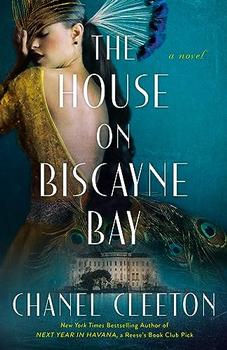
The House on Biscayne Bay
by Chanel Cleeton
As death stalks a gothic mansion in Miami, the lives of two women intertwine as the past and present collide.

The Flower Sisters
by Michelle Collins Anderson
From the new Fannie Flagg of the Ozarks, a richly-woven story of family, forgiveness, and reinvention.

The Funeral Cryer by Wenyan Lu
Debut novelist Wenyan Lu brings us this witty yet profound story about one woman's midlife reawakening in contemporary rural China.
Your guide toexceptional books
BookBrowse seeks out and recommends the best in contemporary fiction and nonfiction—books that not only engage and entertain but also deepen our understanding of ourselves and the world around us.