
-
Your next favorite book
is waiting.
Summary | Excerpt | Reviews | Readalikes | Genres & Themes | Author Bio
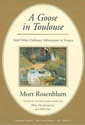
and Other Culinary Adventures in France
by Mort Rosenblum
More food came before it was time for the ortolans, a finch-like bunting from southwest France treasured for tender flesh but a fiercely protected endangered species. His old pal Henri Emmanuelli had brought a dozen, and they were served by a gendarme.
The small band dined as the court did at Versailles, with large napkins masking their faces to hide the grisly gnawing and spitting of tiny bones. Some guests declined diplomatically; diners outnumbered birds. The rest attacked with frenzied relish, each occasionally peeking from behind his cloth to see if anyone got an extra ortolan.
"François Mitterrand emerged first from behind his steaming napkin," Benamou wrote. "Overcome with happiness, his eye sparkling, his glance full of gratitude toward Emmanuelli." One bird remained in the hot oil, and the gendarme-waiter circled the table. When he reached Mitterrand, the bird was still there. The president speared it.
All told, Mitterrand ate thirty oysters, foie gras, a slice of capon, and two ortolans. Not long after, he passed into history.
Brillat-Savarin would have loved that last supper, as much for its meaning as its menu. For him, few pursuits measured up to savoring culinary pleasure. "The invention of a new dish," he wrote in The Physiology of Taste, "brings more to the good of mankind than the discovery of a new star."
Roland Barthes noted: "The discourse on food is like a grillwork window frame, in front of which strolls by each of the sciences that we call social or human." And Pierre Gaxette took the idea to its logical extension. "La cuisine," he wrote, "is not a bad observatory for studying la Grande Histoire."
But if the rise of French civilization could be measured by the knife and fork, so could its fall. And, as the millennium waned and a new sort of world took shape, warning signs were clear.
I had heard reports of France's culinary demise since first moving to Paris. Increasingly, casual conversations revealed distressing testimony. Monsieur Turpin, my friend the Île Saint-Louis fruit-and-fowl man, retired in disgust. When I last saw him, he was glumly singeing pinfeathers off a pheasant, his walrus moustache bristling with indignation. "Ces gens-là," he muttered, jerking an elbow toward a cluster of young French people shambling past, "they are eating while they walk."
During the 1970's, one had to work hard to find a bad meal in France. By the 1990's, it took no trouble at all. Now it seemed that everywhere I looked, someone was fretting over the future. France would dissolve into a mere bouquet of flavors in a stockpot known as the European Union. Worse, the juggernaut of "globalization" would trample historic borders, obliterate ancient customs, dilute a unique society, and leave only ubiquitous golden arches where great restaurants had been.
The glories of France were rooted in the kitchens of Versailles, so prodigious that when Louis XIV died the royal coroner found a stomach twice the size of your average eighteenth-century glutton's. Now vendors sell hot dogs at the gates of Versailles, and French tourists track melted ice-cream goo across its polished courtyard stones.
Was the Sun King's radiance finally in eclipse? Did this, I wondered, mean France was finished?
Copyright 2000 Mort Rosenblum. Reproduced with the permission of the publisher, Hyperion.







I always find it more difficult to say the things I mean than the things I don't.
Click Here to find out who said this, as well as discovering other famous literary quotes!

Can you name the title?
Test your book knowledge with our daily trivia challenge!
Your guide toexceptional books
BookBrowse seeks out and recommends the best in contemporary fiction and nonfiction—books that not only engage and entertain but also deepen our understanding of ourselves and the world around us.

&url=https://www.bookbrowse.com/excerpts/index.cfm/book_number/704/page_number/4/images/touch/apple-touch-icon.png)

