Summary | Excerpt | Reviews | Readalikes | Genres & Themes | Author Bio
Critics' Opinion:
Readers' Opinion:
First Published:
Sep 2000, 285 pages
Paperback:
Nov 2001, 304 pages

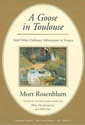
A God in France
"The destiny of nations depends upon how they feed themselves . . .The pleasure of the table reigns among other pleasures, and it is the last to console when others are lost."
- Anthelme Brillat-Savarin
"In France, one dines. Everywhere else, one eats."
- Montesquieu
Only in France could a loaf of bread come with a technical support phone number and an instruction manual thick with philosophy. Lionel Poilâne, who produces such bread, would be a mere baker in any other country. To the French, he is a national treasure, an artist whose medium is a 100-ton oven. In his black velvet string tie and gray workman's smock, tossing his Prince Valiant hair to punctuate a point, he assures a nation of a mere 60 million inhabitants that they still hold the lantern for billions of less enlightened mortals.
"Bread is the soul of civilization," Poilâne remarked one morning in the seat of his empire, a little redbrick boulangerie on the rue du Cherche- Midi. That is, a people can be defined by their daily bread and the quality of meals they create around it.
It is hardly news that the words food and French are inseparable. Back when heads were piling up in baskets in a Paris square, and revolution in France shook the world as nothing had before, a pudgy, balding savant reminded citizens to keep their priorities straight. Great human events are fine, Anthelme Brillat-Savarin observed, but let's not forget lunch.
Literature that followed stirred imaginations everywhere, but France's great writers were often happier with a fork than a pen. "The only irritating thing about eating," Alexandre Dumas père remarked, "is that when you are done, you are no longer hungry."
French society revolves around greengrocers who know each of their tomatoes personally and cheese sellers who can spend half an hour discussing the pros and cons of a particular slab of brie. On New Year's Eve, whatever the rest of the world does to celebrate, the French sit at large tables and eat themselves senseless. While others wondered where to be on December 31, 1999, Frenchmen were deciding which bottles of wine they would open.
Not long ago, northwestern France flooded, and television cameras found an old man who saw the worst of it. He told of crops under water, drowned animals, buildings swept away. But he kept his priorities straight. A lot of people pitched in to help, he concluded, "and we were seventeen at lunch."
The rise of French grandeur owes more to kings' and emperors' chefs than to their generals. Its decline is measured by lines at Pizza Hut. No economic indicator is more reliable than the aisles at Fauchon, the temple of fine food that stocks more mustards than there are days in a year. An improbably fabulous dessert of tomate confit farcie aux douze saveurs at Alain Passard's Arpège is enough to excuse any rudeness from the Paris cabbie who brought you there.
Over centuries, the dinner table has remained an anchor for families and friendships, the heart of what is finest about France. Each course requires separate effort, part of a whole. Children learn their values and their manners at mealtime. Nothing important gets signed, sealed, or delivered without the clinking of glasses and the rattling of cutlery.
And nothing is so sacred as Sunday lunch. In French, you only have to say "dimanche midi." The eating part goes without saying.
Good food, with all the art de vivre around it, was partly why I moved to Paris in 1977. For my first real taste of France, I rented a fat, fish-faced Citroën with cushy seats, and I headed south. North, east, or west would have been just as good. But I had heard a lot about Raymond Thuilier and his three-star auberge, L'Oustau de Baumanière at Les Baux-de-Provence, a medieval village atop starkly beautiful mini-mountains, Les Alpilles. By the fifth course, with desserts, coffee, and digestif yet to come, it was clear I would not leave France any time soon. And the food itself was not the half of it.
Copyright 2000 Mort Rosenblum. Reproduced with the permission of the publisher, Hyperion.





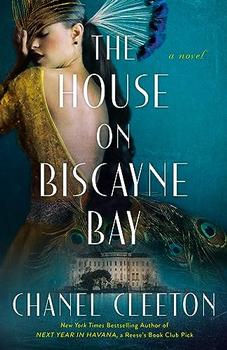
The House on Biscayne Bay
by Chanel Cleeton
As death stalks a gothic mansion in Miami, the lives of two women intertwine as the past and present collide.
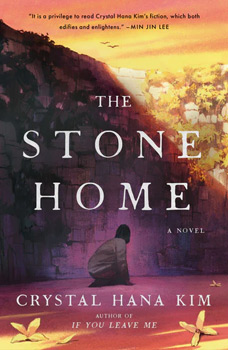
The Stone Home
by Crystal Hana Kim
A moving family drama and coming-of-age story revealing a dark corner of South Korean history.

The Funeral Cryer by Wenyan Lu
Debut novelist Wenyan Lu brings us this witty yet profound story about one woman's midlife reawakening in contemporary rural China.
Your guide toexceptional books
BookBrowse seeks out and recommends the best in contemporary fiction and nonfiction—books that not only engage and entertain but also deepen our understanding of ourselves and the world around us.