Summary | Excerpt | Reviews | Readalikes | Genres & Themes | Author Bio
Critics' Opinion:
Readers' Opinion:
First Published:
Oct 1999, 272 pages
Paperback:
Jul 2002, 272 pages

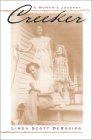
I am told that the reason the map and post office names are not the names folks who live there call them is that, way back when, government officials came through the area attaching names to places. Since the residents of those communities were mostly illiterate, the feds refused to call the places by the names common folk called them. This appears to me to be indicative of the power and credibility given my Appalachian forebears by all those well-meaning, philanthropic folk who came from Washington and the northeast to reach down and protect us from our own ignorance. That reaching-down-to-help-us-out attitude is, perhaps more than any other factor, what funded my pursuit of advanced degrees.
I should point out that I did not know all these things about schooling or letters such as M.A. and Ph.D. until some years after I completed my first degree and after I had come to a place where I could see the result of some of my earlier choices in life, choices made without the benefit of letters or the understanding represented by those letters. With a bunch of letters after your name, folks may still look down on you; but, since you know what they think about you while they don't know what you think about them, you win. The key to it all is to know the lower limit of your reputation, because you don't ever want anyone to be thinking you are worse than you think people think you are. That perspective on the world may well be what led me to psychology in the first place. Coupled with philosophy and literature, it seemed to give me some small handle on the human condition, hence a better likelihood that I could decipher what people were thinking. And that perspective had its beginnings on Two-Mile Creek in Johnson County, about as far east as you can wander and still be in Kentucky.
I want to take you back home with me to see the range of colors of the trees in autumn, when the whole country smells of wood smoke and leaves and apple butter; to see the mist that hangs in the valleys in the mornings and the glitter of the dew on spiderwebs as the sun creeps over the tops of the trees. I used to lie on my belly on the faded wooden bridge that crossed the creek by my house and stare at the water until it seemed that the bridge was moving instead of the creek. As the water streamed past me, I would imagine that I was going on a big ship to someplace exciting.
Every time I have steamed into port in some far-flung, exotic place, I have thought about my bridge and my creek and the path that led me from there to here. Seems to me that it's time for me to mark that path, so I want to take you back to Two-Mile and the well box and the bridge and the church house and the graveyard and the rock cliff and the coal bank and . . . and. . . .
Copyright Linda Scott Derosier. Published with the permission of the publisher, The University of Kentucky Press.




The Flower Sisters
by Michelle Collins Anderson
From the new Fannie Flagg of the Ozarks, a richly-woven story of family, forgiveness, and reinvention.
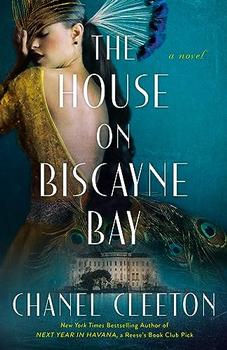
The House on Biscayne Bay
by Chanel Cleeton
As death stalks a gothic mansion in Miami, the lives of two women intertwine as the past and present collide.

The Funeral Cryer by Wenyan Lu
Debut novelist Wenyan Lu brings us this witty yet profound story about one woman's midlife reawakening in contemporary rural China.
Your guide toexceptional books
BookBrowse seeks out and recommends the best in contemporary fiction and nonfiction—books that not only engage and entertain but also deepen our understanding of ourselves and the world around us.