Summary | Excerpt | Reading Guide | Reviews | Readalikes | Genres & Themes | Author Bio
Critics' Opinion:
Readers' Opinion:
First Published:
Mar 2000, 448 pages
Paperback:
Jan 2001, 448 pages

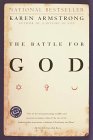
Myth could not be demonstrated by rational proof; its insights were more intuitive, similar to those of art, music, poetry, or sculpture. Myth only became a reality when it was embodied in cult, rituals, and ceremonies which worked aesthetically upon worshippers, evoking within them a sense of sacred significance and enabling them to apprehend the deeper currents of existence. Myth and cult were so inseparable that it is a matter of scholarly debate which came first: the mythical narrative or the rituals attached to it. Myth was also associated with mysticism, the descent into the psyche by means of structured disciplines of focus and concentration which have been evolved in all cultures as a means of acquiring intuitive insight. Without a cult or mystical practice, the myths of religion would make no sense. They would remain abstract and seem incredible, in rather the same way as a musical score remains opaque to most of us and needs to be interpreted instrumentally before we can appreciate its beauty.
In the premodern world, people had a different view of history. They were less interested than we are in what actually happened, but more concerned with the meaning of an event. Historical incidents were not seen as unique occurrences, set in a far-off time, but were thought to be external manifestations of constant, timeless realities. Hence history would tend to repeat itself, because there was nothing new under the sun. Historical narratives tried to bring out this eternal dimension. Thus, we do not know what really occurred when the ancient Israelites escaped from Egypt and passed through the Sea of Reeds. The story has been deliberately written as a myth, and linked with other stories about rites of passage, immersion in the deep, and gods splitting a sea in two to create a new reality. Jews experience this myth every year in the rituals of the Passover Seder, which brings this strange story into their own lives and helps them to make it their own. One could say that unless an historical event is mythologized in this way, and liberated from the past in an inspiring cult, it cannot be religious. To ask whether the Exodus from Egypt took place exactly as recounted in the Bible or to demand historical and scientific evidence to prove that it is factually true is to mistake the nature and purpose of this story. It is to confuse mythos with logos.
Logos was equally important. Logos was the rational, pragmatic, and scientific thought that enabled men and women to function well in the world. We may have lost the sense of mythos in the West today, but we are very familiar with logos, which is the basis of our society. Unlike myth, logos must relate exactly to facts and correspond to external realities if it is to be effective. It must work efficiently in the mundane world. We use this logical, discursive reasoning when we have to make things happen, get something done, or persuade other people to adopt a particular course of action. Logos is practical. Unlike myth, which looks back to the beginnings and to the foundations, logos forges ahead and tries to find something new: to elaborate on old insights, achieve a greater control over our environment, discover something fresh, and invent something novel.
In the premodern world, both mythos and logos were regarded as indispensable. Each would be impoverished without the other. Yet the two were essentially distinct, and it was held to be dangerous to confuse mythical and rational discourse. They had separate jobs to do. Myth was not reasonable; its narratives were not supposed to be demonstrated empirically. It provided the context of meaning that made our practical activities worthwhile. You were not supposed to make mythos the basis of a pragmatic policy. If you did so, the results could be disastrous, because what worked well in the inner world of the psyche was not readily applicable to the affairs of the external world. When, for example, Pope Urban II summoned the First Crusade in 1095, his plan belonged to the realm of logos. He wanted the knights of Europe to stop fighting one another and tearing the fabric of Western Christendom apart, and to expend their energies instead in a war in the Middle East and so extend the power of his church. But when this military expedition became entangled with folk mythology, biblical lore, and apocalyptic fantasies, the result was catastrophic, practically, militarily, and morally. Throughout the long crusading project, it remained true that whenever logos was ascendant, the Crusaders prospered. They performed well on the battlefield, created viable colonies in the Middle East, and learned to relate more positively with the local population. When, however, Crusaders started making a mythical or mystical vision the basis of their policies, they were usually defeated and committed terrible atrocities.
Excerpted from The Battle for God by Karen Armstrong Copyright© 2000 by Karen Armstrong. Excerpted by permission of Knopf, a division of Random House, Inc. All rights reserved. No part of this excerpt may be reproduced or reprinted without permission in writing from the publisher.


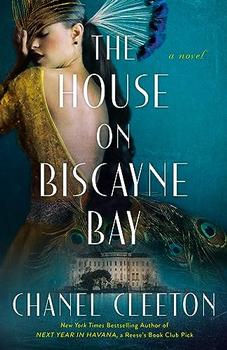
The House on Biscayne Bay
by Chanel Cleeton
As death stalks a gothic mansion in Miami, the lives of two women intertwine as the past and present collide.

The Flower Sisters
by Michelle Collins Anderson
From the new Fannie Flagg of the Ozarks, a richly-woven story of family, forgiveness, and reinvention.

The Funeral Cryer by Wenyan Lu
Debut novelist Wenyan Lu brings us this witty yet profound story about one woman's midlife reawakening in contemporary rural China.
Your guide toexceptional books
BookBrowse seeks out and recommends the best in contemporary fiction and nonfiction—books that not only engage and entertain but also deepen our understanding of ourselves and the world around us.