Summary | Excerpt | Reading Guide | Reviews | Readalikes | Genres & Themes | Author Bio

Critics' Opinion:
Readers' Opinion:
First Published:
May 2000, 400 pages
Paperback:
Oct 2001, 384 pages

What must it have been like for an American boy to advance toward him? I thought of my own interactions with the Japanese when I was in my early twenties. I attended college in Tokyo and my choices were study or sushi.
But for too many on bloody Iwo there were no choices; it had been kill or be killed.
But now it was time to ascend the mountain.
Standing where they raised the flag at the edge of the extinct volcanic crater, the wind whipping our hair, we could view the entire two-mile beach where the armada had discharged its boatloads of attacking Marines.
In February 1945 the Japanese could see it with equal clarity from the tunnels just beneath us. They waited patiently until the beach was chockablock with American boys. They had spent many months prepositioning their gun sights. When the time came, they simply opened fire, beginning one of the great military slaughters of all history.
An oddly out-of-place feeling now seized me: I was so glad to be up here!
The vista below us, despite the gory freight of its history, was invigorating. The sun and the wind seemed to bring all of us alive.
And then I realized that my high spirits were not so out of place at all. I was reliving something. I recalled the line from the letter my father wrote three days after the flagraising: "It was the happiest moment of my life."
Yes, it had to be exhilarating to raise that flag. From Suribachi, you feel on top of the world, surrounded by ocean. But how had my father's attitude shifted from that to "If only there hadn't been a flag attached to that pole"?
As some twenty young Marines and older officers milled around us, we Bradleys began to take pictures of one another. We posed in various spots, including near the "X" that marks the spot of the actual raising. We had brought with us a plaque: shiny red, in the "mitten" shape of Wisconsin and made of Wisconsin ruby-red granite, the state stone. Part of our mission here was to embed this plaque in the rough rocky soil. Now my brother Mark scratched in that soil with a jackknife. He swept the last pebbles from the newly bared area and said, "OK, it should fit now."
Joe gently placed the plaque in the dry soil. It read:
TO JOHN H. BRADLEY
FLAGRAISER FEB. 23, 1945
FROM HIS FAMILY
We stood up, dusted our hands, and gazed at our handiwork. The wind blew through our hair. The hot Pacific sun beat down on us. Our allotted time on the mountain was drawing short.
I trotted over to one of the Marine vans to retrieve a folder that I had carried with me from New York for this occasion. It contained notes and photographs: a few photographs of Bradleys, but mostly of the six young men. "Let's do this now," I called to my family and the Marines who accompanied us up the mountain as I motioned them over to the marble monument which stands atop the mountain.
When the Marines had gathered in front of the memorial, everyone was silent for a moment. The world was silent, except for the whipping wind.
And then I began to speak.
I spoke of the battle. It ground on over thirty-six days. It claimed 25,851 U.S. casualties, including nearly 7,000 dead. Most of the 22,000 defenders fought to their deaths.
It was America's most heroic battle. More medals for valor were awarded for action on Iwo Jima than in any battle in the history of the United States. To put that into perspective: The Marines were awarded eighty-four Medals of Honor in World War II. Over four years, that was twenty-two a year, about two a month.
But in just one month of fighting on this island, they were awarded twenty-seven Medals of Honor: one third their accumulated total.
I spoke then of the famous flagraising photograph. I remarked that nearly everyone in the world recognizes it. But no one knows the boys.
Excerpted from Flags of Our Fathers by James Bradley with Ron Powers Copyright© 2000 by James Bradley with Ron Powers. Excerpted by permission of Bantam, a division of Random House, Inc. All rights reserved. No part of this excerpt may be reproduced or reprinted without permission in writing from the publisher.




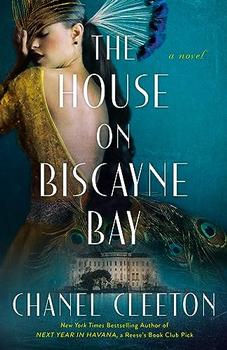
The House on Biscayne Bay
by Chanel Cleeton
As death stalks a gothic mansion in Miami, the lives of two women intertwine as the past and present collide.
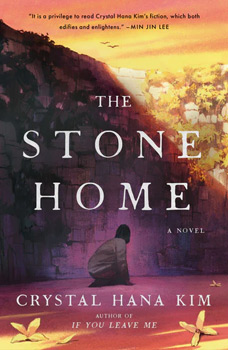
The Stone Home
by Crystal Hana Kim
A moving family drama and coming-of-age story revealing a dark corner of South Korean history.

The Funeral Cryer by Wenyan Lu
Debut novelist Wenyan Lu brings us this witty yet profound story about one woman's midlife reawakening in contemporary rural China.
Your guide toexceptional books
BookBrowse seeks out and recommends the best in contemporary fiction and nonfiction—books that not only engage and entertain but also deepen our understanding of ourselves and the world around us.