Summary | Excerpt | Reviews | Readalikes | Genres & Themes | Author Bio
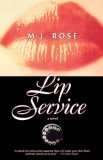
Critics' Opinion:
Readers' Opinion:
First Published:
Aug 1999, 320 pages
Paperback:
Jul 2000, 320 pages

A star, he shined on me. And I wanted to remain in the gleam of his cool blue light forever.
That night, at the Botanical Garden, I was still in my husband's light. But it no longer burned quite so bright.
Inside the Enid A. Haupt Conservatory's cultivated jungle, the huge fronds of green oversize palms hung down in graceful arcs that led the way through the entrance. Giant elephant ears and fragile ferns, four and five feet across, flanked the steps.
I breathed in deeply. The smell was dark and fresh, a combination of earth and humidity, a scent I knew well but usually associated with my own most peaceful moments. Yet there I was, amidst a throng of guests for whom I was supposed to play hostess.
Following Paul and Bob, I stopped at the bar, where Bob's wife, Lanni, who had come ahead, was waiting. A public relations guru who handled both her husband's press as well as FIT's, Lanni was responsible for the guest list that night. Lanni, in navy sequins, also by Armani, caught my eye and winked. When we'd first met, I hadn't trusted her. Used to cosmopolitan New Yorkers, I found Lanni too amicable, too Texas-friendly. As I got to know her, I discovered behind the drawl was a sensitive, supportive woman I had come to admire.
Immediately, we were surrounded by people, and the evening's work on behalf of FIT began.
Certainly, FIT is a worthwhile program. A revolutionary idea created by Paul and a businessman named Mike Menken, the agency's goal is to train and then find work for the many thousands of jobless divorced and unmarried fathers delinquent in their child support payments.
By training these men and getting them work, FIT is responsible for removing thousands of women and children from welfare rolls. The New York City program is so successful, there are now branches in eight other major cities in the country.
Becoming the agency's director fit my husband's image of himself: powerful, successful, and recognized. He mixed and mingled with the top levels of the city's political infrastructure as well as the city's social strata. Paul had mastered the art of garnering attention for his charity and himself; events like this evening's was a perfect example.
In fact, making Bob Wilcox FIT's spokesperson had added a new dimension to the charity's prominence. For one thing, Paul now had a supply of front-row tickets to any home game played in Madison Square Garden. He offered those seats to the charity's major donors, who never seemed to tire of seeing themselves on the eleven o'clock news, seated beside the likes of JFK Jr., John McEnroe, or Spike Lee.
Bob's involvement with FIT also enhanced my husband's wardrobe. An ambassador for Giorgio Armani, Bob was part of an exclusive group of highly visible people given free access to the designer's Madison Avenue boutique. Through Bob, Paul was offered a twenty-five-thousand-dollar-a-year clothes budget, which he shared with me.
At first, it was awkward to go into the Armani boutique, be fussed over, fitted, and then not given a bill. But the simplicity of the designer's style had always appealed to me. The deceptively austere clothes are secretly seductive. Wearing Armani, my need for complicated accessories or flamboyant jewels disappears. But that night I looked underdressed compared with some of the women whose gowns and jewels were so extravagant, they seemed to be competing with the flowers.
I shook hands, kissed cheeks, complimented women on their clothes and their hair, remembered children's names and spouses' job descriptions and recent ailments. Too soon, the vodka I had been sipping was gone. I wanted another but allowed myself only one cocktail before dinner and one glass of wine with dinner; relaxing was not as important as remaining aware of conversational nuances.
Copyright © 1998 by M.J. Rose





The House on Biscayne Bay
by Chanel Cleeton
As death stalks a gothic mansion in Miami, the lives of two women intertwine as the past and present collide.

The Flower Sisters
by Michelle Collins Anderson
From the new Fannie Flagg of the Ozarks, a richly-woven story of family, forgiveness, and reinvention.

The Funeral Cryer by Wenyan Lu
Debut novelist Wenyan Lu brings us this witty yet profound story about one woman's midlife reawakening in contemporary rural China.
Your guide toexceptional books
BookBrowse seeks out and recommends the best in contemporary fiction and nonfiction—books that not only engage and entertain but also deepen our understanding of ourselves and the world around us.