
-
Your next favorite book
is waiting.
Summary | Excerpt | Reading Guide | Reviews | Readalikes | Genres & Themes | Author Bio
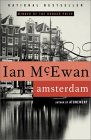

So much for the attack. The apologia borrowed and distorted the well-worn device from Ecclesiastes. It was time to recapture music from the commissars, and it was time to reassert music's essential communicativeness, for it was forged, in Europe, in a humanistic tradition that had always acknowledged the enigma of human nature; it was time to accept that a public performance was "a secular communion," and it was time to recognize the primacy of rhythm and pitch and the elemental nature of melody. For this to happen without merely repeating the music of the past, we had to evolve a contemporary definition of beauty, and this in turn was not possible without grasping a "fundamental truth." At this point Clive boldly borrowed from some unpublished and highly speculative essays by a colleague of Noam Chomsky's, which he had read while on holiday in the man's house on Cape Cod: our capacity to "read" rhythms, melodies, and pleasing harmonies, like our uniquely human ability to learn language, ... was genetically prescribed. These three elements were found by anthropologists to exist in all musical cultures. Our ear for harmony was hardwired. (Furthermore, without a surrounding context of harmony, disharmony was meaningless and uninteresting.) Understanding a line of melody was a complex mental act, but it was one that even an infant could perform; we were born into an inheritance, we were Homo musicus; defining beauty in music must therefore entail a definition of human nature, which brought us back to the humanities and communicativeness ...
Clive Linley's Recalling Beauty was published to coincide with the premiere at the Wigmore Hall of his Symphonic Dervishes for Virtuoso Strings, a work of such cascading polyphonic brilliance, and interrupted by such a hypnotic lament, that it was loathed and loved in equal measure, thereby securing his reputation and the currency of his book.
Creation apart, the writing of a symphony is physically arduous. Every second of playing time involved writing out, note by note, the parts of up to two dozen instruments, playing them back, making adjustments to the score, playing again, rewriting, then sitting in silence, listening to the inner ear synthesize and orchestrate the vertical array of scribbles and deletions; amending again until the bar was right, and playing it once more on the piano. By midnight Clive had extended and written out in full the rising passage and was starting on the great orchestral hiatus that would precede the sprawling change of key. By four o'clock in the morning he had written out the major parts and knew exactly how the modulation would work, how the mists would evaporate.
He stood up from the piano, exhausted, satisfied with the progress he had made but apprehensive: he had brought this massive engine of sound to a point where the real work on the finale could begin, and it could do so now only with an inspired invention--the final melody, in its first and simplest form, baldly stated on a solo wind instrument, or perhaps the first violins. He had reached the core, and felt burdened. He turned out the lamps and walked down to his bedroom. He had no preliminary sketch of an idea, not a scrap, not even a hunch, and he would not find it by sitting at the piano and frowning hard. It could come only in its own time. He knew from experience that the best he could do was relax, step back, while remaining alert and receptive. He would have to take a long walk in the country, or even a series of long walks. He needed mountains, big skies. The Lake District, perhaps. The best ideas caught him by surprise at the end of twenty miles, when his mind was elsewhere.
In bed at last, lying on his back in total darkness, taut, resonating from mental effort, he saw jagged rods of primary color streak across his retina, then fold and writhe into sunbursts. His feet were icy; his arms and chest were hot. Anxieties about work transmuted into the baser metal of simple night fear: illness and death, abstractions that soon found their focus in the sensation he still felt in his left hand. It was cold and inflexible and prickly, as though he had been sitting on it for half an hour. He massaged it with his right hand and nursed it against the warmth of his stomach. Wasn't this the kind of sensation Molly had had when she went to hail that cab by the Dorchester? He had no mate, no wife, no George, to care for him, and perhaps that was a mercy. But what instead? He rolled onto his side and drew the blankets around him. The nursing home, the TV in the dayroom, bingo, and the old men with their fags, and piss and dribbling. He wouldn't stand for it. He would see a doctor in the morning. But that's what Molly had done and they had sent her off for tests. They could manage your descent, but they couldn't prevent it. Stay away then, monitor your own decline; then, when it was no longer possible to work, or to live with dignity, finish it yourself. But how could he stop himself passing that point, the one Molly had reached so quickly, when he would be too helpless, too disoriented, too stupid to kill himself?
Reproduced from Amsterdam : A Novel, by Ian McEwan. © 1997 by Ian McEwan, used by permission of the publishers : Doubleday.




The low brow and the high brow
Click Here to find out who said this, as well as discovering other famous literary quotes!

Can you name the title?
Test your book knowledge with our daily trivia challenge!
Your guide toexceptional books
BookBrowse seeks out and recommends the best in contemporary fiction and nonfiction—books that not only engage and entertain but also deepen our understanding of ourselves and the world around us.


