Summary | Excerpt | Reviews | Readalikes | Genres & Themes | Author Bio

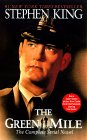
Thirty-five years or so later -- had to be at least thirty-five -- I
saw that name on the obituary page of the paper, under a picture of a
skinny-faced black lady with a cloud of white hair and glasses with
rhinestones at the comers. It was Beverly. She'd spent the last ten years
of her life a free woman, the obituary said, and had rescued the
small-town library of Raines Falls pretty much single-handed. She had also
taught Sunday school and had been much loved in that little backwater.
LIBRARIAN DIES OF HEART FAILURE, the headline said, and below that, in
smaller type, almost as an afterthought: Served Over Two Decades in
Prison for Murder. Only the eyes, wide and blazing behind the glasses
with the rhinestones at the comers, were the same. They were the eyes of a
woman who even at seventy-whatever would not hesitate to pluck a safety
razor from its blue jar of disinfectant, if the urge seemed pressing. You
know murderers, even if they finish up as old lady librarians in dozey
little towns. At least you do if you've spent as much time minding
murderers as I did. There was only one time I ever had a question about
the nature of my job. That, I reckon, is why I'm writing this.
The wide corridor up the center of E Block was floored with linoleum
the color of tired old limes, and so what was called the Last Mile at
other prisons was called the Green Mile at Cold Mountain. It ran, I guess,
sixty long paces from south to north, bottom to top. At the bottom was the
restraint room. At the top end was a T-junction. A left turn meant life --
if you called what went on in the sunbaked exercise yard life, and many
did; many lived it for years, with no apparent ill effects. Thieves and
arsonists and sex criminals, all talking their talk and walking their walk
and making their little deals.
A right turn, though -- that was different. First you went into my
office (where the carpet was also green, a thing I kept meaning to change
and not getting around to), and crossed in front of my desk, which was
flanked by the American flag on the left and the state flag on the right.
On the far side were two doors. One led into the small W.C. that I and the
E Block guards (sometimes even Warden Moores) used; the other opened on a
kind of storage shed. This was where you ended up when you walked the
Green Mile.
It was a small door -- I had to duck my head when I went through, and
John Coffey actually had to sit and scoot. You came out on a little
landing, then went down three cement steps to a board floor. It was a
miserable room without heat and with a metal roof, just like the one on
the block to which it was an adjunct. It was cold enough in there to see
your breath during the winter, and stifling in the summer. At the
execution of Elmer Manfred -- in July or August of '30, that one was, I
believe -- we had nine witnesses pass out.
On the left side of the storage shed -- again -- there was life. Tools
(all locked down in frames crisscrossed with chains, as if they were
carbine rifles instead of spades and pickaxes), dry goods, sacks of seeds
for spring planting in the prison gardens, boxes of toilet paper, pallets
cross-loaded with blanks for the prison plate-shop...even bags of lime for
marking out the baseball diamond and the football gridiron -- the cons
played in what was known as The Pasture, and fall afternoons were greatly
looked forward to at Cold Mountain.
On the right -- once again -- death. Old Sparky his ownself, sitting up
on a plank platform at the southeast comer of the storeroom, stout oak
legs, broad oak arms that had absorbed the terrorized sweat of scores of
men in the last few minutes of their lives, and the metal cap, usually
hung jauntily on the back of the chair, like some robot kid's beanie in a
Buck Rogers comic-strip. A cord ran from it and through a gasket-circled
hole in the cinderblock wall behind the chair. Off to one side was a
galvanized tin bucket. If you looked inside it, you would see a circle of
sponge, cut just right to fit the metal cap. Before executions, it was
soaked in brine to better conduct the charge of direct-current electricity
that ran through the wire, through the sponge, and into the condemned
man's brain.

Copyright © 1996 by Stephen King.




The Stone Home
by Crystal Hana Kim
A moving family drama and coming-of-age story revealing a dark corner of South Korean history.
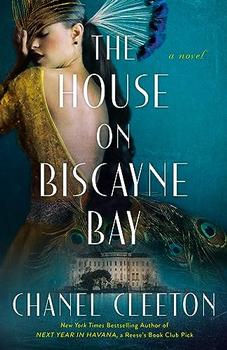
The House on Biscayne Bay
by Chanel Cleeton
As death stalks a gothic mansion in Miami, the lives of two women intertwine as the past and present collide.

The Funeral Cryer by Wenyan Lu
Debut novelist Wenyan Lu brings us this witty yet profound story about one woman's midlife reawakening in contemporary rural China.
Your guide toexceptional books
BookBrowse seeks out and recommends the best in contemporary fiction and nonfiction—books that not only engage and entertain but also deepen our understanding of ourselves and the world around us.