Summary | Excerpt | Reading Guide | Reviews | Readalikes | Genres & Themes | Author Bio
Critics' Opinion:
Readers' Opinion:
First Published:
Feb 1999, 339 pages
Paperback:
Jul 2000, 255 pages

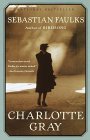
As the thudding airscrew churned up the night, Gregory stretched inside his clothes His feet were cold, despite the flying boots and two pairs of thick socks; he lifted them momentarily off the rudder bars and stamped them on the floor of the plane. Kilpatrick and Simmons had laughed when they came to fetch him to the mess after a flight one day and found him with his feet in a basin of hot water.
He was crossing the coast of England: chalk cliffs, sailing dinghies moored for better days, seaside towns with their whitewashed houses along the narrow streets that trickled down to wind-whipped fronts. When as a boy from India he had been sent to school by the English coast he had hated that wind and the blank sea with its baggy grey horizon.
This was the third time he had undertaken a similar flight, but it had taken him months to persuade his superiors that it was worth the risk First there was the squadron commander, Landon, to convince; then there was Group HQ to be won over The Senior Air Staff Officer told Landon he could not possibly risk losing a plane, let alone an experienced pilot, in such circumstances Gregory was never quite sure what Landon had finally said to convince him.
He shook his head and rubbed his thighs with his hands Beneath the
He had been to the town before the Germans came A French pilot took him to a bar called the Guillaume Tell, where they drank champagne, then to another where they ordered beer. The evening ended at La Lune, which was a brothel, but the French pilot didn't seem to care about the girls From Le Havre the squadron moved up the coast to Deauville and played golf.
When he dropped into the cloud, Gregory began to feel the familiar, unwanted sensation of such moments: someone would soon try to kill him In Le Havre an anti-aircraft gunner, though he didn't yet know it himself, would concentrate only on this murder. When Gregory had experienced ground-fire from British and French batteries, who had wrongly identified his aircraft as German, it had made him aware that the plane was nothing more than a few pieces of airborne metal and wood Anti-aircraft fire was different from fighter fire, though one thing was the same: a few inches from his eyes was a fuel tank waiting to explode.
Now he could make out the shape of docks, so far, the terrestrial world, beneath his boots; there were minimal lights, evidence of some defensive caution, but he could remember from his study of photographs where the oil tanks were. He put the plane into a leftward banking turn, wanting to gain height and gather himself for the dive He reached the top of his shallow climb and checked his position, hanging in the icy air.
He was laughing, though he heard nothing above the engine; for one more moment he held the plane level, then opened the throttle and pushed the stick forward. He watched the airspeed indicator moving up: 340, 360. He was coming in too steep: he was nose-heavy, he felt he would go over. Then, when he could see the ground--industrial shadows, bulky darkness--he could gauge where his horizon was He held the stick steady Gravity was starting to push his eyes back into their sockets and he began to swear. He could see what he took to be the oil depot and twitched the rudder to align himself. At last there was some response from the ground: he saw red balls of tracer curving through the air like boiling fruit, lazy until they reached him, then whipping past at the speed of light Nothing was coming close to him. His thumb stroked the gun button, and when the ground was so near he could almost sense it through his seat, he let the cannon go.
Excerpted from Charlotte Gray by Sebastian Faulks. Copyright© 1999 by Sebastian Faulks. Excerpted by permission of Random House, a division of Random House, Inc. All rights reserved. No part of this excerpt may be reproduced or reprinted without permission in writing from the publisher.


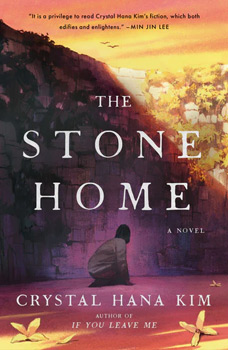
The Stone Home
by Crystal Hana Kim
A moving family drama and coming-of-age story revealing a dark corner of South Korean history.

The Flower Sisters
by Michelle Collins Anderson
From the new Fannie Flagg of the Ozarks, a richly-woven story of family, forgiveness, and reinvention.

The Funeral Cryer by Wenyan Lu
Debut novelist Wenyan Lu brings us this witty yet profound story about one woman's midlife reawakening in contemporary rural China.
Your guide toexceptional books
BookBrowse seeks out and recommends the best in contemporary fiction and nonfiction—books that not only engage and entertain but also deepen our understanding of ourselves and the world around us.