Summary | Excerpt | Reviews | Readalikes | Genres & Themes | Author Bio
Critics' Opinion:
Readers' Opinion:
First Published:
Nov 1999, 544 pages
Paperback:
Feb 2001, 600 pages

Hundreds, perhaps thousands, of different species of animals and fish became instantly extinct. In the Americas, the one-humped camel, the mammoth, an ice age horse, and the giant sloth all disappeared. Gone also were the saber-toothed tiger, huge birds with twenty-five-foot wingspans and many other animals that weighed a hundred or more pounds, most dying by asphyxiation from the smoke and volcanic gases.
Nor did the vegetation on land escape the apocalypse. Plant life not turned to ashes by the holocaust died for lack of sunlight, along with the algae in the seas. In the end, over 85 percent of all life on Earth would die from floods, fires, storms, avalanches, poison from the atmosphere, and eventual starvation.
Human societies, many quite advanced, and a myriad of emerging cultures on the threshold of a progressive golden age were annihilated in a single horrendous day and night. Millions of Earth's men, women, and children died horribly. All vestiges of emerging civilizations were gone, and the few pathetic survivors were left with nothing but dim memories of the past. The coffin had been closed on the greatest uninterrupted advance of mankind, a ten-thousand-year journey from the simple Cro-Magnon man to kings, architects, stonemasons, artists, and warriors. Their works and their mortal remains were buried deep beneath new seas, leaving few physical examples and fragments of an ancient advanced culture. Entire nations and cities that had stood only a few hours before vanished without a trace. The cataclysm of such magnitude left almost no evidence of any prior transcendent civilizations.
Of the shockingly low number of humans who survived, almost all lived in the higher altitudes of mountain ranges and were able to hide in caves to escape the furies of the turbulence. Unlike the more advanced Bronze Age peoples who tended to cluster and build on low-lying plains near rivers and ocean shorelines, the inhabitants of the mountains were Stone Age nomads. It was as though the cream of the crop, the Leonardo da Vincis, the Picassos, and the Einsteins of their era had evaporated into nothingness, abruptly leaving the world to be taken over by primitive nomadic hunters, a phenomenon similar to what happened to the glory of Greece and Rome after it was cast aside in favor of centuries of ignorance and creative lethargy. A neolithic dark age shrouded the grave of the highly cultured civilizations that once existed in the world, a dark age that would last for two thousand years. Slowly, very slowly, did mankind finally walk from the dark and begin building and creating cities and civilizations again in Mesopotamia and Egypt.
Pitifully few of the gifted builders and creative thinkers of the lost cultures survived to reach high ground. Realizing their civilization was lost, never to rise again, they began a centuries-long quest to erect the mysterious megaliths and dolmens of huge upright stones found across Europe, Asia, the Pacific Islands, and into the lower Americas. Long after the memory of their shining legacy had dimmed and become little more than myth, their monuments commemorating the frightful destruction and loss of life still acted as warnings of the next cataclysm to future generations. But within a millennium, their descendants slowly forgot the old ways and assimilated with the nomadic tribes and ceased to exist as a race of advanced people.
For hundreds of years after the convulsion, humans were afraid to venture down from the mountains and reinhabit the lower lands and coastal shorelines. The technically superior seafaring nations were but vague thoughts of a distant past. Ship construction and sailing techniques were lost and had to be reinvented by later generations whose more accomplished ancestors were revered simply as gods.
All this death and devastation was caused by a hunk of dirty ice no larger than a small farm town in Iowa. The comet had wreaked its unholy havoc, mercilessly, viciously. The earth had not been ravaged with such vehemence since a meteor had struck 65 million years earlier in a catastrophe that had exterminated the dinosaurs.
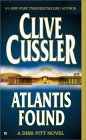
From Atlantis Found by Clive Cussler. (c) October, 1999





The Flower Sisters
by Michelle Collins Anderson
From the new Fannie Flagg of the Ozarks, a richly-woven story of family, forgiveness, and reinvention.

The House on Biscayne Bay
by Chanel Cleeton
As death stalks a gothic mansion in Miami, the lives of two women intertwine as the past and present collide.

The Funeral Cryer by Wenyan Lu
Debut novelist Wenyan Lu brings us this witty yet profound story about one woman's midlife reawakening in contemporary rural China.
Your guide toexceptional books
BookBrowse seeks out and recommends the best in contemporary fiction and nonfiction—books that not only engage and entertain but also deepen our understanding of ourselves and the world around us.