Summary | Excerpt | Reading Guide | Reviews | Beyond the Book | Readalikes | Genres & Themes | Author Bio

Critics' Opinion:
Readers' Opinion:
First Published:
Jul 2012, 320 pages
Paperback:
Apr 2013, 320 pages
 Book Reviewed by:
Kim Kovacs
Buy This Book

In the meantime, Elizabeth can’t imagine what in the name of God she--what anyone--can do for them. Still, after catching her breath, she and her father and the American consul decide that instead of spending lunch discussing the conditions in Aleppo and planning for the arrival of the rest of their group, they will follow these woeful deportees down the alley and into the square, and there see what they can do to help.
Ryan Martin leaves to find rags for the women to wear, but by the time he returns with a wagon of tattered dresses and blouses--remnants from the dead who have passed through Aleppo that summer--the newly arrived deportees already have been clothed by the other refugees. In the meantime, Elizabeth and a nurse from the hospital pick at the vermin on the women and clean the gaping wounds on their legs and ankles and feet. They ration the little calamine lotion and olive oil they have for those women whose sunburns have not seared deep into their flesh, and gently wash the wounds of those whose skin--especially on their shoulders and backs--has peeled off like a snake’s. Within minutes they finish off the one large bottle of iodine the nurse has brought. Elizabeth gives the deportees water and bowls of thin bulgur soup to eat, because it is all they can scare up at the moment. There may be bread tomorrow. She feels helpless. When she was given her nursing training back in Boston, no one prepared her for dysentery. For gangrene. For feet with bones splintered from weeks of walking barefoot, the toes and heels swollen and mangled and deformed.
Most of the women are clustered underneath makeshift tents--canvas pulled tight on tottering wooden poles--but there are more women than there is room, so they spread out beyond the tent when the sun is no longer overhead and there are long stripes of comforting black shade. The children--among whom the only males in this new group can be found--remind her of dead sea horses she once saw on the beach at Cape Cod: The children, like the sea horses, are curled up on their sides and their bones seem as brittle and sharp as the shells of the dried pipefish. Perhaps a quarter mile away is a hospital, primitive by Boston standards, but a hospital nonetheless. It infuriates Elizabeth that there is, apparently, no room for these women there, and so far not a single doctor has emerged from the building and offered to help. Ryan has tried to mollify her by telling her that the vast majority of the beds there are filled with Armenian women and children, but this reality too has left her seething inside.
The number of deportees who speak either English or French surprises Elizabeth, though most are too tired right now to talk. Nevertheless, there is a woman who looks to be in her fifties but Elizabeth suspects is actually half that age, who murmurs “thank you” in English as she takes the bowl of soup and brings it to her lips.
“You’re welcome,” Elizabeth says. “I wish it were a more substantial meal.”
The woman shrugs. “You’re American,” she observes, a statement. She is wearing a man’s shirt and a skirt that balloons around her like a sack.
“Yes. My name is Elizabeth.”
“I’m Nevart,” the Armenian offers, and Elizabeth carefully rolls the name around in her mind. A small girl sleeps beside the woman, the child’s collarbone rising and falling ever so slightly with each breath. Elizabeth guesses that she is seven or eight. “Where in America?” Nevart asks.
“Boston,” Elizabeth answers. “It’s in the state of Massachusetts.” The woman’s nails are as brown as her skin. “Sip that soup slowly,” she adds.
Nevart nods and places the bowl in her lap. “I know where Boston is,” she says. “I heard you speaking Armenian a minute ago. How much do you know?”
Excerpted from The Sandcastle Girls by Chris Bohjalian. Copyright © 2012 by Chris Bohjalian. Excerpted by permission of Doubleday, a division of Random House, Inc. All rights reserved. No part of this excerpt may be reproduced or reprinted without permission in writing from the publisher.





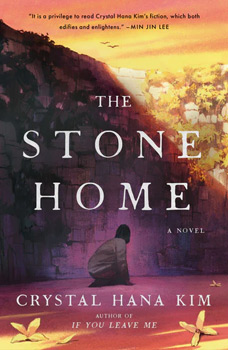
The Stone Home
by Crystal Hana Kim
A moving family drama and coming-of-age story revealing a dark corner of South Korean history.
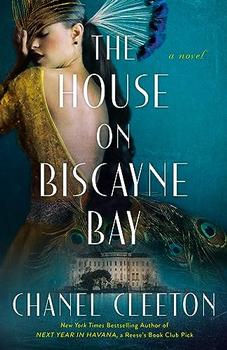
The House on Biscayne Bay
by Chanel Cleeton
As death stalks a gothic mansion in Miami, the lives of two women intertwine as the past and present collide.

The Funeral Cryer by Wenyan Lu
Debut novelist Wenyan Lu brings us this witty yet profound story about one woman's midlife reawakening in contemporary rural China.
Your guide toexceptional books
BookBrowse seeks out and recommends the best in contemporary fiction and nonfiction—books that not only engage and entertain but also deepen our understanding of ourselves and the world around us.