Summary | Excerpt | Reviews | Beyond the Book | Readalikes | Genres & Themes | Author Bio
Critics' Opinion:
Readers' Opinion:
First Published:
Jun 2012, 416 pages
Paperback:
Mar 2013, 416 pages
 Book Reviewed by:
Lisa Guidarini
Buy This Book

Excerpt
Darwin's Ghosts
Just before Christmas in 1859, only a month after he had finally published On the Origin of Species by Natural Selection, Charles Darwin found himself disturbed, even haunted, by the thought of his intellectual predecessors. He entered a state of extreme anxiety that had the strange effect of making him more than usually forgetful.
It had been a cold winter. Though Darwin might have liked to linger on the Sand Walk with his children to admire the intricately patterned hoarfrost on the trees, he knew he had work to do, letters about his book to answer, criticisms to face.
He had weathered the first blasts of the storm of censure in a sanatorium in Ilkley, where he had been taking the water cure, wrapped in wet sheets in hot rooms, the skin on his face dry and cracked with eczema. Since his return to his family home, Down House, now garlanded with Christmas holly, ivy, and mistletoe by his children, he had braced himself every morning against the sound of the postman’s footsteps on the gravel outside his study window. The letters, he lamented to his wife, Emma, came like swarms.
Each new mailbag delivered to Down House brought letters voicing opprobrium, some veiled, some outspoken; a few contained praise. But though some reviewers might be expressing outrage, Darwin reassured himself, hundreds of ordinary people were reading his book. On the first day of sale in November, the entire print run of 1,250 books had sold out. Even Mudie’s Select Lending Library had taken five hundred copies. Now his publisher, John Murray, was about to publish a second edition; this time Murray intended to print three thousand copies, and he had agreed to let Darwin correct a few minor mistakes. Darwin was relieved. The mistakes embarrassed him.
As readers and reviewers took up their positions for or against his book, Darwin began to keep a note of where everyone stood on the battleground. “We shall soon be a good body of working men,” he wrote to his closest friend and confidant, the botanist Joseph Hooker, “& shall have, I am convinced, all young & rising naturalists on our side.”
The letter that launched Darwin into a prolonged attack of anxiety came from the Reverend Baden Powell, the Savilian Professor of Geometry at Oxford, a theologian and physicist who had been forthright in his support for the development theory for some time.* The elderly professor was on the brink of being prosecuted for ecclesiastical heresy. Of all the letters in that day’s pile, the one from Powell would be innocuous enough, Darwin assumed. He scanned it quickly, relieved to glimpse phrases like “masterly volume” and a few other words of praise. But Baden Powell was not happy. Having finished with his compliments, the professor launched into a direct attack, criticizing Darwin not for being wrong, not for being an infidel, but for failing to acknowledge his predecessors. He even implied that Darwin had taken the credit for a theory that had already been argued by others, notably himself.
This was not the first time Darwin had been accused of intellectual theft, but until now, the accusations had been tucked away in reviews and had been only implicit. How original is this book? people were clearly asking. How new is this idea of Mr. Darwin’s?
* The Reverend Baden Powell was the father of Robert Baden-Powell, the founder of the Scouting movement.
He might have protected himself better from charges of plagiarism, Darwin reflected fretfully, if he had only written a preface, as most scientists did when they published any controversial set of claims: a survey of all the ideas that had gone before. It gave the ideas a history and a context. It was a way of showing where the edges of other people’s ideas finished and your own began. But he had not done so, though he had planned to. And now he was being accused of passing off the ideas of others as his own.
Excerpted from Darwin's Ghosts by Rebecca Stott. Copyright © 2012 by Rebecca Stott. Excerpted by permission of Spiegel & Grau, a division of Random House, Inc. All rights reserved. No part of this excerpt may be reproduced or reprinted without permission in writing from the publisher.


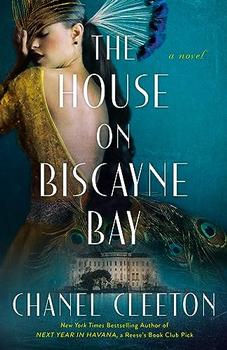
The House on Biscayne Bay
by Chanel Cleeton
As death stalks a gothic mansion in Miami, the lives of two women intertwine as the past and present collide.
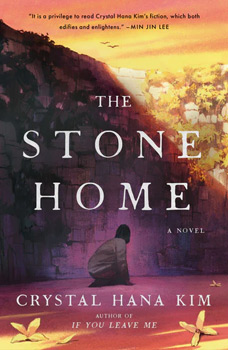
The Stone Home
by Crystal Hana Kim
A moving family drama and coming-of-age story revealing a dark corner of South Korean history.

The Funeral Cryer by Wenyan Lu
Debut novelist Wenyan Lu brings us this witty yet profound story about one woman's midlife reawakening in contemporary rural China.
Your guide toexceptional books
BookBrowse seeks out and recommends the best in contemporary fiction and nonfiction—books that not only engage and entertain but also deepen our understanding of ourselves and the world around us.