Summary | Excerpt | Reviews | Beyond the Book | Readalikes | Genres & Themes | Author Bio
Critics' Opinion:
Readers' Opinion:
First Published:
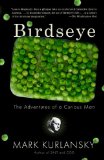
May 2012, 272 pages
Paperback:
Feb 2013, 272 pages
 Book Reviewed by:
Jo Perry
Buy This Book

Europeans did not always like the American attitude. Albert Einstein, essentially a nineteenth-century European scientist and pure theoretician who found himself in twentieth-century America, wrote of this pragmatic side of American thinking, "There is visible in this process of relatively fruitless but heroic endeavors a systematic trend of development, namely, an increasing skepticism concerning every attempt by means of pure thought to learn something about the 'objective world,' about the world of 'things' in contrast to the world of mere 'concepts and ideas.'?"
Birdseye grew up in a world in which mere concepts and ideas were not enough. An American inventor solved a problem, formed a company, and, he hoped, earned a fortune. Alexander Graham Bell, a Scot turned Canadian who then came to America, was most known at the time of Birdseye's birth as not only the inventor of the telephone but the founder of the first telephone company, Bell Telephone, in 1877. By the time Birdseye was born, the Bell Telephone Company had placed phones in 150,000 homes and offices.
Excerpted from Birdseye by Mark Kurlansky. Copyright © 2012 by Mark Kurlansky. Excerpted by permission of Doubleday, a division of Random House, Inc. All rights reserved. No part of this excerpt may be reproduced or reprinted without permission in writing from the publisher

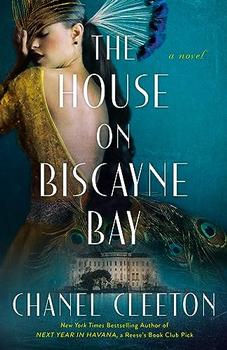
The House on Biscayne Bay
by Chanel Cleeton
As death stalks a gothic mansion in Miami, the lives of two women intertwine as the past and present collide.
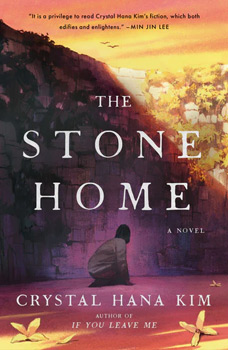
The Stone Home
by Crystal Hana Kim
A moving family drama and coming-of-age story revealing a dark corner of South Korean history.
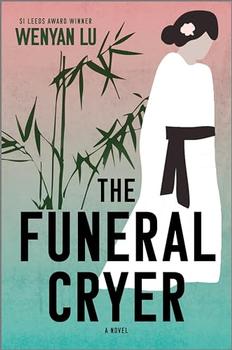
The Funeral Cryer by Wenyan Lu
Debut novelist Wenyan Lu brings us this witty yet profound story about one woman's midlife reawakening in contemporary rural China.
Your guide toexceptional books
BookBrowse seeks out and recommends the best in contemporary fiction and nonfiction—books that not only engage and entertain but also deepen our understanding of ourselves and the world around us.