Summary | Excerpt | Reviews | Beyond the Book | Readalikes | Genres & Themes | Author Bio
Critics' Opinion:
Readers' Opinion:
First Published:
Apr 2012, 304 pages
Paperback:
Feb 2013, 304 pages
 Book Reviewed by:
Elizabeth Whitmore Funk
Buy This Book

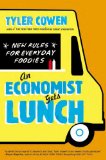
Food is a product of economic supply and demand, so try to figure out where the supplies are fresh, the suppliers are creative, and the demanders are informed.
Most food writings are not much concerned with economics, but the early history of my discipline is for the most part a theory of food production and distribution. Early economies were built upon agriculture and of course they still are in the world's poorer countries. Adam Smith, who wrote The Wealth of Nations in 1776, was the father of modern economics and some of his best pedagogic examples had to do with the grain trade. Frédéric Bastiat, a leading nineteenth century French economist who remains in print to this day, focused on explaining how it is that Paris gets fed, even though no central planner sees to this fact. I'm bringing my own profession back to its historic roots.
Before we can understand how people are beginning to put things right, we need to understand how matters went wrong in the first place.
Excerpted from An Economist Gets Lunch by Tyler Cowen. Copyright © 2012 by Tyler Cowen. Excerpted by permission of Dutton. All rights reserved. No part of this excerpt may be reproduced or reprinted without permission in writing from the publisher.


The House on Biscayne Bay
by Chanel Cleeton
As death stalks a gothic mansion in Miami, the lives of two women intertwine as the past and present collide.
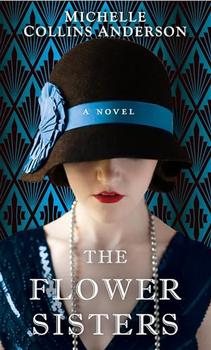
The Flower Sisters
by Michelle Collins Anderson
From the new Fannie Flagg of the Ozarks, a richly-woven story of family, forgiveness, and reinvention.

The Funeral Cryer by Wenyan Lu
Debut novelist Wenyan Lu brings us this witty yet profound story about one woman's midlife reawakening in contemporary rural China.
Your guide toexceptional books
BookBrowse seeks out and recommends the best in contemporary fiction and nonfiction—books that not only engage and entertain but also deepen our understanding of ourselves and the world around us.