Summary | Excerpt | Reading Guide | Reviews | Beyond the Book | Readalikes | Genres & Themes | Author Bio
Critics' Opinion:
Readers' Opinion:
First Published:
Mar 2012, 432 pages
Paperback:
Mar 2013, 352 pages
 Book Reviewed by:
Kim Kovacs
Buy This Book

The child quit Greene Street by way of Prince before facing the wild river of Broadway, dressed for her bedroom and hugging the shadows like a lifeline. Everything blurs on Broadway at ten o'clock at night. She braved a flash torrent of watered silk. Glib-eyed men in double vests of black velvet stampeded into saloons cloaked from floor to ceiling in mirrors. Stevedores, politicians, merchants, a group of newsboys with unlit cigars tucked in their rosy lips. A thousand floating pairs of vigilant eyes. A thousand ways to be caught. And the sun had fallen, so the frail sisterhood haunted every corner: chalk-bosomed whores desperately pale beneath the rouge, their huddles of five and six determined by brothel kinships and by who wore diamonds and who could only afford cracked and yellowing paste copies.
The little girl could spot out even the richest and healthiest of the street bats for what they really were. She knew the mabs from the ladies instantly.
When she spied a gap in the buttery hacks and carriages, she darted like a moth out of the shadows. Willing herself invisible, winging across the huge thoroughfare eastward. Her naked feet met the slick, tarry waste that curdled up higher than the cobbles, and she nearly stumbled on a gnawed ear of corn.
Her heart leaped, a single jolt of panic. She'd fall - they'd see her and it would all be over.
Did they kill the other kinchin slow or quick?
But she didn't fall. The carriage lights veering off scores of plate-glass windows were behind her, and she was flying again. A few girlish gasps and one yell of alarm marked her trail.
Nobody chased her. But that was nobody's fault, really, not in a city of this size. It was only the callousness of four hundred thousand people, blending into a single blue-black pool of unconcern. That's what we copper stars are for, I think... to be the few who stop and look.
She said later that she was seeing in badly done paintings - everything crude and two-dimensional, the brick buildings dripping watercolor edges. I've suffered that state myself, the not-being-there. She recollects a rat gnawing at a piece of oxtail on the pavement, then nothing. Stars in a midsummer sky. The light clatter of the New York and Harlem train whirring by on iron railway tracks, the coats of its two overheated horses wet and oily in the gaslight. A passenger in a stovepipe hat staring back blankly the way they'd come, trailing his watch over the window ledge with his fingertips. The door open on a sawdusty slaughter shop, as they're called, half-finished cabinetry and dismembered chairs pouring into the street, as scattered as her thoughts. Then another length of clotted silence, seeing nothing. She reluctantly pulled the stiffening cloth away from her skin once more.
The girl veered onto Walker Street, passing a group of dandies with curled and gleaming soaplocks framing their monocles, fresh and vigorous after a session with the marble baths of Stoppani's. They thought little enough of her, though, because of course she was running hell for leather into the cesspit of the Sixth Ward, and so naturally she must have belonged there.
She looked Irish, after all. She was Irish. What sane man would worry over an Irish girl flying home?
Well, I would.
I lend considerably more of my brain to vagrant children. I'm much closer to the question. First, I've been one, or near enough to it. Second, star police are meant to capture the bony, grime-cheeked kinchin when we can. Corral them like cattle, then pack them in a locked wagon rumbling up Broadway to the House of Refuge. Th e urchins are lower in our society than the Jersey cows, though, and herding is easier on livestock than on stray humans. Children stare back with something too hot to be malice, something helpless yet fiery when police corner them... something I recognize. And so I will never, not under any circumstances, never will I do such a thing. Not if my job depended on it. Not if my life did. Not if my brother's life did.
Excerpted from The Gods of Gotham by Lyndsay Faye. Copyright © 2012 by Lyndsay Faye. Excerpted by permission of Amy Einhorn Books. All rights reserved. No part of this excerpt may be reproduced or reprinted without permission in writing from the publisher.





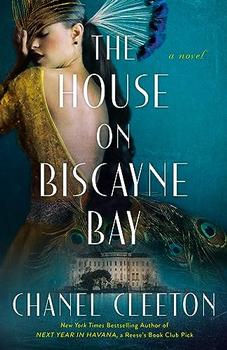
The House on Biscayne Bay
by Chanel Cleeton
As death stalks a gothic mansion in Miami, the lives of two women intertwine as the past and present collide.

The Flower Sisters
by Michelle Collins Anderson
From the new Fannie Flagg of the Ozarks, a richly-woven story of family, forgiveness, and reinvention.

The Funeral Cryer by Wenyan Lu
Debut novelist Wenyan Lu brings us this witty yet profound story about one woman's midlife reawakening in contemporary rural China.
Your guide toexceptional books
BookBrowse seeks out and recommends the best in contemporary fiction and nonfiction—books that not only engage and entertain but also deepen our understanding of ourselves and the world around us.