Summary | Excerpt | Reviews | Beyond the Book | Readalikes | Genres & Themes | Author Bio
Critics' Opinion:
Readers' Opinion:
First Published:
Sep 2011, 544 pages
Paperback:
Jul 2012, 544 pages
 Book Reviewed by:
Marnie Colton
Buy This Book

Hemingway's momentary high spirits in early April 1934 must have had at least two prongs: he was back from his excellent safari adventure; and now, before heading home by train to Florida, he hoped to go to a Brooklyn boatyard and put in an order for his own longed-for fishing machine. And yet, what his letters, cojoined with verifiable facts of his life just then, suggest is that what might have seemed so clear in a photograph and in what he told some shipside reporters didn't nearly reflect what Hemingway was generally feeling inside. Every good photograph has a secret, a critic named Mark Stevens once wrote: "Something mysteriously and tantalizingly withheld, even when the world seems laid out as plainly as a corpse upon a table."
One verifiable truth is that the monarch of American letters had been riding through rough critical seas for the last few years - and much more rough going was up ahead. Somehow, nothing seemed quite as locked as it once did, and that included owning the reviewers. Not quite a year earlier - on June 13, 1933 - the author for whom things had once seemed to come so effortlessly had written to his book editor: "I am tempted never to publish another damned thing. The swine arent worth writing for. I swear to Christ they're not. Every phase of the whole racket is so disgusting that it makes you feel like vomiting._._._. And it is a commonplace that I lack confidence that I am a man - What shit - And I'm supposed to go around with your good friends spreading that behind my back - And they imagine they will get away with it." He'd been referring specifically in this instance to his former friend Max Eastman (a fellow Scribners author), who'd just written a half-joking and belated review of Death in the Afternoon for The New Republic titled "Bull in the Afternoon." The Hemingway style, Eastman said, was that "of wearing false hair on the chest." In Hemingway's reading, and in the reading of some of his close friends, the piece wasn't trying to be humorous at all but rather was making overt suggestions to the effect that Hemingway must feel sexually inadequate. Well, he'd break Eastman's jaw the next time he saw him, and sell tickets to the event.
One way to read Ernest Hemingway's life is through the phenomenon of remarkable first luck. He'd become an international literary figure, specifically as a novelist, so quickly - in the second half of the 1920s, less than a decade from when he'd started out. He'd started out with stories - actually, sometimes just intensely felt imagistic fragments of stories.
Excerpted from Hemingway's Boat by Paul Hendrickson. Copyright © 2011 by Paul Hendrickson. Excerpted by permission of Knopf, a division of Random House, Inc. All rights reserved. No part of this excerpt may be reproduced or reprinted without permission in writing from the publisher.

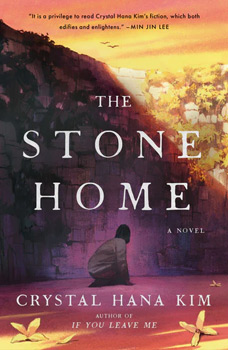
The Stone Home
by Crystal Hana Kim
A moving family drama and coming-of-age story revealing a dark corner of South Korean history.

The Flower Sisters
by Michelle Collins Anderson
From the new Fannie Flagg of the Ozarks, a richly-woven story of family, forgiveness, and reinvention.

The Funeral Cryer by Wenyan Lu
Debut novelist Wenyan Lu brings us this witty yet profound story about one woman's midlife reawakening in contemporary rural China.
Your guide toexceptional books
BookBrowse seeks out and recommends the best in contemporary fiction and nonfiction—books that not only engage and entertain but also deepen our understanding of ourselves and the world around us.