Summary | Excerpt | Reading Guide | Reviews | Beyond the Book | Readalikes | Genres & Themes | Author Bio
Critics' Opinion:
Readers' Opinion:
First Published:
Oct 2011, 416 pages
Paperback:
Sep 2012, 464 pages
 Book Reviewed by:
Elizabeth Whitmore Funk
Buy This Book

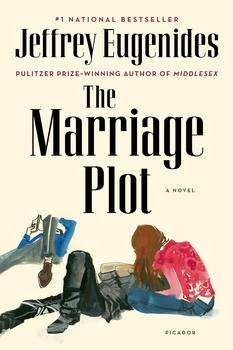
Madeleine's love troubles had begun at a time when the French theory she was reading deconstructed the very notion of love. Semiotics 211 was an upper-level seminar taught by a former English department renegade. Michael Zipperstein had come to Brown thirty-two years earlier as a New Critic. He'd inculcated the habits of close reading and biography-free interpretation into three generations of students before taking a Road to Damascus sabbatical, in Paris, in 1975, where he'd met Roland Barthes at a dinner party and been converted, over cassoulet, to the new faith. Now Zipperstein taught two courses in the newly created Program in Semiotics Studies: Introduction to Semiotic Theory in the fall and, in the spring, Semiotics 211. Hygienically bald, with a seaman's mustache-less white beard, Zipperstein favored French fisherman's sweaters and wide-wale corduroys. He buried people with his reading lists: in addition to all the semiotic big hitters - Derrida, Eco, Barthes - the students in Semiotics 211 had to contend with a magpie nest of reserve reading that included everything from Balzac's Sarrasine to issues of Semiotext(e) to photocopied selections from E. M. Cioran, Robert Walser, Claude Levi-Strauss, Peter Handke, and Carl Van Vechten. To get into the seminar, you had to submit to a one-on-one interview with Zipperstein during which he asked bland personal questions, such as what your favorite food or dog breed was, and made enigmatic Warholian remarks in response. This esoteric probing, along with Zipperstein's guru's dome and beard, gave his students a sense that they'd been spiritually vetted and were now - for two hours on Thursday afternoons, at least - part of a campus lit-crit elite.
Which was exactly what Madeleine wanted. She'd become an English major for the purest and dullest of reasons: because she loved to read. The university's "British and American Literature Course Catalog" was, for Madeleine, what its Bergdorf equivalent was for her roommates. A course listing like "English 274: Lyly's Euphues" excited Madeleine the way a pair of Fiorucci cowboy boots did Abby. "English 450A: Hawthorne and James" filled Madeleine with an expectation of sinful hours in bed not unlike what Olivia got from wearing a Lycra skirt and leather blazer to Danceteria. Even as a girl in their house in Prettybrook, Madeleine wandered into the library, with its shelves of books rising higher than she could reach - newly purchased volumes such as Love Story or Myra Breckinridge that exuded a faintly forbidden air, as well as venerable leather-bound editions of Fielding, Thackeray, and Dickens - and the magisterial presence of all those potentially readable words stopped her in her tracks. She could scan book spines for as long as an hour. Her cataloging of the family's holdings rivaled the Dewey decimal system in its comprehensiveness. Madeleine knew right where everything was. The shelves near the fireplace held Alton's favorites, biographies of American presidents and British prime ministers, memoirs by warmongering secretaries of state, novels about sailing or espionage by William F. Buckley, Jr. Phyllida's books filled the left side of the bookcases leading up to the parlor, NYRB-reviewed novels and essay collections, as well as coffee-table volumes about English gardens or chinoiserie. Even now, at bed-and-breakfasts or seaside hotels, a shelf full of forlorn books always cried out to Madeleine. She ran her fingers over their salt-spotted covers. She peeled apart pages made tacky by ocean air. She had no sympathy for paperback thrillers and detective stories. It was the abandoned hardback, the jacketless 1931 Dial Press edition ringed with many a coffee cup, that pierced Madeleine's heart. Her friends might be calling her name on the beach, the clambake already under way, but Madeleine would sit down on the bed and read for a little while to make the sad old book feel better. She had read Longfellow's "Hiawatha" that way. She'd read James Fenimore Cooper. She'd read H. M. Pulham, Esquire by John P. Marquand.
Excerpted from The Marriage Plot by Jeffrey Eugenides. Copyright © 2011 by Jeffrey Eugenides. Excerpted by permission of Farrar, Straus & Giroux. All rights reserved. No part of this excerpt may be reproduced or reprinted without permission in writing from the publisher.



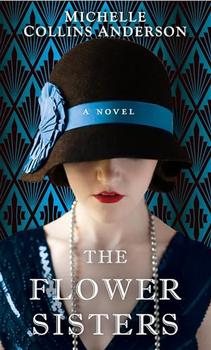
The Flower Sisters
by Michelle Collins Anderson
From the new Fannie Flagg of the Ozarks, a richly-woven story of family, forgiveness, and reinvention.
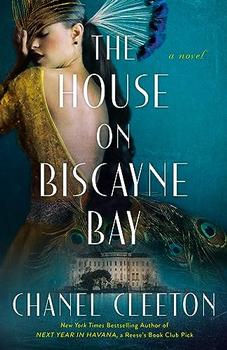
The House on Biscayne Bay
by Chanel Cleeton
As death stalks a gothic mansion in Miami, the lives of two women intertwine as the past and present collide.
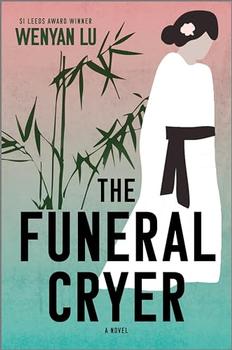
The Funeral Cryer by Wenyan Lu
Debut novelist Wenyan Lu brings us this witty yet profound story about one woman's midlife reawakening in contemporary rural China.
Your guide toexceptional books
BookBrowse seeks out and recommends the best in contemporary fiction and nonfiction—books that not only engage and entertain but also deepen our understanding of ourselves and the world around us.