
-
Your next favorite book
is waiting.
Summary | Excerpt | Reading Guide | Reviews | Beyond the Book | Readalikes | Genres & Themes | Author Bio
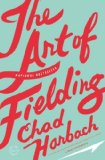
A Novel
by Chad Harbach Book Reviewed by:
The kid glided in front of the first grounder, accepted the ball into his glove with a lazy grace, pivoted, and threw to first. Though his motion was languid, the ball seemed to explode off his fingertips, to gather speed as it crossed the diamond. It smacked the pocket of the first baseman's glove with the sound of a gun going off. The coach hit another, a bit harder: same easy grace, same gunshot report. Schwartz, intrigued, sat up a little. The first baseman caught each throw at sternum height, never needing to move his glove, and dropped the balls into the plastic bucket at his feet.
The coach hit balls harder and farther afield - up the middle, deep in the hole. The kid tracked them down. Several times Schwartz felt sure he would need to slide or dive, or that the ball was flat-out unreachable, but he got to each one with a beat to spare. He didn't seem to move faster than any other decent shortstop would, and yet he arrived instantly, impeccably, as if he had some foreknowledge of where the ball was headed. Or as if time slowed down for him alone.
After each ball, he dropped back into his feline crouch, the fingertips of his small glove scraping the cooked earth. He barehanded a slow roller and fired to first on a dead run. He leaped high to snag a tailing line drive. Sweat poured down his cheeks as he sliced through the soup-thick air. Even at full speed his face looked bland, almost bored, like that of a virtuoso practicing scales. He weighed a buck and a quarter, maximum. Where the kid's thoughts were - whether he was having any thoughts at all, behind that blank look - Schwartz couldn't say. He remembered a line from Professor Eglantine's poetry class: Expressionless, expresses God.
Then the coach's bucket was empty and the first baseman's bucket full, and all three men left the field without a word. Schwartz felt bereft. He wanted the performance to continue. He wanted to rewind it and see it again in slow motion. He looked around to see who else had been watching - wanted at least the pleasure of exchanging a glance with another enraptured witness - but nobody was paying any attention. The few fans who hadn't gone in search of beer or shade gazed idly at their cell-phone screens. The kid's loser teammates were already in the parking lot, slamming their trunks. Fifteen minutes to game time. Schwartz, still dizzy, hauled himself to his feet. He would need two quarts of Gatorade to get through the final game, then a coffee and a can of dip for the long midnight drive. But first he headed for the far dugout, where the kid was packing up his gear. He'd figure out what to say on the way over. All his life Schwartz had yearned to possess some single transcendent talent, some unique brilliance that the world would consent to call genius. Now that he'd seen that kind of talent up close, he couldn't let it walk away.

Excerpted from "The Art of Fielding," Little, Brown & Company Copyright © 2011 by Chad Harbach. No part of this excerpt may be reproduced or reprinted without permission in writing from the publisher.







When you are growing up there are two institutional places that affect you most powerfully: the church, which ...
Click Here to find out who said this, as well as discovering other famous literary quotes!

Can you name the title?
Test your book knowledge with our daily trivia challenge!
Your guide toexceptional books
BookBrowse seeks out and recommends the best in contemporary fiction and nonfiction—books that not only engage and entertain but also deepen our understanding of ourselves and the world around us.
