Summary | Excerpt | Reading Guide | Reviews | Beyond the Book | Readalikes | Genres & Themes | Author Bio

Critics' Opinion:
Readers' Opinion:
First Published:
Mar 2011, 320 pages
Paperback:
Feb 2012, 320 pages
 Book Reviewed by:
BookBrowse First Impression Reviewers
Buy This Book

A Note of Grace
Old Man Hung makes the best pho in the city and has done so for decades. Where he once had a shop, though, he no longer does because the rents are exorbitant, both the hard rents and the soft: the bribes a proprietor must pay to the police in this new era of freedom.
Still, Hung has a mission, if not a license. He pushes the firewood, braziers and giant pots balanced on his wooden cart through the streets of Hanoi's Old Quarter in the middle of the night and sets up his stall in a sliver of alleyway, on an oily patch of factory ground, at the frayed edge of a park or in the hollow carcass of a building under construction. He's a resourceful, roving man who, until very recently, could challenge those less than half his age to keep up.
When he is forced to move on, word will travel from the herb seller, or the noodle maker or the man delivering newspapers to the shopkeepers along Hàng Bông Road who make sure to pass the information on to his customers, particularly to Bình, the one who is like a son to him, out buying a newspaper or a couple of cigarettes in the earliest of morning hours, returning home to rouse his own son, Tu, slapping their bowls, spoons and chopsticks into his satchel, jerking the motorbike out of his kitchen and into the alleyway, and joining the passengers of three million other motorbikes en route to breakfast, at least forty of them destined for Hung.
His customers, largely men known to him for a number of years, are loyal, some might say dependent. He is loyal and most certainly dependent. This is his livelihood, his being, his way in the world, and has been ever since he first came to apprentice in his uncle Chien's pho shop at eleven years of age.
It was 1933 when his father sent him from the rice fields to the city, getting Hung well out of the way of a mother who cherished him least of all her ten children. She'd kept him at a distance ever since a fortune teller had confirmed her suspicions that the large black mole stretching from the outer corner of Hung's left eye to the middle of his cheekbone was an inauspicious sign. Tattooed with the promise of future darkness, the fortune teller had decreed.
Hung had come to his uncle Chien with no name other than "nine," denoting his place in the birth order, becoming Hung only in Hanoi, under the guardianship of his uncle, a man who neither subscribed to village superstitions nor could afford to turn help away.
This morning, Hung has set up shop in the empty kidney of a future swimming pool attached to a hotel under construction near the Ngu Xá Temple. It has taken several attempts to get his fire started in the damp air, but as the dark gray of night yields to the lighter gray of clouded morning, the flames burn an orange as pure and vibrant as a monk's robe.
Some of his customers have already begun to slip over the lip of the pool, running down its incline with their bowls, spoons and chopsticks, racing to be head of the queue.
Hung works like the expert he is, using his right hand to lay noodles into each bowl presented to him, covering these with slices of rare beef, their edges curling immediately with the heat of the broth he is simultaneously ladling into each bowl with his left.
"There you go, Nguyn. There you go, Phúc, little Min," and off his first customers shuffle with their bowls to squat on the concrete incline, using their spoons and chopsticks to greet the dawn of a new day.
Ah, and here is Bình, greeting him quietly as always, bowl in hands, never particularly animated until he's had a few sips of broth. Although he is well into his fifties, Bình is a man still so like the boy who used to accompany his father, Dao, to Hung's pho shop back in the revolutionary days of the early 1950s. The world has changed much since then, but Bình remains the same mindful, meditative soul who used to pad about after Hung, helping him carry the empty bowls out to the dishwasher in the alleyway behind the shop.
Excerpted from The Beauty of Humanity Movement by Camilla Gibb. Copyright © 2011 by Camilla Gibb. Excerpted by permission of Penguin Press. All rights reserved. No part of this excerpt may be reproduced or reprinted without permission in writing from the publisher.





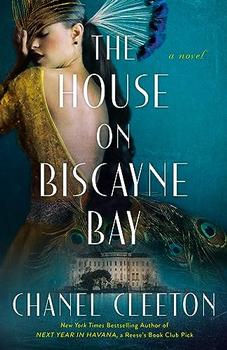
The House on Biscayne Bay
by Chanel Cleeton
As death stalks a gothic mansion in Miami, the lives of two women intertwine as the past and present collide.

The Flower Sisters
by Michelle Collins Anderson
From the new Fannie Flagg of the Ozarks, a richly-woven story of family, forgiveness, and reinvention.

The Funeral Cryer by Wenyan Lu
Debut novelist Wenyan Lu brings us this witty yet profound story about one woman's midlife reawakening in contemporary rural China.
Your guide toexceptional books
BookBrowse seeks out and recommends the best in contemporary fiction and nonfiction—books that not only engage and entertain but also deepen our understanding of ourselves and the world around us.