Summary | Excerpt | Reviews | Beyond the Book | Readalikes | Genres & Themes | Author Bio
 Book Reviewed by:
Elena Spagnolie
Buy This Book

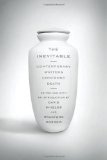
By contrast, Lance Olsen’s “Lessness”—a collage of personal anecdotes, quotations, and aphorisms—evokes the irony of humankind’s condition and the ways in which our “deepest need is to be free of the anxiety of death and annihilation; but it is life itself which awakens it, and so we must shrink from being fully alive.” His essay is also full of gallows humor: “My wife’s grandmother refused to be buried, insisting on being entombed in a mausoleum instead because, she said, she didn’t want to get dirty.” Robin Hemley, in his “Field Notes for the Graveyard Enthusiast,” offers yet another response to the inevitable by developing a taxonomy of known and unknown graveyards, but the taxonomy dissolves. All the dead become anonymous in time, he concludes, embracing the eventual disappearance of every individual: “My gravestone will be blank.”
These essays display a remarkable range of differing approaches. Sallie Tisdale, in her entomologically inspired “The Sutra of Maggots and Blowflies,” uses the dipteran order of insects as a metaphor for death, evoking the transience of their brief adult lives and the repulsion and attraction she feels toward them. She talks about “decay as a kind of perfect” and wants to be able to stare at death without succumbing to it—being “in the fire” and still living one’s life. Margo Jefferson reverses the trajectory of the metaphor. In “Death Wish in Negroland,” she investigates the suicidal tendencies of the black bourgeoisie as an emblem of deeply haunted and conflicted desires: “I’d call it the guilty confusion of those who were raised to defiantly accept their entitlement, to be more than survivors, to be victors who knew that victory was as much a threat as failure . . . .” Peter Straub, in “Inside Story,” shares with us one of his most cherished and defining secret childhood moments, a near-fatal accident that colored his entire life as a writer and a man, the roiling depths of which come into focus on his analyst’s couch. Lynne Tillman’s “The Final Plot” is an unblinking meditation on language and death. She addresses the subject from the point of view that death is the one subject no writer can address autobiographically, that the experience is nourished by the deaths of others, concluding, “Of death, mortals are absolutely ignorant. The dead, fortunately, are beyond caring.” In “Bijou,” Mark Doty describes a 1972 art porn movie of that same title, remembers a 1980s East Village sex club, and meditates on the deathly cloud of AIDS that emerged during that era, seeing sex as a kind of affirmation of death. In “What Will Survive of Us,” Geoff Dyer discusses the worldwide phenomenon of ghost bikes—bicycles painted white and placed at the scenes of fatal bike accidents to memorialize those who died—seeing them as a creative, moving improvement on the shabbiness of the more grandiose memorial art of officialdom. Finally we’re all just trying to figure out how to say good--bye.
The concluding essay, Annie Dillard’s brief but haunting “This Is the Life,” asks: if there is no transcendental meaning, and we know we are mortal, how do we construct a life with value? “You have seen an ordinary bit of what is real,” she writes, “the infinite fabric of time that eternity shoots through, and time’s soft-skinned people working and dying under slowly shifting stars. Then what?” Here is the very question every writer in this anthology -pursues.
David Foster Wallace, who so often set forth the most difficult questions, said, “You don’t have to think very hard to realize that our dread of both relationships and loneliness, both of which are sub-dreads of our dread of being trapped inside a self (a psychic self, not just a physical self), has to do with angst about death, the recognition that I’m going to die, and die very much alone, and the rest of the world is going to go merrily on without me. I’m not sure I could give you a steeple-fingered theoretical justification, but I strongly suspect a big part of [a writer’s] job is to aggravate this sense of entrapment and loneliness and death in people, to move people to countenance it, since any possible human redemption requires us first to face what’s dreadful, what we want to deny.” This anthology is an overt attempt to do exactly what Wallace called for.
Reprinted from The Inevitable, Contemporary Writers Confront Death edited by David Shields and Bradford Morrow (c) 2011 by David Shields and Bradford Morrow. Used with permission of the publisher, W. W. Norton & Company, Inc.

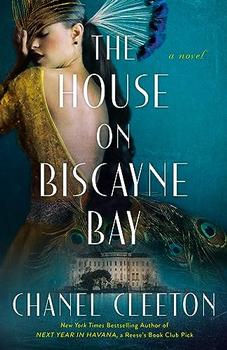
The House on Biscayne Bay
by Chanel Cleeton
As death stalks a gothic mansion in Miami, the lives of two women intertwine as the past and present collide.
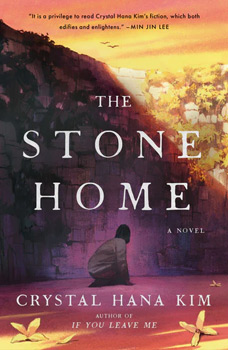
The Stone Home
by Crystal Hana Kim
A moving family drama and coming-of-age story revealing a dark corner of South Korean history.

The Funeral Cryer by Wenyan Lu
Debut novelist Wenyan Lu brings us this witty yet profound story about one woman's midlife reawakening in contemporary rural China.
Your guide toexceptional books
BookBrowse seeks out and recommends the best in contemporary fiction and nonfiction—books that not only engage and entertain but also deepen our understanding of ourselves and the world around us.