Summary | Excerpt | Reviews | Beyond the Book | Readalikes | Genres & Themes | Author Bio
An Insurance Company Insider Speaks Out on How Corporate PR Is Killing Health Care and Deceiving Americans
Critics' Opinion:
Readers' Opinion:
First Published:
Nov 2010, 288 pages
Paperback:
Sep 2011, 304 pages
 Book Reviewed by:
Stacey Brownlie
Buy This Book

Chapter 11
The Campaign Against Sicko
Most of the two thousand people who crowded into the Grand
Théâtre Lumière at the Cannes Film Festival early on Saturday
morning, May 19, 2007, for the world premiere of Sicko, Michael
Moore's indictment of the U.S. health care system, rose to their feet at
the end of the film and gave Moore and his new documentary an astonishing
fifteen-minute standing ovation.
One young man, however, could not stay to applaud because of
an urgent assignment. Largely unnoticed, he slipped out of the theater
and made his way to his hotel room, where he placed a call to the
organization in Washington, D.C., that not only had covered his trip
to the French Riviera and his ticket to the premiere but also paid his
salary.
Dialing America's Health Insurance Plans, he was immediately
patched into a conference call where dozens of insurance executives,
including me, waited anxiously on the line. All knew of the threat to
the industry; none knew any specifics. Moore had kept such tight control
over the release of his film that none of us knew exactly what it
was about. Would it focus on big pharmaceutical companies, as early
rumors had suggested, or on the insurance industry?
As he read from the extensive notes he had taken in the back of
the dark theater, AHIP's reconnaissance agent confirmed our worst
fears: Private health insurance companies played the role of the
villain.
Which companies were in the movie, we wanted to know, and
how badly were they portrayed?
I was cautiously optimistic. Because there had not been a single
Moore sighting at any of CIGNA's facilities or any reports that he had
interviewed anyone associated with the company, I thought there was
a good chance he had chosen other targets. I was hoping especially
that archrival Aetna had been in his sights.
But I was wrong: CIGNA was among the first companies in the
line of fire. My phone would soon be ringing off the hook with calls
from reporters and TV producers wanting to get my reaction to the
claims of people in the film who said we had refused to pay for needed
medical care. I also knew, though, that I would get a lot of support
from AHIP, which was poised to mount a massive PR campaign to discredit
Moore and his movie.
Industry leaders had already agreed to provide the resources for
a campaign to attack the movie because of the concern that it would
persuade more Americans to support a Medicare-for-all, governmentrun
health care system that would marginalize, if not eliminate, the
role of private insurance companies. Industry-commissioned polls had
been showing for several years that many Americans, worried about
rapidly rising insurance premiums and reports of insurance companies
refusing to pay for necessary medical treatments, were not as opposed
to such a system as they used to be. Several years had passed
since the fear-based propaganda campaigns financed by special interests
had scared Americans away from Bill and Hillary Clinton's health
care reform proposal. There had been only occasional need for fearmongering
during the industry-friendly Bush years.
Another big concern was the timing of Moore's film. The campaigns
for the Democratic and Republican presidential nominations
were in full swing. If Moore's movie attracted big audiences and
generated a lot of positive buzz, it might embolden one or more
Democratic candidates to join Representative Dennis Kucinich
(D-Ohio) in endorsing the expansion of Medicare to cover everybody.
If the man or woman elected in 2008 favored such a radical restructuring
of the American health care system, the increasingly profitable
insurance industry would find itself in a war for survival.
After hearing the report from Cannes, we knew that was a real
possibility. Moore's movie compared the U.S. system, dominated by
large for-profit insurance companies, with the nonprofit, government run
systems of Canada, France, the United Kingdom, and even Cuba,
all of which have attained universal coverage for their citizens while
spending far less for care that's as good as, if not better than, the care
Americans receive. Not surprisingly, considering the anticorporate
theme of Moore's previous documentaries, the U.S. system did not
fare well in the comparison.
Excerpted from Deadly Spin by Wendell Potter. Copyright © 2010 by Wendell Potter. Excerpted by permission of Bloomsbury. All rights reserved. No part of this excerpt may be reproduced or reprinted without permission in writing from the publisher.

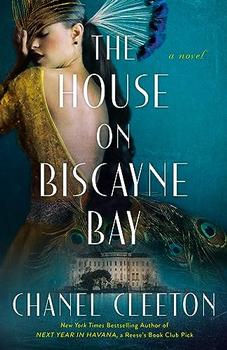
The House on Biscayne Bay
by Chanel Cleeton
As death stalks a gothic mansion in Miami, the lives of two women intertwine as the past and present collide.

The Flower Sisters
by Michelle Collins Anderson
From the new Fannie Flagg of the Ozarks, a richly-woven story of family, forgiveness, and reinvention.
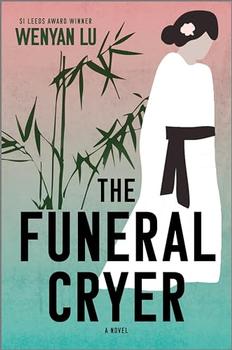
The Funeral Cryer by Wenyan Lu
Debut novelist Wenyan Lu brings us this witty yet profound story about one woman's midlife reawakening in contemporary rural China.
Your guide toexceptional books
BookBrowse seeks out and recommends the best in contemporary fiction and nonfiction—books that not only engage and entertain but also deepen our understanding of ourselves and the world around us.