Summary | Excerpt | Reading Guide | Reviews | Beyond the Book | Readalikes | Genres & Themes | Author Bio
Critics' Opinion:
Readers' Opinion:
First Published:
Jun 2010, 368 pages
Paperback:
Jun 2011, 336 pages
 Book Reviewed by:
Judy Krueger
Buy This Book

“I don’t get it.”
“Well, you could say it’s about self-imprisonment and breaking
free from that,” Lao Zhang explains. “Or breaking free from
irrational authority of any kind.”
“I guess.”
“Hey, Lao Zhang, ni zenmeyang?” someone asks.
“Hao, hao. Painting a lot. You?”
Everyone here seems to know Lao Zhang, which isn’t surprising.
He’s been in the Beijing art scene since it started, when
he was a teenager and hung out at the Old Summer Palace, the
first artists’ village in Communist China. After a couple of years,
the cops came in and arrested a lot of the artists, and the village
got razed. That happened to a lot of the places where Lao
Zhang used to hang out. “Government doesn’t like it when too
many people get together,” he told me once.
Finally, Lao Zhang gave up on Beijing proper. “Tai dade
mafan,” he’d say. Too much hassle. Too expensive. So he led an
exodus to Mati Village, a collective farm that had been practically
abandoned after the communes broke up. A place where
artists who hadn’t made it big could live for cheap.
“You think they’ll bust you here?” I asked once.
Lao Zhang shrugged. “Who knows? It lasts as long as it lasts.”
I have to wonder. Because even though Mati Village is pretty
far away from Beijing proper, far from the villas and townhouses
on Beijing’s outer fringes, people still find their way
here. Foreigners, art-lovers, journalists.
Me.
And that Prada chick from the jiaozi place tonight. Lucy Wu.
“Jianli, it’s been a long time.” Lucy Wu smiles and extends
her hand coyly in Lao Zhang’s general direction, having spotted
us hanging out by the café, behind the PA speakers where it’s
not quite so loud.
“Luxi,” Lao Zhang replies. He takes her hand for a moment;
it’s dwarfed in his. He stares at her with a look that I can’t quite
figure out. “You’re well?”
“Very.” She takes a step back, like she’s measuring him up. “I
met your friend Yili earlier this evening. Did she tell you?”
“Sorry,” I say. “I forgot.”
Lucy giggles. “Not to worry. I knew we’d find each other.”
I watch them watching each other, like a couple of circling cats.
“I’m going to get a beer,” I say.
Back in the main room, muffled thuds come from inside the
“concrete” block (I’m pretty sure it’s plaster). Cracks appear,
then a little chunk falls out, then more pieces, and all of a sudden
there’s a hole, and you can see this skinny, shirtless man covered
in sweat, swinging a sledgehammer against the walls of his prison.
The room is flooded with a rank smell, which makes sense, considering
the guy’s been in the box for a couple of days.
Everybody cheers.
I drink my beer. Grab another. The crowd starts to thin out
around me. Show’s over, I guess. It’s been almost an hour since
I’ve seen Lao Zhang.
I think about looking for him, but something holds me back.
Someone, more accurately.
She’s got to be an old girlfriend. Except I couldn’t tell if he
was really happy to see her.
“Sorry.”
It’s Lao Zhang, who has appeared next to me, without Lucy
Wu.
“How was it?” he asks.
Excerpted from Rock Paper Tiger by Lisa Brackmann. Copyright © 2010 by Lisa Brackmann. Excerpted by permission of Soho Press. All rights reserved. No part of this excerpt may be reproduced or reprinted without permission in writing from the publisher.


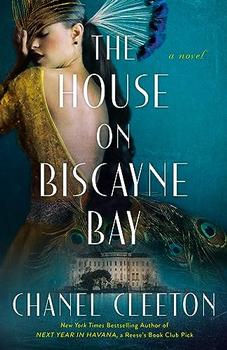
The House on Biscayne Bay
by Chanel Cleeton
As death stalks a gothic mansion in Miami, the lives of two women intertwine as the past and present collide.
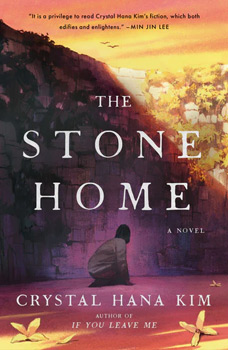
The Stone Home
by Crystal Hana Kim
A moving family drama and coming-of-age story revealing a dark corner of South Korean history.

The Funeral Cryer by Wenyan Lu
Debut novelist Wenyan Lu brings us this witty yet profound story about one woman's midlife reawakening in contemporary rural China.
Your guide toexceptional books
BookBrowse seeks out and recommends the best in contemporary fiction and nonfiction—books that not only engage and entertain but also deepen our understanding of ourselves and the world around us.