Summary | Excerpt | Reading Guide | Reviews | Beyond the Book | Readalikes | Genres & Themes | Author Bio
Turning Oppression into Opportunity for Women Worldwide
Critics' Opinion:
Readers' Opinion:
First Published:
Sep 2009, 320 pages
Paperback:
Jun 2010, 320 pages
 Book Reviewed by:
Beverly Melven
Buy This Book

Women are indeed a linchpin of the region's development strategy. Economists who scrutinized East Asia's success noted a common pattern. These countries took young women who previously had contributed negligibly to gross national product (GNP) and injected them into the formal economy, hugely increasing the labor force. The basic formula was to ease repression, educate girls as well as boys, give the girls the freedom to move to the cities and take factory jobs, and then benefit from a demographic dividend as they delayed marriage and reduced childbearing.The women meanwhile financed the education of younger relatives, and saved enough of their pay to boost national savings rates.This pattern has been called "the girl effect." In a nod to the female chromosomes, it could also be called "the double X solution."
Evidence has mounted that helping women can be a successful poverty-fighting strategy anywhere in the world, not just in the booming economies of East Asia.The Self Employed Women's Association was founded in India in 1972 and ever since has supported the poorest women in starting businesses—raising living standards in ways that have dazzled scholars and foundations.
In Bangladesh, Muhammad Yunus developed microfinance at the Grameen Bank and targeted women borrowers—eventually winning a Nobel Peace Prize for the economic and social impact of his work. Another Bangladeshi group, BRAC, the largest antipoverty organization in the world, worked with the poorest women to save lives and raise incomes—and Grameen and BRAC made the aid world increasingly see women not just as potential beneficiaries of their work, but as agents of it.
In the early 1990s, the United Nations and the World Bank began to appreciate the potential resource that women and girls represent. "Investment in girls' education may well be the highest-return investment available in the developing world," Lawrence Summers wrote when he was chief economist of the World Bank. "The question is not whether countries can afford this investment, but whether countries can afford not to educate more girls." In 2001 the World Bank produced an influential study, Engendering Development Through Gender Equality in Rights, Resources, and Voice, arguing that promoting gender equality is crucial to combat global poverty. UNICEF issued a major report arguing that gender equality yields a "double dividend" by elevating not only women but also their children and communities. The United Nations Development Programme (UNDP) summed up the mounting research this way:"Women's empowerment helps raise economic productivity and reduce infant mortality. It contributes to improved health and nutrition. It increases the chances of education for the next generation."
More and more, the most influential scholars of development and public health—including Sen and Summers, Joseph Stiglitz, Jeffrey Sachs, and Dr. Paul Farmer—are calling for much greater attention to women in development. Private aid groups and foundations have shifted gears as well."Women are the key to ending hunger in Africa," declared the Hunger Project. French foreign minister Bernard Kouchner, who founded Doctors Without Borders, bluntly declared of development: "Progress is achieved through women." The Center for Global Development issued a major report explaining "why and how to put girls at the center of development."CARE is taking women and girls as the centerpiece of its antipoverty efforts.The Nike Foundation and the NoVo Foundation are both focusing on building opportunities for girls in the developing world. "Gender inequality hurts economic growth," Goldman Sachs concluded in a 2008 research report that emphasized how much developing countries could improve their
economic performance by educating girls. Partly as a result of that research,Goldman Sachs committed $100 million to a"10,000Women" campaign meant to give that many women a business education.
Concerns about terrorism after the 9/11 attacks triggered interest in these issues in an unlikely constituency: the military and counterterrorism agencies. Some security experts noted that the countries that nurture terrorists are disproportionally those where women are marginalized. The reason there are so many Muslim terrorists, they argued, has little to do with the Koran but a great deal to do with the lack of robust female participation in the economy and society of many Islamic countries. As the Pentagon gained a deeper understanding of counterterrorism, and as it found that dropping bombs often didn't do much to help, it became increasingly interested in grassroots projects such as girls' education. Empowering girls, some in the military argued, would disempower terrorists.When the Joint Chiefs of Staff hold discussions of girls' education in Pakistan and Afghanistan, as they did in 2008, you know that gender is a serious topic that fits squarely on the international affairs agenda.That's evident also in the Council on Foreign Relations.The wood-paneled halls that have been used for discussions of MIRV warheads and NATO policy are now employed as well to host well-attended sessions on maternal mortality.
Excerpted from Half the Sky by Nicholas D. Kristof and Sheryl WuDunn Copyright © 2009 by Nicholas D. Kristof. Excerpted by permission of Knopf, a division of Random House, Inc. All rights reserved. No part of this excerpt may be reproduced or reprinted without permission in writing from the publisher.






The Flower Sisters
by Michelle Collins Anderson
From the new Fannie Flagg of the Ozarks, a richly-woven story of family, forgiveness, and reinvention.
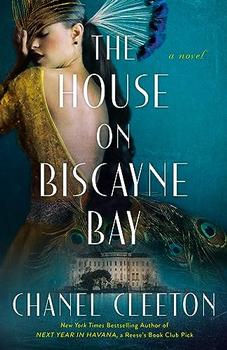
The House on Biscayne Bay
by Chanel Cleeton
As death stalks a gothic mansion in Miami, the lives of two women intertwine as the past and present collide.

The Funeral Cryer by Wenyan Lu
Debut novelist Wenyan Lu brings us this witty yet profound story about one woman's midlife reawakening in contemporary rural China.
Your guide toexceptional books
BookBrowse seeks out and recommends the best in contemporary fiction and nonfiction—books that not only engage and entertain but also deepen our understanding of ourselves and the world around us.