Summary | Excerpt | Reading Guide | Reviews | Beyond the Book | Readalikes | Genres & Themes | Author Bio
Critics' Opinion:
Readers' Opinion:
First Published:
Sep 2009, 320 pages
Paperback:
Aug 2010, 320 pages
 Book Reviewed by:
Micah Gell-Redman
Buy This Book

But we also need to consider one further argument. Much public
support for price-gouging laws comes from something more visceral
than welfare or freedom. People are outraged at “vultures” who prey
on the desperation of others and want them punished—not rewarded
with windfall profits. Such sentiments are often dismissed as atavistic
emotions that should not interfere with public policy or law. As Jacoby
writes, “demonizing vendors won’t speed Florida’s recovery.
But the outrage at price-gougers is more than mindless anger.
It gestures at a moral argument worth taking seriously. Outrage is
the special kind of anger you feel when you believe that people are
getting things they don’t deserve. Outrage of this kind is anger at
injustice.
Crist touched on the moral source of the outrage when he described
the “greed that someone must have in their soul to be willing
to take advantage of someone suffering in the wake of a hurricane.” He
did not explicitly connect this observation to price-gouging laws. But
implicit in his comment is something like the following argument,
which might be called the virtue argument:
Greed is a vice, a bad way of being, especially when it makes people
oblivious to the suffering of others. More than a personal vice, it is at
odds with civic virtue. In times of trouble, a good society pulls together.
Rather than press for maximum advantage, people look out for
one another. A society in which people exploit their neighbors for financial gain in times of crisis is not a good society. Excessive greed is
therefore a vice that a good society should discourage if it can. Price-gouging laws cannot banish greed, but they can at least restrain its
most brazen expression, and signal society’s disapproval of it. By punishing
greedy behavior rather than rewarding it, society affirms the
civic virtue of shared sacrifice for the common good.
To acknowledge the moral force of the virtue argument is not to
insist that it must always prevail over competing considerations. You
might conclude, in some instances, that a hurricane-stricken community
should make a devil’s bargain—allow price gouging in hopes of
attracting an army of roofers and contractors from far and wide, even
at the moral cost of sanctioning greed. Repair the roofs now and the
social fabric later. What’s important to notice, however, is that the debate
about price-gouging laws is not simply about welfare and freedom.
It is also about virtue—about cultivating the attitudes and dispositions,
the qualities of character, on which a good society depends.
Some people, including many who support price-gouging laws,
find the virtue argument discomfiting. The reason: It seems more judgmental
than arguments that appeal to welfare and freedom. To ask
whether a policy will speed economic recovery or spur economic
growth does not involve judging people’s preferences. It assumes that
everyone prefers more income rather than less, and it doesn’t pass
judgment on how they spend their money. Similarly, to ask whether,
under conditions of duress, people are actually free to choose doesn’t
require evaluating their choices. The question is whether, or to what
extent, people are free rather than coerced.
The virtue argument, by contrast, rests on a judgment that greed is
a vice that the state should discourage. But who is to judge what is
virtue and what is vice? Don’t citizens of pluralist societies disagree
about such things? And isn’t it dangerous to impose judgments about
virtue through law? In the face of these worries, many people hold that
government should be neutral on matters of virtue and vice; it should
not try to cultivate good attitudes or discourage bad ones.
So when we probe our reactions to price gouging, we find ourselves
pulled in two directions: We are outraged when people get
things they don’t deserve; greed that preys on human misery, we think,
should be punished, not rewarded. And yet we worry when judgments
about virtue find their way into law.
Excerpted from Justice: What’s the Right Thing to Do by Michael J. Sandel. Published in September 2009 by Farrar, Straus and Giroux, LLC. Copyright © 2009 by Michael J. Sandel. All rights reserved.




The House on Biscayne Bay
by Chanel Cleeton
As death stalks a gothic mansion in Miami, the lives of two women intertwine as the past and present collide.
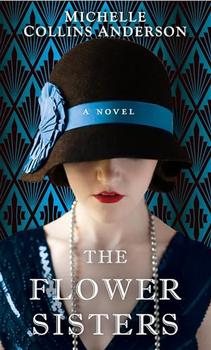
The Flower Sisters
by Michelle Collins Anderson
From the new Fannie Flagg of the Ozarks, a richly-woven story of family, forgiveness, and reinvention.
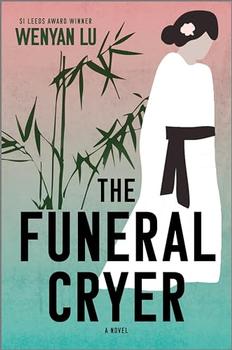
The Funeral Cryer by Wenyan Lu
Debut novelist Wenyan Lu brings us this witty yet profound story about one woman's midlife reawakening in contemporary rural China.
Your guide toexceptional books
BookBrowse seeks out and recommends the best in contemporary fiction and nonfiction—books that not only engage and entertain but also deepen our understanding of ourselves and the world around us.