Summary | Excerpt | Reviews | Beyond the Book | Readalikes | Genres & Themes | Author Bio
Critics' Opinion:
Readers' Opinion:
First Published:
Jul 2009, 208 pages
Paperback:
Jul 2010, 208 pages
 Book Reviewed by:
Derek Brown
Buy This Book

Governments tend to assume that proper attention and care of the past will do the present good. In the United States, the National Historic Preservation Act assumes that a sense of the past will help make good Americans. The nation’s heritage must be preserved, it says, “in order to give a sense of orientation to the American people.” President George W. Bush’s executive order of 2003 titled “Preserve America” echoed that sentiment: “The Federal Government shall recognize and manage the historic properties in its ownership as assets that can support department and agency missions while contributing to the vitality and economic well-being of the Nation’s communities and fostering a broader appreciation for the development of the United States and its underlying values.”
The passion for the past is clearly about more than market forces or government policies. History responds to a variety of needs, from greater understanding of ourselves and our world to answers about what to do. For many human beings, an interest in the past starts with themselves. That is in part a result of biology. Like other creatures, humans have a beginning and an ending, and in between lies their story. It probably also has to do with the realization that today the great majority of people live in a rapidly changing world where long-standing relationships that were once taken for granted - whether with places or with people such as family or friends - no longer exist for many. Part of the current fascination with preserving heritage comes from the fear that we are losing priceless and irreplaceable pieces of the past, whether they are dying languages or decaying buildings. Sometimes the preservationists seem to want time itself to stand still. In New York, to take a current debate, should the tenements of the Lower East Side be replaced by modern, more salubrious buildings? Or should they be kept, as a spokeswoman for the Tenement Museum said, “to remind us of the experience lived and worked inside them”?
Nineteen million people around the world are now signed up to the online Friends Reunited, which will put you in touch with long-lost friends from the distant past, even from your earliest school days. If anyone wants to go still further back, and an increasing number of people do, he or she can research genealogies. It is understandable, said a spokesman for the College of Arms in London, “in a throwaway society where everything is ephemeral.” Most national archives now have special sections set aside for patrons who are investigating their family histories. Thanks to the Mormons, who collect parish registers, genealogies, and birth records for their own purposes, Salt Lake City houses an enormous worldwide collection of records. The Internet has made it even easier, with dozens of sites where you can search for your ancestors, with more specialized ones dedicated to a single family name. In Canada and the United Kingdom, the popular television show Who Do You Think You Are? caters to our fascination with celebrities and the hunt for ancestors as it traces back, often with surprising results, the family trees of the famous.
Recent developments in science make it possible to go beyond the printed records. The decoding of DNA means that scientists can now trace an individual’s ancestry back through the mother’s line and can find others with the same genetic makeup. As the databases of information build up, it becomes increasingly possible to see how human beings have migrated over the years. This is important for anyone who wants to go back beyond where the paper trail peters out. It is particularly important for those who never had much of a paper trail to begin with. Those immigrants who came in great waves to the New World in the nineteenth and twentieth centuries to escape a miserable and uncertain life in Europe often lost all links with their pasts, sometimes indeed even their old names. For the descendants of American slaves, who lacked even the faintest hope of recovering the path their ancestors followed from Africa and not much more chance of finding out what happened to them once they were in the United States, DNA has suddenly opened the door to self-knowledge. A moving program called African American Lives, which was broadcast by PBS in 2006, looked at the DNA of famous black Americans, Oprah Winfrey and Quincy Jones among them. Sometimes the results are disappointing: family stories about the great-grandparent who was descended from kings are often just that - stories. Sometimes there are surprises, as when an obscure professor of accounting in Florida found he was descended from Genghis Khan. Perhaps, thought the professor, he owed his administrative skills to his terrifying ancestor.
Excerpted from Dangerous Games by Margaret MacMillan Copyright © 2009 by Margaret MacMillan. Excerpted by permission of Modern Library, a division of Random House, Inc. All rights reserved. No part of this excerpt may be reproduced or reprinted without permission in writing from the publisher.
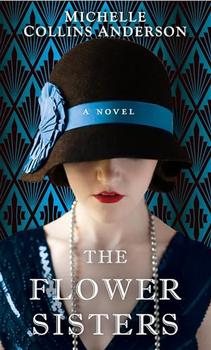
The Flower Sisters
by Michelle Collins Anderson
From the new Fannie Flagg of the Ozarks, a richly-woven story of family, forgiveness, and reinvention.
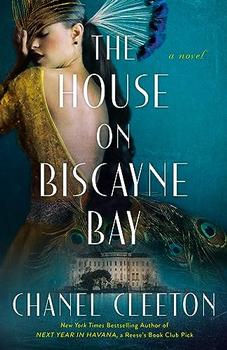
The House on Biscayne Bay
by Chanel Cleeton
As death stalks a gothic mansion in Miami, the lives of two women intertwine as the past and present collide.
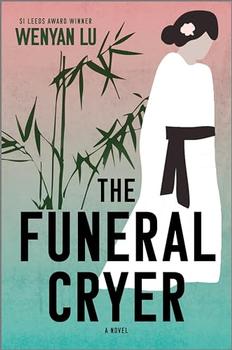
The Funeral Cryer by Wenyan Lu
Debut novelist Wenyan Lu brings us this witty yet profound story about one woman's midlife reawakening in contemporary rural China.
Your guide toexceptional books
BookBrowse seeks out and recommends the best in contemporary fiction and nonfiction—books that not only engage and entertain but also deepen our understanding of ourselves and the world around us.