Summary | Excerpt | Reviews | Beyond the Book | Readalikes | Genres & Themes | Author Bio
Critics' Opinion:
Readers' Opinion:
First Published:
May 2009, 384 pages
Paperback:
Jun 2010, 384 pages
 Book Reviewed by:
Derek Brown
Buy This Book

ONE
Nadezhda Yakovlevna
Saturday, the 13th of January 1934
Since that white night our lifelines first coiled themselves around each other, fifteen years ago come May Day, in Kiev, in a seedy bohemian cabaret called the Junk Shop, I must have heard Mandelstam give public readings scores of times, still the pure pleasure I take from the poetry of his poems is undiminished. There are moments when I am reduced to tears by the unspeakable beauty of the words, which take on another dimension when they enter one's consciousness through the ear, as opposed to the eye. How can I explain the miracle of it without sounding like the doting wife swooning in blind admiration? This high-strung, headstrong, life-glad homo poeticus (his description of himself, casually offered up when he mooched that first cigarette from me in the Junk Shop in what now seems like a previous incarnation), this nervous lover (of me and sundry others), is transfigured -- becomes someone, something, else. (It goes without saying but humor me if I say it: when he metamorphoses into someone else, so do I.) With one arm sawing the air awkwardly, the arc of his body scores the rhyme and rhythm and layers of multiple meaning buried in the text. His head tossed back, the unmistakably Semitic Adam's apple working against the almost transparently thin skin of his pale throat, he loses himself in the thing we call poetry; becomes the poem. When he materializes at the lectern at the start of an evening, there are usually several barely suppressed groans of mirth from the audience at the sight of this fussy, stage-frightened figure of a man dressed as if for his own funeral. On the particular evening I'm describing, he was wearing his only suit (a dark and itchy woolen twill purchased at the hard currency shop using coupons bought with a small inheritance I once received), along with a silk cravat (a relic of his trip to Paris before the Revolution) knotted around a starch-stiffened detachable collar. He reads as only the creator of the poem can read: with a slight pause for breath, an inaudible sucking in of air, at the places where the lines break or bend or double back on themselves. This pause is critical to understanding the impact of a Mandelstam poem. I have compared notes with several of what Osya calls his first readers (with him doing the reading and them doing the listening) and the savvier among them agree that he appears to be inventing the next line as he goes along. And this in turn gives even the listener who is familiar with the poem the eerie feeling that he is hearing these lines for the first time; that they haven't existed before, haven't been composed, reworked, polished, memorized, copied out on onion-skin paper by yours truly and stashed away in teapots and shoes and female undergarments in the hope against hope that our Chekists, when they come for him, will be unable to arrest his oeuvre.
The line, the pause for breath, then the next line spilling freshly minted from his bloodless lips -- that, my darlings, is at the heart of the heart of a Mandelstam recitation. For reasons I have not entirely grasped, the effect is even more remarkable when he is reading a love poem -- and still more startling when the love poem in question isn't addressed to me, his best friend and comrade-in-arms and lawful wedded wife, but to the plume of a theater actress perched on the folding chair next to me in the front row of the dingy Literary Gazette editorial office, my fleshy arm linked through her slender arm, the back of my wrist grazing as if by inadvertence the curve of her very beautiful breast.
At the lectern Mandelstam turned away for a sip of water before starting to recite the last poem of the reading. The actress, who used her stage name, Zinaida Zaitseva-Antonova, even offstage, leaned toward me, crushing her breast into my wrist. "Which poem is next, Nadezhda Yakovlevna?" she breathed, her voice husky with what I identified as sexual anticipation.
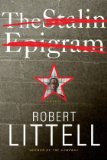
Copyright © 2009 by Robert Littell

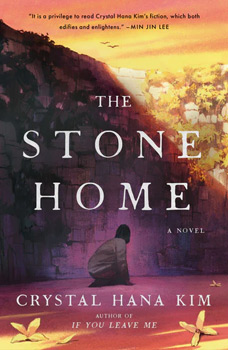
The Stone Home
by Crystal Hana Kim
A moving family drama and coming-of-age story revealing a dark corner of South Korean history.
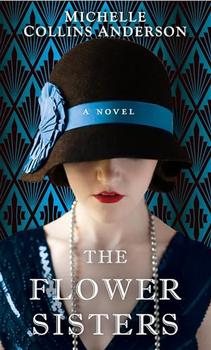
The Flower Sisters
by Michelle Collins Anderson
From the new Fannie Flagg of the Ozarks, a richly-woven story of family, forgiveness, and reinvention.
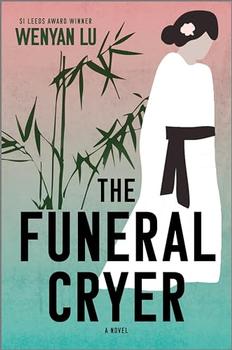
The Funeral Cryer by Wenyan Lu
Debut novelist Wenyan Lu brings us this witty yet profound story about one woman's midlife reawakening in contemporary rural China.
Your guide toexceptional books
BookBrowse seeks out and recommends the best in contemporary fiction and nonfiction—books that not only engage and entertain but also deepen our understanding of ourselves and the world around us.